Researchers recently uncovered a sophisticated WordPress malware strain that evades detection by hiding in a must-use plugin and using a blockchain-based command-and-control (C2) mechanism. Disguised as a routine site health or reporting tool, this threat can persist silently across compromised sites, stealing sensitive data and even spreading across shared server environments.
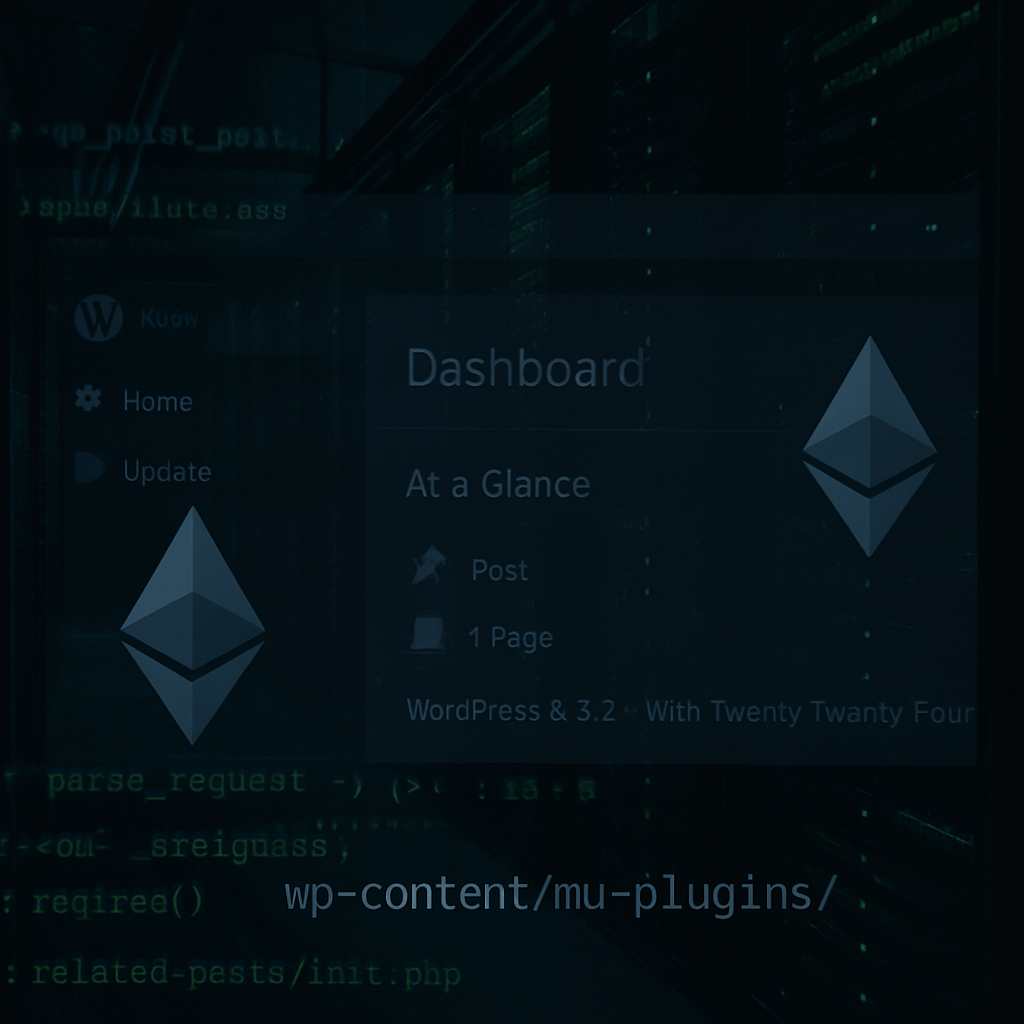
This implant is placed in the wp-content/mu-plugins directory as a must-use plugin—a special type that auto-loads with every request and doesn’t show up in the regular WordPress plugin dashboard. To stay under the radar, the malware actively removes itself from several admin views, including the Plugins page, Must-Use Plugins list, update notices, and the Site Health section.
How It Operates
Once installed, the malware takes multiple steps to establish persistence and control. It can create new administrator accounts using names such as admin_xxxxxx, adm_xxxxxx, administrator_xxxxxx, or backup_xxxxxx (six random trailing characters), reset existing account passwords, and hide rogue accounts from dashboard and REST API listings. The malware also tampers with user counts displayed in the admin interface to avoid raising suspicion.
If the malicious file is manually removed or its size changed, a backup stored in the database allows the implant to reconstruct itself, restore old modification timestamps, and make the file read-only. Additionally, it can copy itself to other WordPress installations found in shared web-server directories.
Blockchain-Backed Command & Control
Instead of hard-coding a server domain or IP, this malware retrieves its C2 information at runtime using EtherHiding. At launch, it sends requests to a smart contract on Ethereum, drawing from one of three pre-set contract addresses and 21 public RPC gateways. Data obtained is decrypted to reveal current attacker-controlled HTTP servers.
These remote servers can not only receive encrypted site data—including admin credentials, configuration files, active plugins, order information, and environment or Git credentials—but also issue commands. The operators may order the malware to reinfect, remove security plugins, inject JavaScript into site visitors’ browsers, or alter plugin content. This design allows for a variety of malicious outcomes: credential theft, payment skimming, content manipulation, or expansion into deeper server control.
Attributes and Indicators
In one discovered case, malware samples appeared under more than 4,000 unique filenames, often using standard legitimate names like advanced-cache.php, db.php, or a theme’s functions.php. It also collects stolen admin passwords during login, searches for secrets in WordPress configuration, environment, and Git files, then reports everything to its operators.
Key IoCs include the unusual use of the mu-plugins directory, filenames that mimic normal components, admin account naming patterns, WordPress options like src, bu, bp, and ic that store, among other things, backups of source code or stored credentials, and odd custom cron schedules (e.g. jf_7xc5bj9trbgji). Another signature is the Ethereum smart contract method selector 0x3bc5de30, used for pulling encrypted command channel data.
Defensive Measures
Site administrators are advised not to rely solely on what’s visible in WordPress dashboards. They should manually inspect the must-use plugin directory, query the user database for rogue admins, audit options tables for unexpected entries, and check server logs for unfamiliar outbound traffic. Checking other sites hosted on the same server is also crucial.
Updating WordPress core and all plugins without delay is key, especially in light of recent plugin-takeover vulnerabilities that grant threat actors initial system entry. Regularly reviewing unexpected files, plugins, unknown account changes, and ensuring backups are clean can reduce exposure to this threat.
Indicators of compromise to scan for include:
• Path: wp-content/mu-plugins
• Filenames like advanced-cache.php, db.php, functions.php
• Admin account names matching suspicious patterns
• WordPress options holding backups or stolen credentials
• Custom cron schedules and specific Ethereum smart contract selectors
This malware exemplifies a rising trend: attackers using blockchain smart contracts not just for cryptocurrency, but to build resilient, hidden infrastructure. EtherHiding techniques make C2 servers harder to identify or block, complicating the typical incident response playbook.
This development matters because many site owners assume removing a malicious plugin or restoring from backup is sufficient. Given how this strain hides, self-repairs, and bridges multiple sites, any cleanup effort that omits deep inspection risks leaving the door open. The future of WordPress security will require threat intelligence that spots such stealth tools early, workflow changes that include routine database and server auditing, and perhaps new detection tools focused on behavioral or activity-based indicators over visible plugin status.