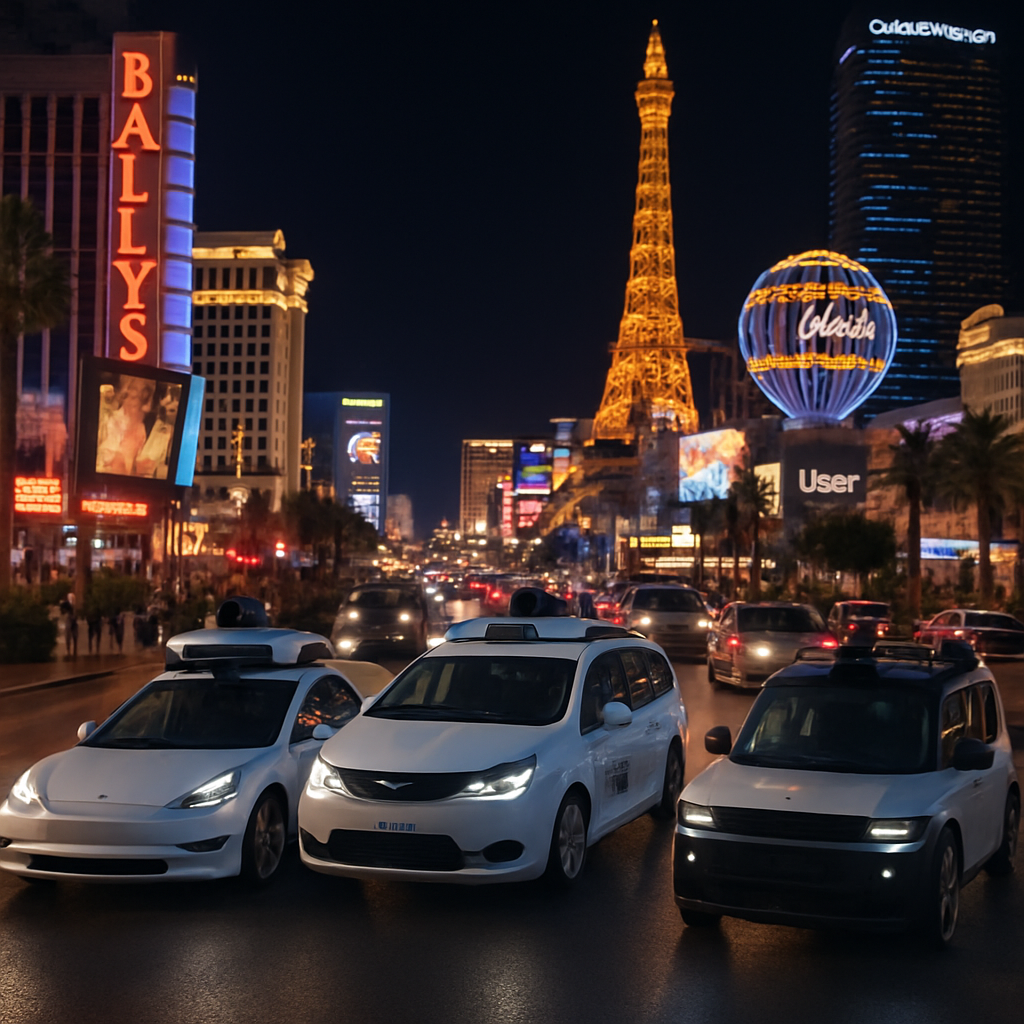
Nevada’s transportation regulator cleared the way for massive robotaxi deployment in Clark County, including Las Vegas. On August 20, the Nevada Transportation Authority unanimously issued permits to Tesla, Uber, and Waymo, allowing them to roll out commercial autonomous fleets over the next 12 months. Combined, the permits allow up to 8,000 robotaxis across the county, with Tesla receiving permission for 5,000, and Waymo and Uber each allowed up to 1,000 vehicles. Meanwhile, Zoox already holds a separate permit to operate 100 robotaxis in the area. ([techcrunch.com](https://techcrunch.com/2026/08/20/tesla-uber-and-waymo-all-get-the-ok-to-operate-thousands-of-robotaxis-in-nevada/))
Rollout vs. Reach: Reality Check
Despite the high numbers in the permits, company leadership signaled that deploying the maximum fleet sizes is unlikely in the near term. Tesla’s Cybercab chief engineer, Eric Early, acknowledged that the 5,000-vehicle cap was always more of a ceiling than a target. He estimated the company might get to roughly 2,500 robotaxis within the next year, with possible variation depending on operational readiness. ([techcrunch.com](https://techcrunch.com/2026/08/20/tesla-uber-and-waymo-all-get-the-ok-to-operate-thousands-of-robotaxis-in-nevada/))
Clark County is fast becoming a hotspot in the race among Tesla, Waymo, Uber (working via Motional and Zoox), and Zoox alone. The newly approved robotaxis are expected to reshape commuting patterns in heavily trafficked zones, especially for tourists and airport transit. How quickly that shift occurs depends on regulatory compliance, battery infrastructure, and local market dynamics. ([techcrunch.com](https://techcrunch.com/2026/08/20/tesla-uber-and-waymo-all-get-the-ok-to-operate-thousands-of-robotaxis-in-nevada/))
Stakeholder Pushback and Hybrid Model Debates
The permit approvals did not come without significant resistance. Taxi companies and the Livery Operators Association raised concerns during the hearing, warning that letting robotaxis flood the market could destabilize the transportation economy. They pointed to risks like oversupply of commercial vehicles and heavier traffic congestion, particularly in areas like the Golden Triangle—the stretch between McCarran International Airport, Las Vegas Boulevard, and vicinity, where much autonomous vehicle testing has occurred. ([techcrunch.com](https://techcrunch.com/2026/08/20/tesla-uber-and-waymo-all-get-the-ok-to-operate-thousands-of-robotaxis-in-nevada/))
Uber has pushed for a gradual integration model via hybrid operations that mix human drivers with robotaxi fleets. The company argued this hybrid route allows demand to be met more flexibly while avoiding sudden disruptions. This stance sets Uber apart from Waymo and Tesla, both of which are focused more heavily on fully autonomous services. The hybrid approach also offers a fallback if AV-technology rollout or adoption doesn’t scale as expected. ([techcrunch.com](https://techcrunch.com/2026/08/20/tesla-uber-and-waymo-all-get-the-ok-to-operate-thousands-of-robotaxis-in-nevada/))
These regulatory permits are among the first to address commercial robotaxi operations at scale, placing Las Vegas in the vanguard of autonomous transportation in the U.S. They also raise pressing questions about workforce displacement, urban planning, and how cities will adapt to fleets of driverless vehicles mingling with traditional transit and ride-hail services. ([techcrunch.com](https://techcrunch.com/2026/08/20/tesla-uber-and-waymo-all-get-the-ok-to-operate-thousands-of-robotaxis-in-nevada/))
What this means is clear: Nevada is placing a bet on autonomous driving and ceding ground now to companies who can deliver scale fast. Yet, the gap between what’s permitted and what’s feasible suggests we’ll be watching closely—not just how many robotaxis hit the roads, but how local infrastructure, public sentiment, and transportation economics adapt. The next year in Las Vegas could be an inflection point for autonomous mobility in America.