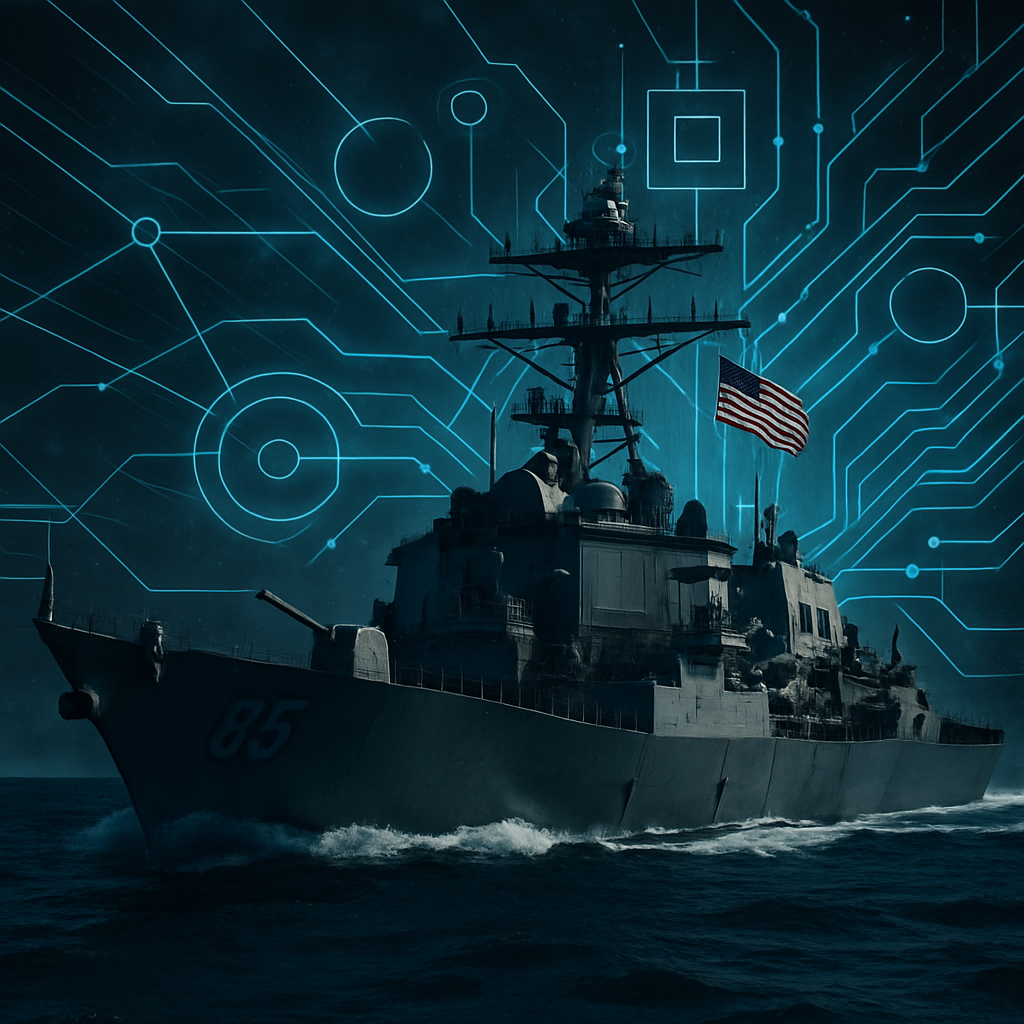
The U.S. Navy is pushing for big changes in its tech procurement. Chief Technology Officer Justin Fanelli, in the role for about three and a half years, is steering away from the traditional, labyrinthine government acquisition model toward a simpler, funnel-like process. That means rewarding companies with solid results rather than bogging them down with complex entry points.
In a recent conversation during a spontaneous dash to catch an unannounced flight, Fanelli disclosed that he’s building on a “demand signal” he shared with investors last year — revealing what tech the Navy wants to buy in the coming years. The list, vetted by venture investors, aims to shape how investors and startups think about Navy priorities before deals are struck.
Money, Movement, and Co-Investments
The Navy spends around $150 billion annually on everything it buys, but only a small fraction is funneled into direct investments in technology companies. Most spending still travels through established procurement pathways. Fanelli wants to shift more of that toward co-investment: collaborating with private capital or purchasing from commercial firms rather than relying on long-time defense primes.
Historically, the Navy has covered early-stage research — seed to Series B rounds. Now it prefers that the private sector incubate early tech, reserving Navy funding and procurement for companies at Series D through F levels. This strategy also motivates the Navy to clarify its future tech needs so VCs can align accordingly.
Where the Navy Wants Innovation Now
The updated priority areas give us a clear sense of where the Navy aims to spend downstream. These include:
- Applied AI: systems using sensor fusion, targeting, autonomy, cyber ops — turning raw data into decisions;
- Quantum information science: not about owning quantum hardware per se, but applying quantum techniques to navigation, crypto, and secure comms;
- Advanced networking: secure data transport in harsh or intermittent conditions, whether at sea or across allied systems;
- Electromagnetic spectrum operations: tech that senses and manages spectrum use in contested and dynamic battlespaces;
- Digital engineering and interoperability: emphasis on open APIs, model-based systems engineering, and zero-trust architectures so systems can talk to each other without custom integrations.
Fanelli makes it clear this is not a binding contract or rank-ordered wishlist. The priorities evolve with changing threats and technology breakthroughs. The idea is to provide a roadmap so decision-makers in startups and VCs can anticipate where Navy spending might flow.
Real-World Moves Back the Talk
It’s not just talk. This month, the Navy awarded a contract worth $562 million for the MQ-25 Stingray, a drone designed to refuel manned aircraft from carriers. It’s also bought edge computing setups that are deployable aboard ships and in remote areas. In another case, machine vision from Applied Intuition replaced a delayed system, accelerating deployment by about four years and expanding scale.
To drive buy-ins inside the Navy, decisions typically go through a small source Selection Committee rather than multiple layers. Fanelli cites budget timelines as one of the biggest threats to keeping a tech solution around: even when something works, if it doesn’t replace something already funded or can’t be sustained financially year to year, it risks being abandoned.
Even mid-flight prep, the Navy’s tech chief was already pushing for investment and clarity — showing just how determined the service is to break from old ways of doing business.
Why this matters: This signals a broader cultural shift in defense acquisition — one that leans into commercial innovation, faster timelines, and tighter collaboration with private capital. For startups and investors, it offers a rare chance to align early with what the Navy will prioritize. Watch how this plays out not just in contracts, but in whether emerging tech firms can lock in sustained support inside a budget-driven institution. This could reshape how the U.S. military harnesses innovation in a faster-moving, more competitive world.