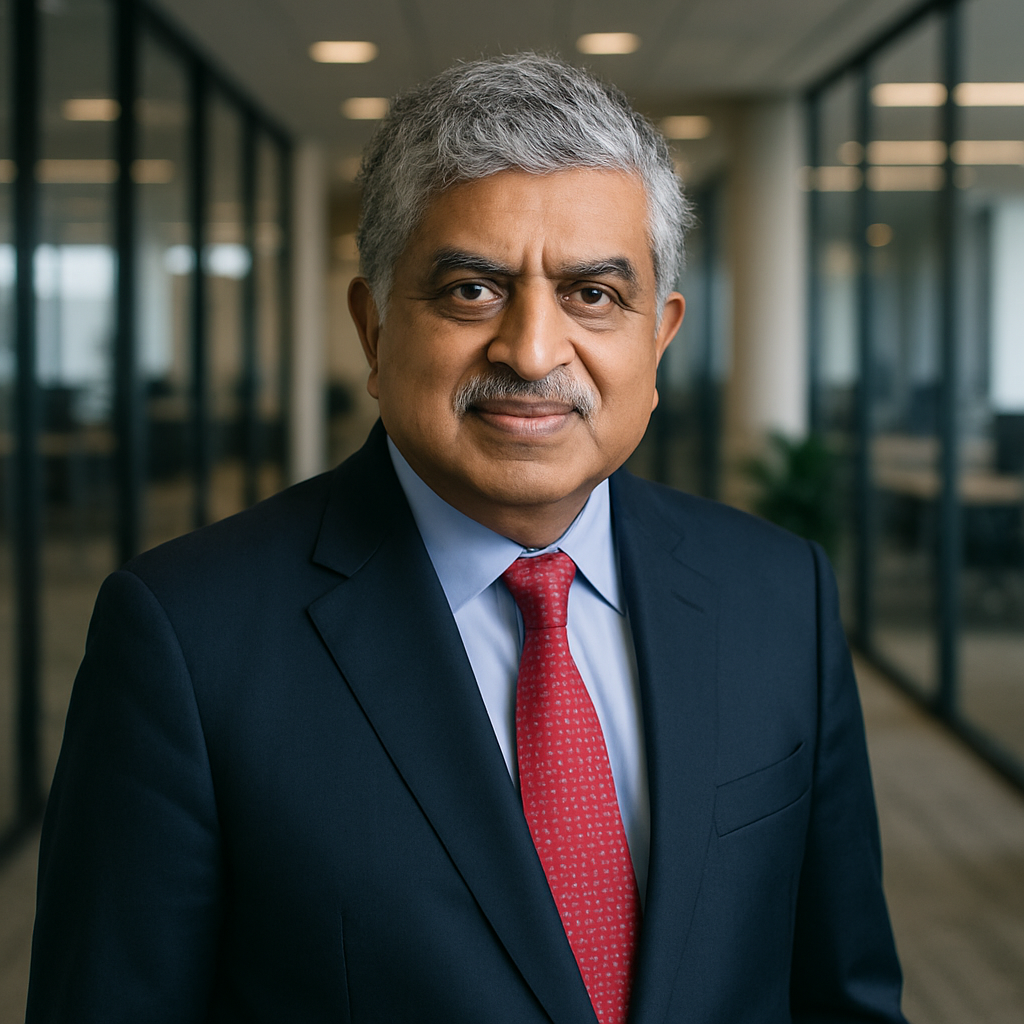
Nandan Nilekani, renowned for co-founding Infosys and spearheading India’s Aadhaar initiative, has stepped down from his role as General Partner at Fundamentum Partnership, the venture capital firm he co-established in 2017. This transition coincides with the firm’s announcement of its third fund, targeting a corpus of approximately $200 million.
Despite relinquishing his GP title, Nilekani remains deeply involved with Fundamentum. He will serve as the anchor investor for the new fund and continue to provide strategic guidance and mentorship to the firm’s portfolio companies. Co-founder Sanjeev Aggarwal emphasized that this change is primarily titular, with Nilekani’s advisory role remaining integral to the firm’s operations.
Fundamentum’s investment strategy focuses on supporting Indian startups at the Series B stage and beyond. Its diverse portfolio includes companies like Spinny, an online used-car marketplace; PharmEasy, a digital pharmacy platform; Kuku FM, an audio storytelling service; and AppsForBharat, known for developing the Sri Mandir devotional app.
The leadership team for the third fund comprises Sanjeev Aggarwal, Prateek Jain (a member since the firm’s inception), fintech investor Mayank Kachhwaha, and finance chief Sanjay Chaturvedi. The fund aims to invest in eight to ten early-stage startups specializing in consumer technology, fintech, and artificial intelligence, with initial investments of around ₹100 crore (approximately $10.5 million) each.
Fundamentum plans to raise about half of the fund’s target from international investors, with the remainder sourced from Indian institutions and family offices. While the first close is yet to be announced, the firm has already commenced deploying capital and anticipates concluding the fundraising process within the next 12 to 18 months.
Nilekani’s decision to step down as General Partner while maintaining an active advisory role reflects a strategic shift in leadership dynamics within venture capital firms. This move allows for the infusion of fresh perspectives into the firm’s management while retaining the invaluable experience and mentorship of seasoned leaders. As the Indian startup ecosystem continues to evolve, such transitions may become more common, balancing innovation with stability.