Motorola’s Preinstalled App Hijacks Amazon Launches to Inject Affiliate Codes
Recent investigations have uncovered that certain Motorola smartphones come with a preinstalled system application that intercepts user attempts to open the Amazon app, redirecting them through affiliate tracking URLs without user consent. This practice raises significant concerns about supply chain integrity, user privacy, and undisclosed revenue generation on premium Android devices.
The issue first came to light when a Motorola Razr 60 Ultra user reported on Reddit that tapping the Amazon app icon no longer opened the app directly. Instead, the device launched a browser session pointing to an unfamiliar URL, which subsequently redirected to Amazon.com with an embedded affiliate code.
Further analysis revealed that a hidden system app named Smart Feed was responsible for this behavior. This app communicates with an external server, devicenative[.]com, to retrieve configurations and affiliate codes. When a user attempts to open the Amazon app, Smart Feed intercepts the launch intent and substitutes it with a browser redirect carrying the affiliate code.
The process operates as follows:
1. The user taps the Amazon app icon.
2. Smart Feed intercepts the launch intent.
3. The app queries devicenative[.]com for affiliate parameters.
4. A browser opens with a redirect URL that leads to Amazon with the injected affiliate tag.
5. The user lands on Amazon.com, unaware that revenue credit has been claimed.
This redirection is likely to go unnoticed unless the user has disabled the Open links in app by default setting—a non-default configuration that most users do not change.
Beyond the financial implications, this behavior mirrors techniques used by adware and banking trojans, such as intent hijacking and hidden system-level persistence. The reliance on an external domain for behavioral instructions is particularly concerning, as it means the app’s functionality can change without any firmware update.
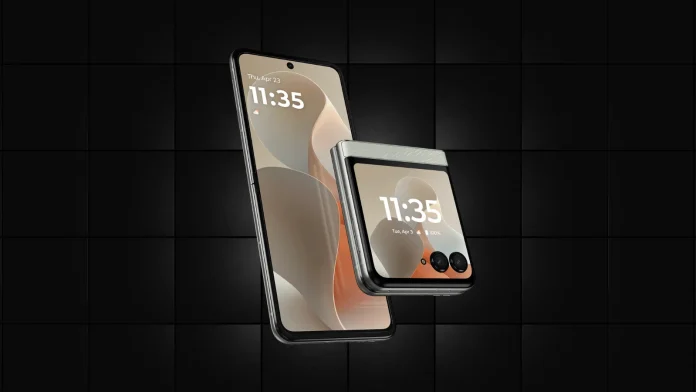
The issue has been confirmed on the Motorola Razr 60 Ultra, a flagship device retailing at approximately $1,300. It remains unclear whether other Motorola models or regional variants are affected.
The domain devicenative[.]com suggests that a third-party monetization SDK or affiliate partner may be involved, rather than Motorola engineering this directly. However, this distinction does not absolve Motorola of accountability for bundling such software.
As of now, Motorola has not issued an official statement regarding this issue.