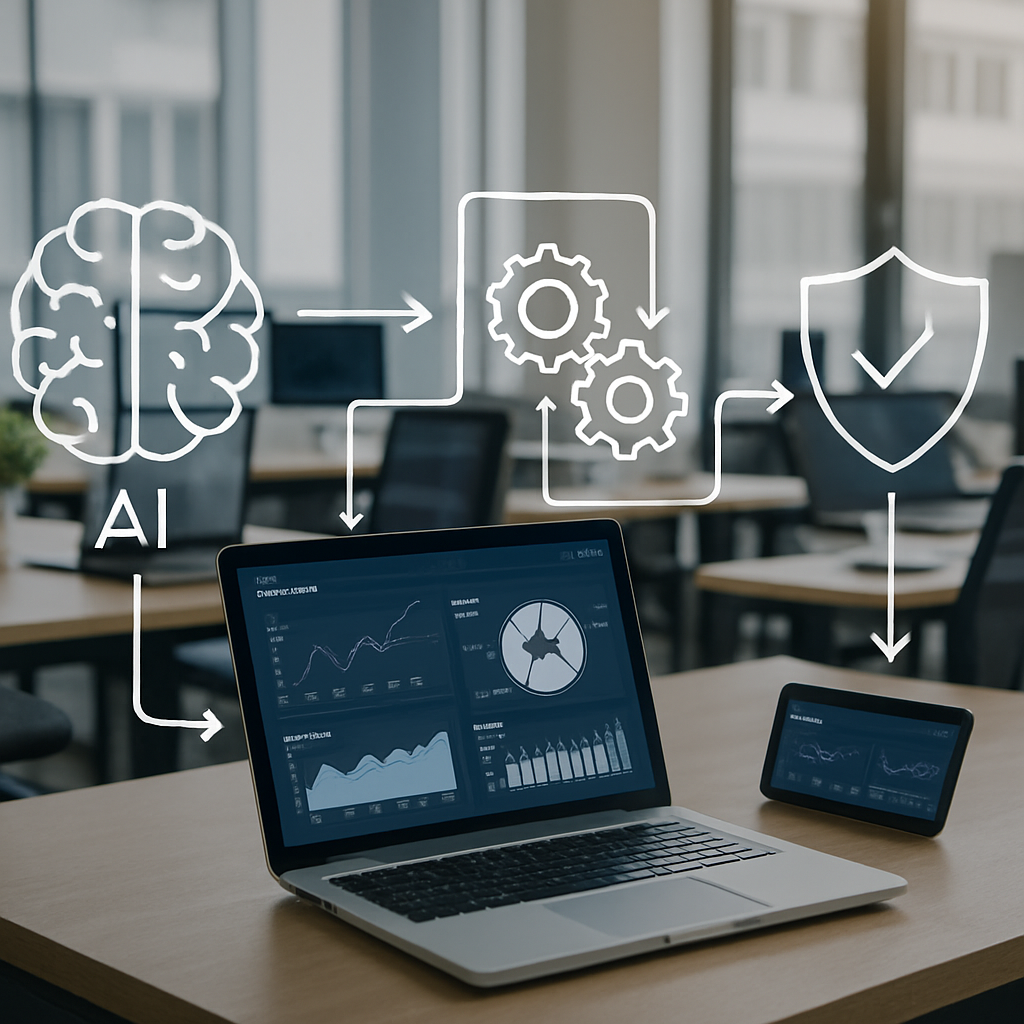
A recent survey of over 500 enterprise IT leaders reveals a major dichotomy: many want their Mac fleets to be managed by AI-driven automation, but far fewer believe their organizations are prepared for it. The report, from Fleet, shows AI automation is the top investment priority over the next year or two—but readiness gaps are glaring in infrastructure and practices.([9to5mac.com](https://9to5mac.com/2026/08/22/apple-work-most-it-leaders-want-ai-to-manage-their-macs-but-few-are-ready-for-it/))
What IT Leaders Say vs. What They’re Ready For
In the survey, 46.5% of device management decision-makers named AI-driven automation as their leading investment priority for the next 12-24 months. Other priorities—like vulnerability remediation (42.5%) and device visibility (42.1%)—trail just behind.([9to5mac.com](https://9to5mac.com/2026/08/22/apple-work-most-it-leaders-want-ai-to-manage-their-macs-but-few-are-ready-for-it/))
But despite this enthusiasm, only a small fraction of organizations report having the operational foundation needed to support true AI control over their Macs. The report indicates that only 13% of respondents describe their endpoint management workflows as “fully autonomous”; the vast majority—87%—rely on manual or partially automated approaches.([digitalitnews.com](https://digitalitnews.com/road-to-ai-in-it-research-reveals-enterprise-ai-gaps/?utm_source=openai))
Shadow AI Risk Widens the Gap
One of the most alarming findings: employee use of unsanctioned AI tools is widespread. Roughly 78% of employees are already using personal AI tools at work, even though IT teams typically know of only four AI tools in use on average—while internal teams are often using 14. That disparity raises serious concerns around security, cost control, and visibility.([9to5mac.com](https://9to5mac.com/2026/08/22/apple-work-most-it-leaders-want-ai-to-manage-their-macs-but-few-are-ready-for-it/))
These risks aren’t hypothetical. The IBM Cost of a Data Breach Report indicates that breaches tied to such “shadow AI” cost an average of about $670,000 more than standard breaches.([9to5mac.com](https://9to5mac.com/2026/08/22/apple-work-most-it-leaders-want-ai-to-manage-their-macs-but-few-are-ready-for-it/))
Operational Shortfalls, Especially Infrastructure-Wise
While many IT leaders are eager to move toward AI automation, few highlight infrastructure to support it. Only 29.6% are focusing on infrastructure as code (IaC)—a versioned, verifiable way to define system configurations and policies that helps ensure changes made by AI are safe, auditable, and reversible.([digitalitnews.com](https://digitalitnews.com/road-to-ai-in-it-research-reveals-enterprise-ai-gaps/?utm_source=openai))
Other foundation pieces are missing too: visibility into what AI tools employees are using, telemetry, device management systems that can enforce policy at scale, and internal review mechanisms. Without those layers, automated AI actions risk producing more problems than they solve.([9to5mac.com](https://9to5mac.com/2026/08/22/apple-work-most-it-leaders-want-ai-to-manage-their-macs-but-few-are-ready-for-it/))
In short: the ambitions are there—IT teams want AI handling repetitive tasks, automating workflow, patching devices—but the baseline systems and governance models required for safe deployment are uneven and often unavailable.([9to5mac.com](https://9to5mac.com/2026/08/22/apple-work-most-it-leaders-want-ai-to-manage-their-macs-but-few-are-ready-for-it/))
What’s driving this disconnect? For many organizations, management of Macs and other endpoints has been largely manual or incremental so far. AI is seen as a multiplier—but one that magnifies both strengths and weaknesses. Pasts of underinvested infrastructure, lack of automation practices, and weak oversight are catching up. The risk of shadow AI, unexpected costs, or security incidents makes the stakes higher than ever.([9to5mac.com](https://9to5mac.com/2026/08/22/apple-work-most-it-leaders-want-ai-to-manage-their-macs-but-few-are-ready-for-it/))
The survey raises urgent questions for enterprise IT leadership: How will you build trust in AI systems? Who will own governance and visibility? How do you prevent unmanaged tools from undermining risk posture? Lost data, exposed environments, or financial fallout aren’t far off if AI is deployed without guardrails.
Ultimately, although AI-automated device management is no longer just a futuristic idea—it’s the next big enterprise inflection point—most organizations are starting without the essentials in place. Those who build toward infrastructure readiness, enforce governance actively, and close the visibility gap will be the ones to pull ahead. Others may find they’ve taken on more risk than reward.