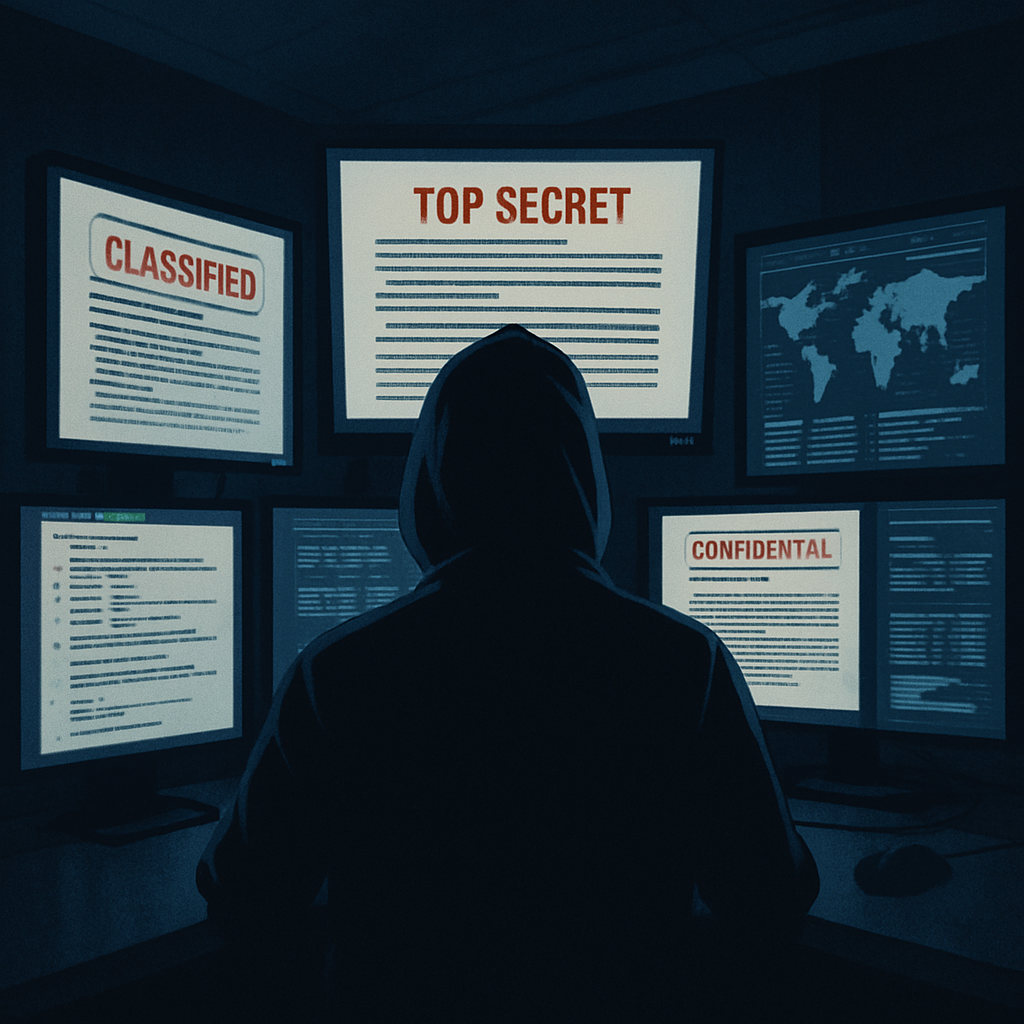
A threat actor known as ModernStealer has surfaced on dark web forums and Telegram channels, claiming to possess and sell sensitive information related to military, government, nuclear, and aerospace sectors. These assertions have raised concerns among public-sector and defense organizations, though no concrete evidence has confirmed the authenticity of these data leaks.
ModernStealer’s activities involve advertising alleged data sales, often accompanied by reused contact details. It’s important to note that such sellers may exaggerate their claims, recycle old data, or offer information they did not personally acquire. Analysts at StealthMole have traced a pattern in these postings, linking ModernStealer to a Session contact identifier and a Telegram account named Sassoon Don. Further investigation revealed connections to other aliases promoting similar sensitive material.
The initial investigation was triggered by a DarkForums post that advertised a purported document detailing a drone partnership between Türkiye and Pakistan. This document referenced entities like Baykar Teknoloji and Pakistan’s National Aerospace Science and Technology Park, mentioning aspects such as technology transfer, training, joint research, localization, and procurement. However, the post did not provide evidence of how the document was obtained, its authenticity, or whether any security breach had occurred.
Subsequent searches uncovered multiple listings by ModernStealer, including claims of possessing databases from the Pakistan Nuclear Regulatory Authority. In total, five listings attributed to ModernStealer and eight related to government entities were identified. These posts mentioned organizations such as Pakistan’s NUST and SUPARCO, Bangladesh’s military, and U.S. defense bodies. It’s crucial to approach these claims with caution, as dark web brokers often repackage older or mixed data as new leaks, creating a false sense of urgency.
A recurring Session identifier appeared in 30 indexed threads, including posts by an alias named Zu1f1q4r, who advertised materials related to Pakistan’s military procurement, Intelligence Bureau, and Federal Investigation Agency. While this shared identifier suggests operational overlap, it does not conclusively prove that ModernStealer and Zu1f1q4r are the same individual. They could be separate operators sharing infrastructure or members of a group, necessitating careful and evidence-based attribution.
The investigation also led to a Telegram account identified as Sassoon Don. Messages from this account used the same Session contact while seeking classified documents about Ukraine and Central Asian countries. ModernStealer later listed this account directly as a contact option in posts related to military documents. Another alias, PriorOps, used the same Telegram handle in a post claiming to offer a database of People’s Liberation Army personnel. This underscores the importance of monitoring platforms like Telegram alongside forums, as aliases may change while operational contacts remain consistent.
For organizations potentially affected by these claims, it’s essential to validate the information before taking action. Teams should preserve logs, compare any samples with their records, reset exposed credentials when evidence supports it, and avoid amplifying unverified posts. This disciplined approach complements evidence-based checks of leak claims, especially when adversaries use visibility and uncertainty as leverage.
The emergence of ModernStealer highlights the evolving tactics of cyber threat actors who exploit underground marketplaces and messaging platforms to disseminate alleged sensitive information. Organizations must remain vigilant, employing robust cybersecurity measures and thorough validation processes to mitigate potential risks associated with such claims.