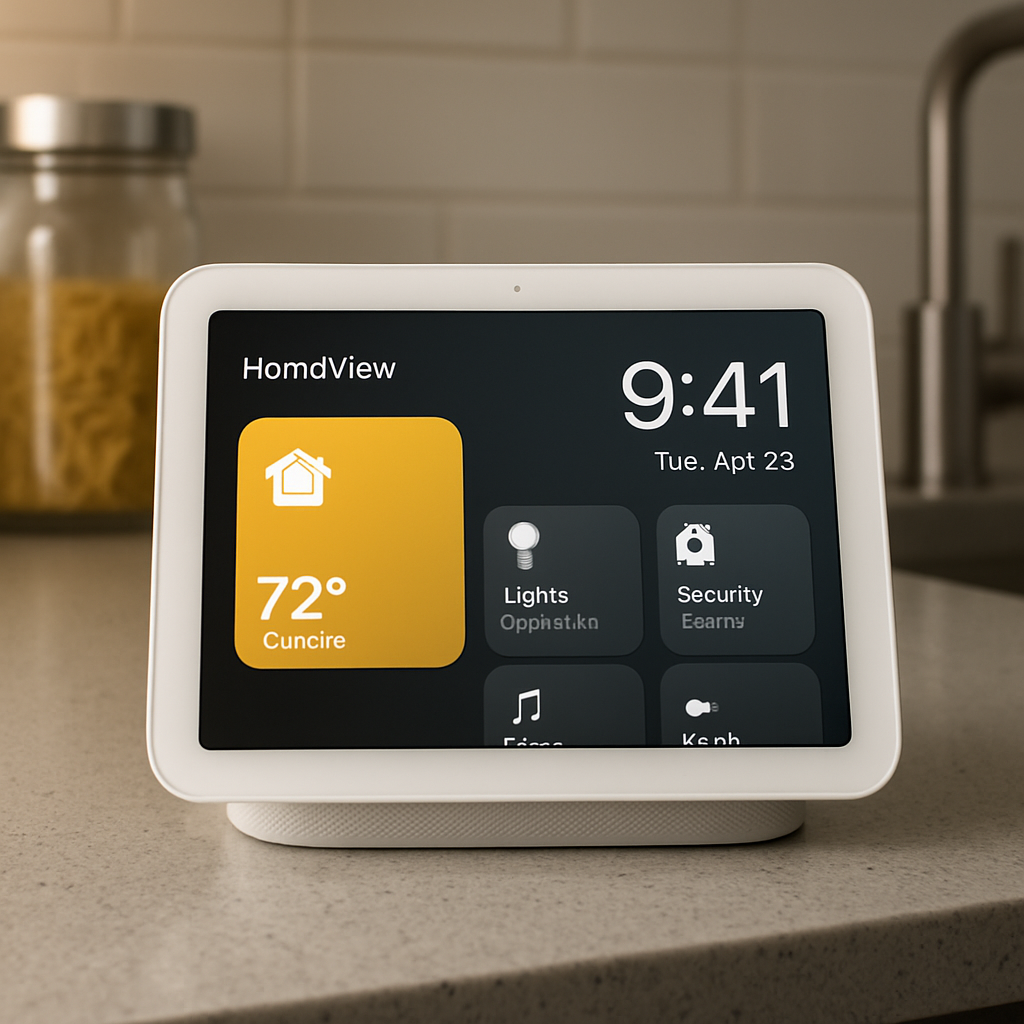
Apple’s freshly revealed HomeView device—a smart home hub with a 7-inch touch display powered by Siri AI—has earned skepticism from popular reviewer Marques Brownlee, who recently shared first impressions questioning whether it delivers enough new utility. At a price point and function set that overlaps with existing Apple products, he suggests HomeView may be a miss for many users.
In his video review, Brownlee struggles to pinpoint a specific group of users who would strongly benefit from the HomeView. He points out that its capabilities overlap heavily with devices most people already own—namely iPhones, iPads, Apple Watches, and HomePods. Because it doesn’t offer a lot of unique features, he argues its appeal is limited.
One major limitation he highlights: HomeView lacks an App Store. While it can display CarPlay‐enabled audio and video apps from a paired iPhone, the absence of native apps reduces its versatility. This gap, he says, significantly curtails the potential advantages of owning the device.
Overlap, Added Cost, and Questionable “Must-Have” Status
Brownlee notes that the tasks HomeView handles are mostly ones users already perform via other devices. Whether controlling smart home gear, checking notifications, listening to music via HomePod, or managing content via iPhone or iPad—HomeView doesn’t drastically simplify any of it. Its similarities with products already in most homes make its status as a necessity harder to justify.
Because of that overlap, Brownlee believes HomeView will be “a skip for most people.” He questions whether the added cost of buying yet another Apple device aligns with the level of unique value provided—especially considering how central the iPhone is already to many smart-home and infotainment routines.
Where HomeView Might Still Make Sense
Despite his doubts, Brownlee doesn’t label HomeView pointless. For users who want a dedicated wall or counter screen for smart home control—separate from their phone or tablet—or who prefer hands-free interaction without picking up a device, HomeView could fill a niche. It also consolidates certain tasks like CarPlay display support, which may appeal in specific contexts.
Still, even for these scenarios, Brownlee stresses the tradeoffs. The lack of native apps and requiring a paired iPhone for many functions means HomeView doesn’t replicate what existing screens in a home already do. For those who already own a robust selection of Apple gear, it might feel redundant more than revolutionary.
Overall, Brownlee sees HomeView as a promising concept, but incomplete in its current form. Without more exclusive functionality or stronger differentiators, its broad appeal may be muted.
Why this matters:Apple entering a more prominent smart home display space signals its ambition to deepen its ecosystem beyond phones and wearables. But when new devices blur roles rather than clearly add them, the chances of user misalignment rise—especially for premium hardware buyers who expect standout features rather than duplications.