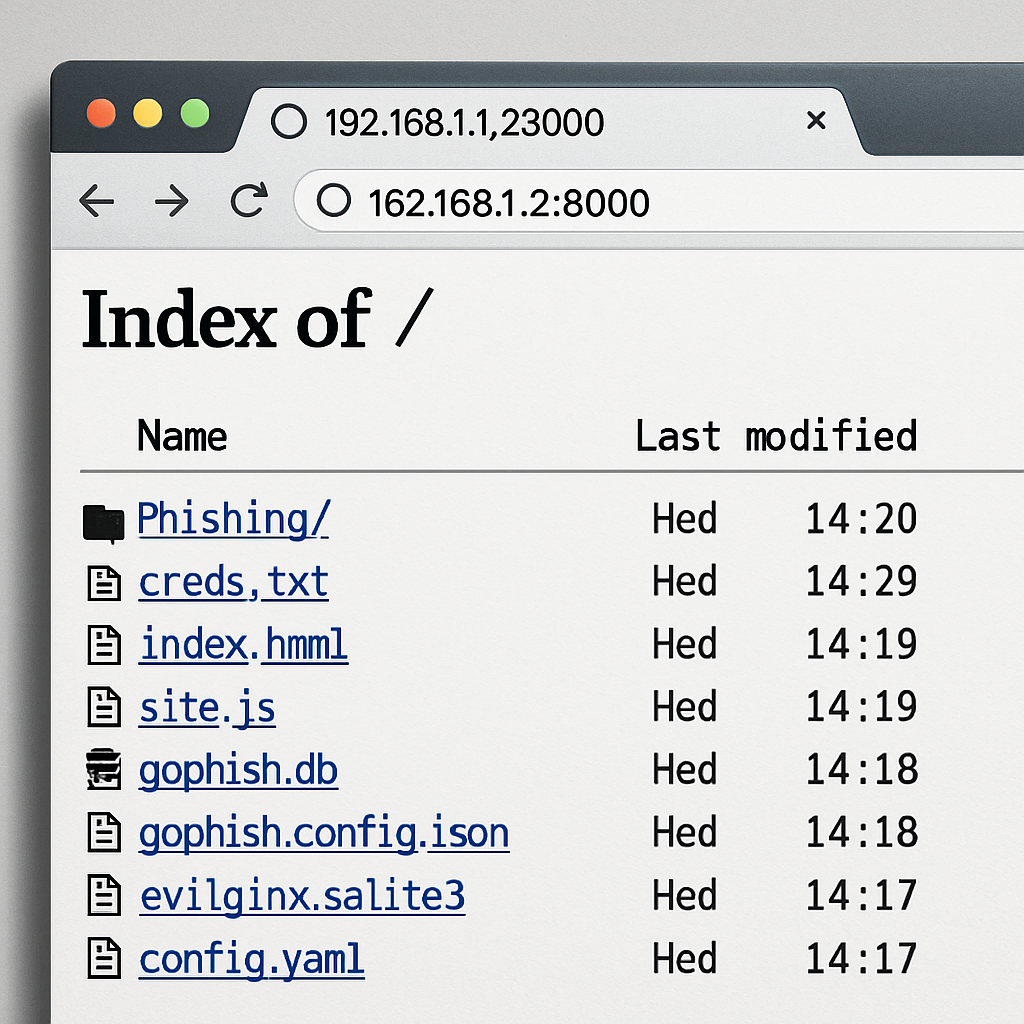
A misconfigured Python HTTP server has inadvertently exposed the inner workings of three active adversary-in-the-middle (AiTM) phishing campaigns. This incident underscores the critical importance of proper server configuration and the potential risks associated with operational oversights.
Exposure Through Misconfiguration
Security analysts at Lexfo discovered an exposed Python HTTP server on a virtual private server (VPS). This server, left accessible to the internet, contained a comprehensive toolkit used by attackers to orchestrate AiTM phishing operations. Such tools enable attackers to intercept and capture user credentials and authenticated browser sessions by positioning themselves between the victim and legitimate sign-in services.
The exposed server provided a rare glimpse into the methodologies employed by cybercriminals. It included phishing page templates, login-relay components, configuration data, and other materials essential for conducting credential-theft campaigns. This level of access is typically restricted, making the discovery particularly significant for cybersecurity professionals.
Insights into Multiple Campaigns
The server’s contents were linked to three distinct AiTM phishing campaigns. While the presence of multiple campaigns on a single server does not conclusively indicate a single operator, it suggests potential shared infrastructure, reused kits, or rented services. This overlap complicates attribution efforts and highlights the interconnected nature of cybercriminal activities.
Notably, the server housed a custom bulk mailer tool named MaDoO Blaster v4.7.3, which attackers likely used to distribute phishing emails en masse. The availability of such tools on the exposed server provides valuable intelligence on the operational tactics of these campaigns.
Operational Security Implications
This incident serves as a stark reminder of the importance of stringent operational security practices. A seemingly minor misconfiguration, such as leaving a temporary server accessible to the internet, can lead to significant data exposure. Organizations must ensure that all web services, regardless of their perceived importance, undergo regular inventory checks and security reviews to prevent inadvertent disclosures.
Furthermore, the exposure of such detailed attacker resources offers defenders an opportunity to analyze and understand the tools and techniques employed in AiTM phishing campaigns. This knowledge can inform the development of more effective detection and mitigation strategies.
In conclusion, the inadvertent exposure of this Python HTTP server highlights the critical need for meticulous server management and configuration. It also underscores the value of such exposures in providing cybersecurity professionals with insights into adversarial tactics, ultimately enhancing the collective defense against phishing threats.