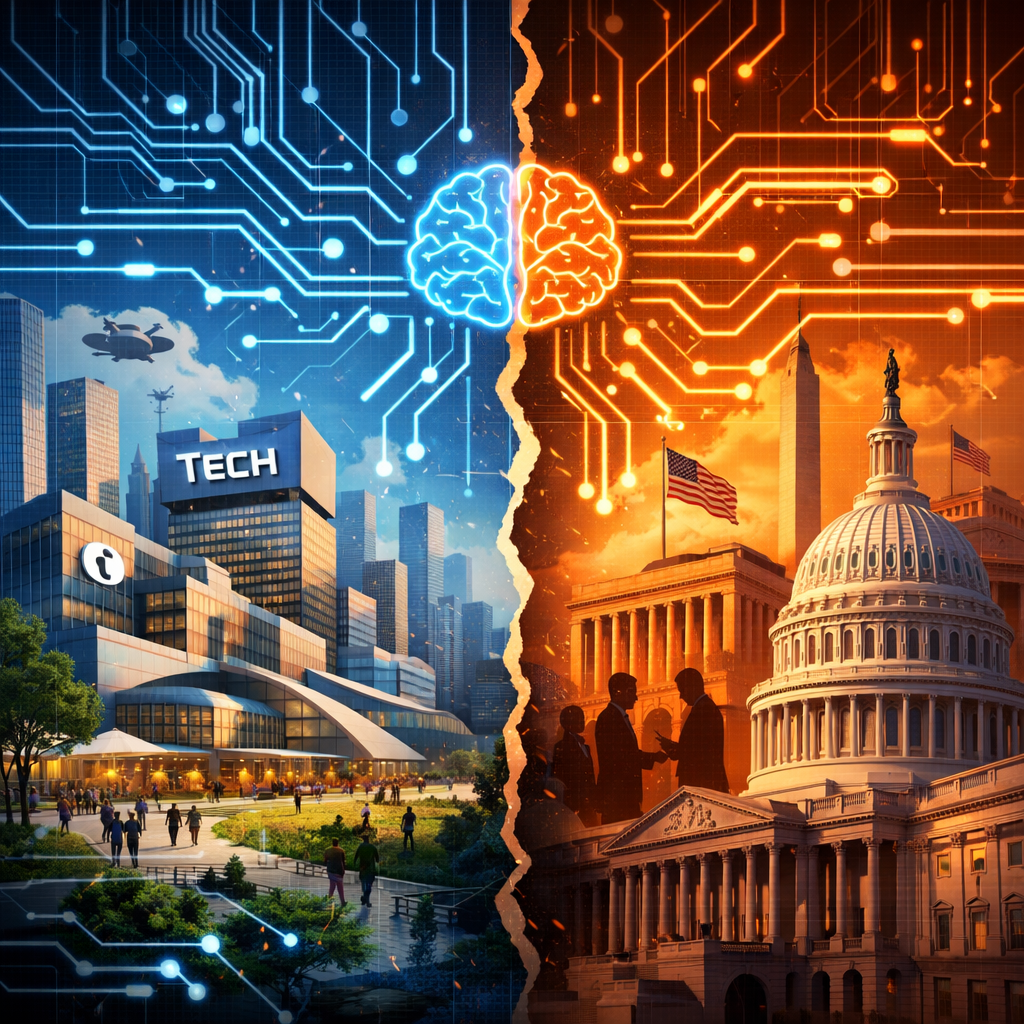
Big Tech is entering a shifting political landscape now that the 2026 midterm elections have changed power dynamics in Washington. Companies that aligned closely with the Trump administration—and benefitted from looser regulations, tax breaks, and delayed investigations—are facing renewed pressure as Democrats prepare to tighten oversight, especially around AI. These developments force Silicon Valley giants into a high-stakes balancing act: repairing bipartisan relationships while bracing for stricter regulations across states and federally.
Image Repair & Political Positioning
Recently, OpenAI hired Jessica Schumer—daughter of Senator Chuck Schumer—and rebranded its data centers as “compute campuses,” moves seen by some as attempts to clean up its public image. Similar gestures are underway across the industry: Meta, Anthropic, and others have launched public partnerships, workforce programs, and initiatives with unions or community groups to signal alignment with Democratic priorities.
These image efforts aren’t just superficial. As early as this year, several tech companies were quietly recalibrating their political engagement, anticipating Democratic gains. Meta’s president recently stressed working with the government as elected—demonstrating awareness of growing partisanship. Critics, however, dismiss some of these efforts as “optics,” warning that rhetoric alone won’t protect firms from regulatory or electoral backlash.
Regulation, State Power & the AI Wildcard
Key policy fights are already emerging. Data center siting moratoria are under discussion in various states and localities. Legislatures are drafting AI transparency, safety, and bias bills, while lawsuits and fines—like those faced by Meta and OpenAI—reinforce the risks. Federal oversight is expected to intensify under Democrats, though gridlock in Congress could slow progress.
In parallel, courts at the state level are acting with vigor. Regulations around deepfakes, chatbots, and AI are now law in some states. Others are taking aim at environmental costs tied to AI infrastructure, such as energy usage and land use for massive data centers. The Trump administration, by contrast, still emphasizes innovation freedom—signaling potential conflicts ahead over whether to prioritize economic growth or guardrails.
Financial markets, too, will have their say. A sharp sell-off following the midterms rattled investors, especially those looking toward IPOs from AI firms like Anthropic. Some analysts warn that a broader downturn—or what they call an AI bubble pop—may hit companies closely tied to regulatory uncertainty.
What Tech Should Expect Next
For Big Tech, where your headquarters is may become more critical than headquartered in Washington. State‐by‐state laws may diverge widely—some welcoming data center construction, others banning or restricting it. Local policies on AI safety, power consumption, and labor could reshape where tech firms choose to build.
Meanwhile, executive actions or vetoes from the White House may play an outsized role if Congress remains gridlocked. President Trump has emphasized both AI competitiveness and the need for consumer protections—though just how he will act remains unclear.
Public interest will be a wild card. Voters have made clear they want stronger guardrails around AI and more oversight. Industry leaders who misjudge popular sentiment could suffer not just in policy but in reputation—and, ultimately, in market value.
Why this matters: The 2026 midterms aren’t just reshuffling seats; they’re reshaping the rules of the road for AI, data, and regulation. Tech giants must decide whether to align with economic freedom arguments or embrace stronger oversight—and where that position comes from will increasingly depend on the states in which they operate. Policy watchers should track: state-level AI bills, local moratoria on data infrastructure, and how White House enforcement trends evolve under increased bipartisan scrutiny.