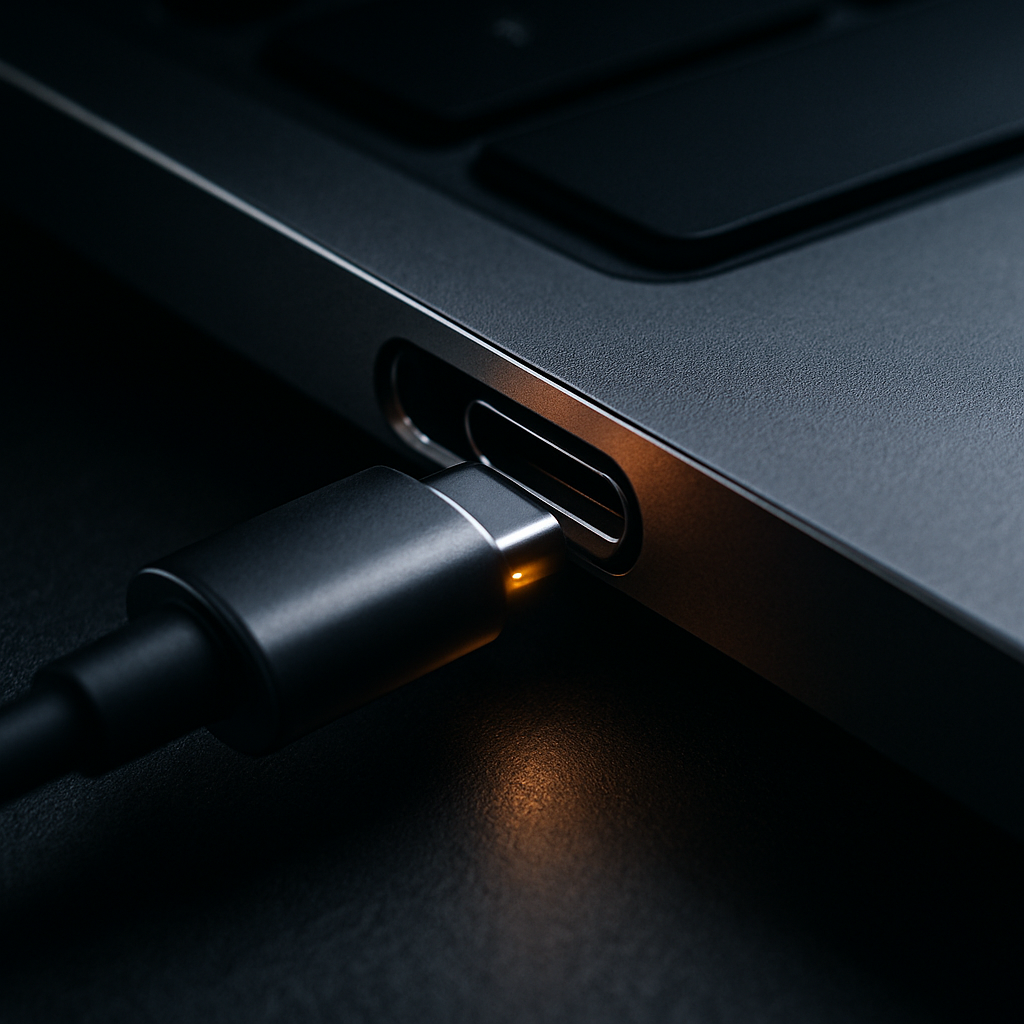
Microsoft has launched the Surface Laptop Ultra, and among its many high-end upgrades there’s one standout feature: a magnetic USB-C port. Dubbed “Magnetic Connect,” it represents a first in laptop design — a USB-C charging port with magnets built in to help the charger snap into place securely. The system still works with standard USB-C cables, but the included charger uses strong magnets along with tapered edges around the port for easier alignment and attachment.
The Surface Laptop Ultra itself is a powerhouse. Under the hood it’s equipped with Nvidia’s RTX Spark graphics, supports up to 128GB of RAM, and includes the usual array of ports you’d expect for a flagship laptop. However, it’s the magnetic port that might make the biggest impact on user experience.
Magnetic Connect: How It Works
The Magnetic Connect charger latches onto the USB-C port using strong magnets—this ensures a reliable connection without fiddling with alignment. Around the port’s perimeter, Microsoft tapered the housing to guide the charger into place. Without the magnetic tip, the port behaves like a normal USB-C port, though the edge tapering means it won’t grip standard plugs as solidly.
This concept is reminiscent of Apple’s MagSafe, though here it’s applied to USB-C rather than a proprietary connector. Microsoft appears to see this innovation as something that could spread across its product lineup, and possibly beyond.
Real-World Implications
Magnetic connectors like this help reduce wear on ports and cables, prevent damage from accidental tugs, and make plugging in easier—especially in low-light or awkward situations. For users who carry the Surface Laptop Ultra, the magnetic USB-C port could turn a small daily annoyance into something more seamless.
The inclusion of this feature in a laptop starting near the $2,600 range does raise questions about how quickly versions with this tech will trickle down to more affordable devices. Microsoft is opening pre-orders now, so we’ll soon see how customers respond to this blend of design, utility, and premium price.
What this means:Microsoft’s magnetic USB-C port is a noteworthy step toward smarter, more resilient charging solutions. It suggests the company is willing to rethink even well-established tech like USB-C. Look for this design to influence upcoming laptops—perhaps even phones—and see if competitors follow. If implemented broadly, this could become a new standard for charging convenience and device durability.