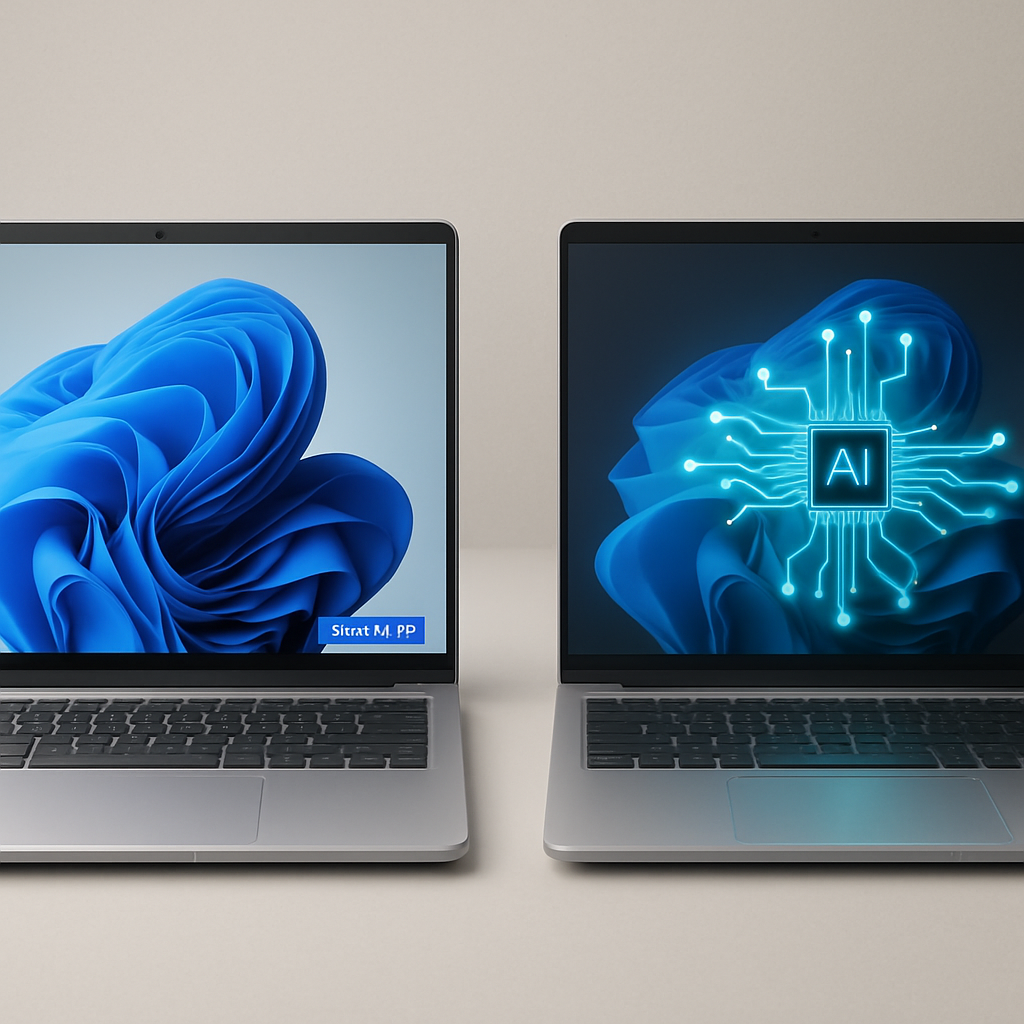
Microsoft is quietly dropping the “Copilot+ PC” designation for its Windows laptops, signaling a shift in how the company markets AI-enabled hardware. Despite fulfilling all earlier specifications required for this branding—such as including a Neural Processing Unit (NPU)—new Surface models are no longer labeled as Copilot+ PCs. While Microsoft hasn’t officially ended the badge, senior figures have indicated a move away from the branding.
What changed and why it matters
Introduced in 2024, the Copilot+ PC label was meant to highlight laptops with dedicated AI hardware and features like Recall—Microsoft’s functionality for retrieving past actions or files. The goal was to carve out a clearer category for devices capable of handling “AI on the edge.” Yet over time, the branding became confusing: many machines met the technical criteria, making the label feel less meaningful. Recall, in particular, drew criticism over its performance and value.
Recent statements from Microsoft executive Brett Ostrum suggest the company will continue building devices that satisfy Copilot+ hardware requirements but won’t use the name on new models. Despite this pullback, Microsoft still emphasizes AI integration—including hybrid cloud-edge computing—without leaning on labels that may mislead or overlap. Additionally, from external reports, major players such as Nvidia seem to omit any reference to the Copilot+ moniker in their flagship Windows AI pushes.
Impact on consumers and the AI laptop market
For consumers, this largely means less clarity around which laptops carry which features. Devices that would’ve been marketed as Copilot+ PCs may still deliver identical performance without that label. Without the designation, buyers may have to dig deeper into specs instead of relying on simple badges when choosing devices.
On a broader scale, this reflects a trend among tech brands toward dialing back marketing hype around AI hardware. As AI features become more ubiquitous, labels meant to distinguish edge-enabled devices risk becoming redundant noise for many buyers. The transition suggests Microsoft is realigning messaging to focus less on branding and more on actual capability.
This change could also ripple into certification programs and validation benchmarks. OEMs that aligned their products to meet Copilot+ criteria may need to adapt presets or marketing collateral. And for those evaluating laptops, the shift means hardware checklists—neural chips, latency, power efficiency—are becoming more important than whether a box says “Copilot+.”
What this means going forward is that Microsoft appears to be maturing its approach: moving past glitzy labels toward practical substance. Because AI features are now expected rather than exceptional in mid-to-high-end laptops, marketing needs to reflect reality. Watch for future devices where branding falls silent but capability speaks for itself, and get ready to examine what’s under the hood rather than what’s on the label.