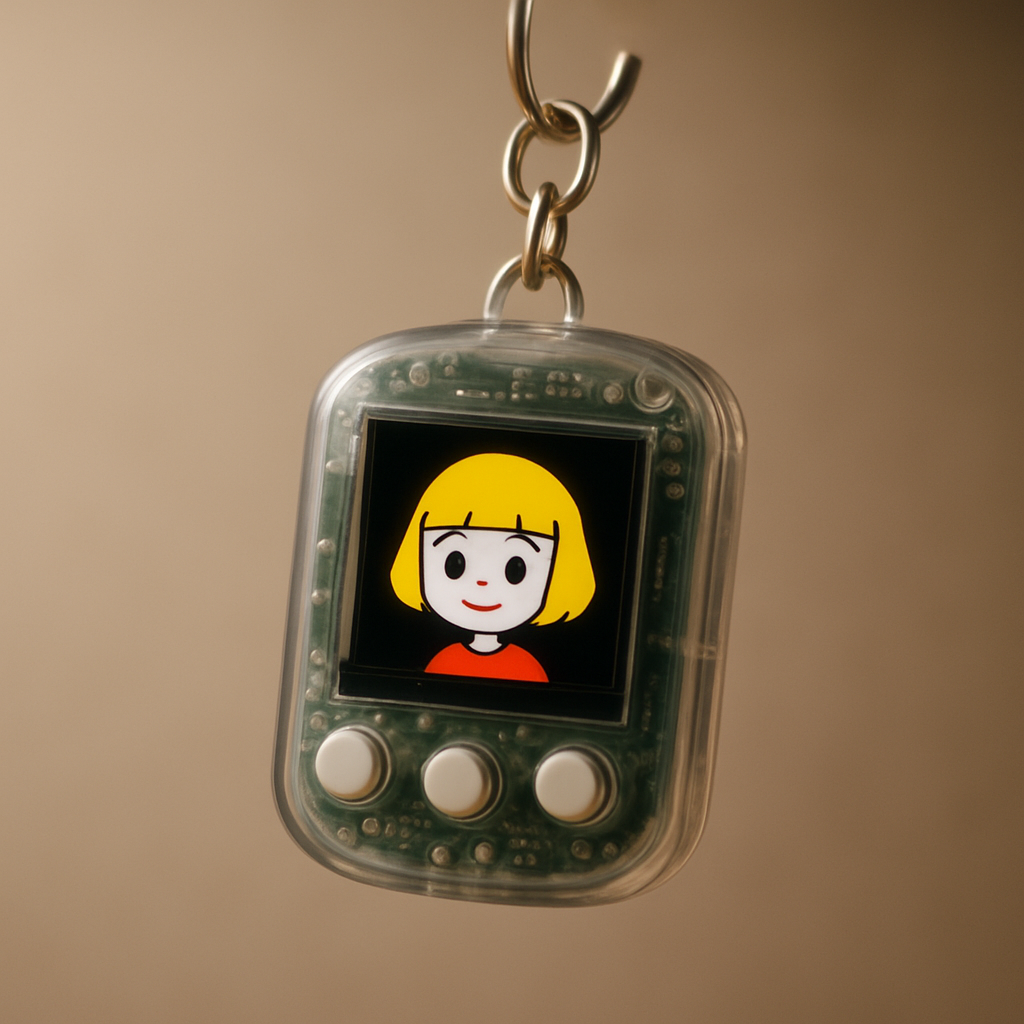
Meta has introduced its latest hardware experiment: Muse Charm, a palm-sized device designed to deliver its Muse AI assistant without relying on phones or smart glasses. Revealed at Connect 2026, this handheld unit combines a 2-inch OLED touchscreen, built-in 5G connectivity, microphones, cameras, and a fingerprint sensor—all packed into a keychain-friendly form. It’s expected to ship by December in time for the holiday season, though pricing hasn’t been finalized yet.
The Design & Functionality
Muse Charm looks and feels like a modern take on the 1990s electronic pet. On its front is a roughly 2-inch OLED touch display that showcases a customizable virtual Muse avatar. Users can personalize the Avatar’s appearance, outfit, voice, and behaviors, interacting with it through touch or voice. A fingerprint scanner serves as the device’s unlocking method. Inside, it features 5G for connectivity even without Wi-Fi, along with microphones and cameras for AI analysis and activity sensing. Despite having front and rear cameras, the device won’t support phone calls or video conferencing. It comes with features like speakers and USB-C charging, and a translucent case reveals the internal circuitry. Multiple ways to carry it are supported—from wrist straps to keychain lanyards.
Muse Expansion & Context
Muse Charm is Meta’s bold move into hardware built specifically for AI agents. The Muse assistant, already available on Android, iOS, Mac, the web, and soon Meta’s smart glasses, now gets its own dedicated ecosystem in Charm. With new retail partnerships in the mix — including Walmart, Best Buy, Gap, and others — Meta is preparing to bring Muse to more users in tangible ways.
This comes at a time when AI agent devices are getting serious attention. Earlier efforts like Rabbit R1 or Humane AI Pin raised interest, but were mostly held back by software and model limitations. Meta is diving in when those agentic AI models are gaining real utility — in tasks like booking events, shopping, or managing refunds — raising expectations for competitors like OpenAI. Rumors indicate OpenAI is planning its own hardware rollout in 2027, possibly including a phone, speaker, earbuds, or smart pen devices.
Meta is calling Charm an exploratory, version-0 product — essentially a test to see how people use a device designed solely for interacting with an AI agent. While Charm expands Muse’s presence, Meta anticipates most of its audience will continue accessing Muse via more familiar platforms like phones and glasses.
This holiday launch signals the company’s belief that AI agents are ready to go beyond apps into purpose-built devices. It’s also a test of whether people will embrace carrying around a device devoted to conversation with an AI—one that’s always available, always listening, and always processing. Privacy concerns, battery life, durability, and pricing will be key battlegrounds.
What this means: Muse Charm pushes forward the emerging category of “AI agent hardware,” where companies try to make assistants feel more accessible and integrated into daily life. Meta’s timing—after Muse has built platform momentum—gives it a strategic head start. What to watch for: battery stamina, real world usefulness, privacy safeguards, and how competitors like OpenAI respond with their own AI-first devices in 2027.