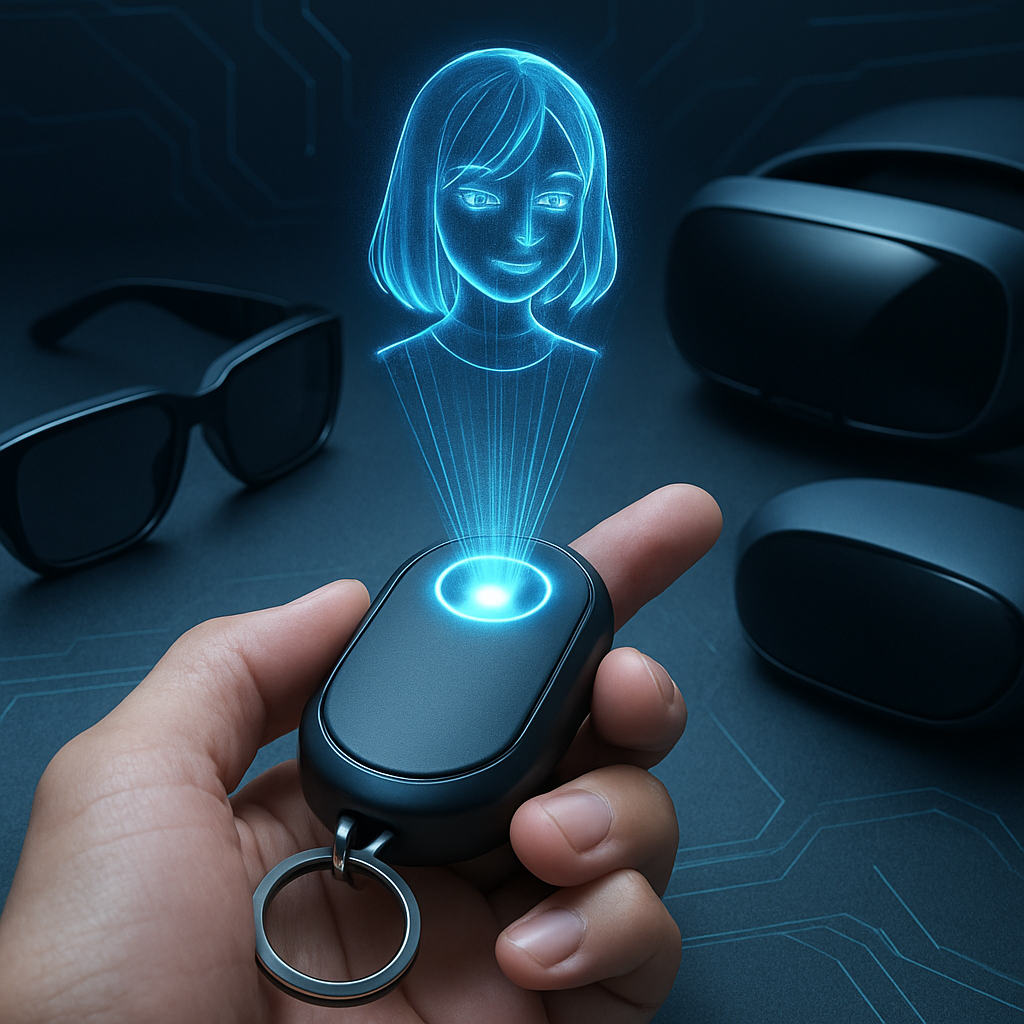
Meta has debuted its latest foray into personal AI hardware with the Muse Charm, a pocket-sized device that acts like a Tamagotchi, letting users converse and interact with an AI avatar wherever they go. Unveiled during the 2026 Connect event, the Muse Charm is about the size of a smartwatch—but designed to hang on your keychain—and packs the full power of Meta’s Muse AI, including real-time voice input, a fingerprint sensor, and a digital avatar.
A Look at Muse Charm and Meta’s Hardware Push
The Muse Charm stands out because it offers instant AI access without needing to unlock a phone or open an app. The fingerprint sensor lets users immediately start speaking, while the avatar helps make the experience feel more personal and playful. Meta aims to release it during the holiday season of this year.
This reveal is part of a broader hardware push at Connect. Meta also introduced new Meta VR Glasses, which offer full-color passthrough, a 5K display, and weigh just 100 grams thanks to a tethered puck for storage and battery. These glasses are said to support Xbox Cloud Gaming, work for PC and Mac via virtual keyboard and trackpad overlays, and deliver cinematic quality with Dolby Vision and Atmos support. Expect them in the spring, priced from $1,300.
Updates to Ray-Ban Smart Glasses and More AI Features
Meta’s Ray-Ban line is also getting upgrades: a slimmer third-gen design, a six-microphone setup tuned to cut over 90% of background noise, and a 12MP camera able to capture 3K video. The revamped Ray-Ban smart glasses now also include Meta AI activation via a button, along with enhanced battery life—nine hours of active use and up to 48 hours combining with its case. A case-only audio variant is also available starting at $349, offering media playback and hands-free calling.
On the features side, Meta is adding an FDA-cleared hearing enhancement tool to its AI glasses later this year. This feature will be part of the Meta One subscription or offered for a one-time fee of $149, with a 30-day trial window. It’s clear the company is trying to make its wearable devices more functional and more deeply integrated with daily life.
The Muse Charm might be the flashiest piece, but Meta’s broader strategy is becoming evident: a family of devices that deliver seamless, always-on AI, from keychains to glasses. Between the audible stopgap of the Ray-Bans, the visual immersion of the VR Glasses, and the portable persona of the Charm, Meta is building multiple entry points into its Muse AI ecosystem.
What this means: Meta is betting on personality and portability. AI companions in 2026 aren’t just servers-in-the-cloud—they’re physical, tactile, interactive devices. Consumers will soon be comparing their AI experiences not just on speed or smarts, but warmth, immediacy, and form factor. AI personas are becoming hardware anchors. Watch for how users adopt these new devices—and how Meta balances the playful with the useful.