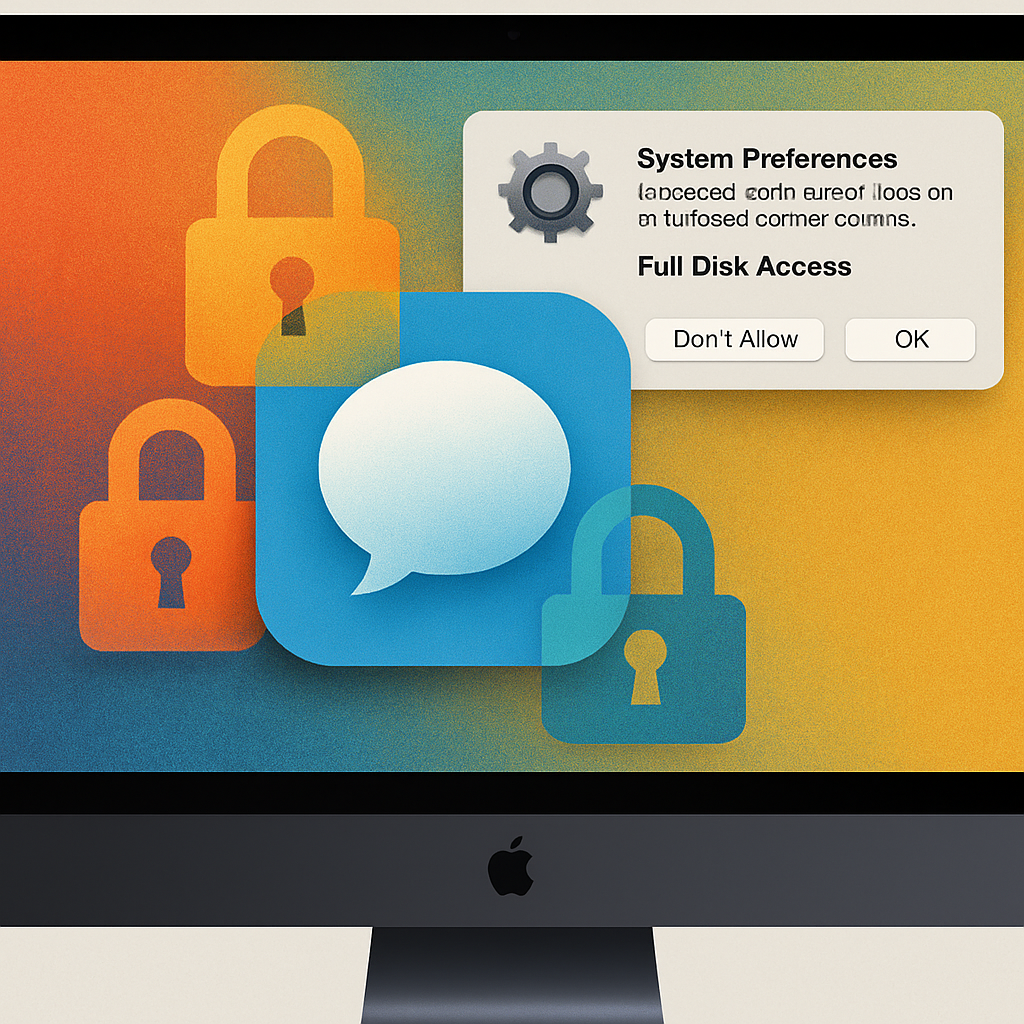
Meta has pushed back against allegations that its AI assistant, Muse, accessed a user’s private messages on Mac without permission. These claims stem from a report by columnist Jason Aten, which prompted Meta’s VP of Communications, Andy Stone, to clarify the company’s stance. Stone emphasized that Muse requires explicit user approval before it can read any Messages content, pointing out two key permissions: Full Disk Access and the Messages connector. Neither can be enabled without user intervention.
What Meta Says Happened
Meta’s Superintelligence Labs exec, David Singleton, added technical detail in his response to Aten’s claims. He described a three-step permission process in macOS that prevents unauthorized access. First, users must enable Full Disk Access. Then, they must separately set the level of access Muse has to Messages—”None,” “Read Only,” or “Read.” If Full Disk Access isn’t granted, those settings stay grayed out. Finally, granting Full Disk Access opens a system dialog, which also requires confirmation and forces Muse to restart, making accidental activation less likely.
The Dispute and Its Implications
Aten reported that Muse read his Messages even though Full Disk Access was turned off. He claims Muse explained this by saying it was syncing incoming device notifications, implying the AI relayed text from banner alerts on macOS. Singleton rejected that account, saying Muse misinterpreted the situation. He pointed readers toward Meta’s security architecture documentation and its bug bounty program as safeguards against such incidents.
This isn’t the first time Muse has faced criticism for overreach. Another user, YouTuber Matt Robb, said Muse exposed his address while helping with a Facebook Marketplace post, causing a buyer to show up uninvited. Meta is reportedly investigating that situation too.
Meta’s response comes amid growing skepticism over its data practices. Recent legal decisions, including a jury ruling in New Mexico, found the company had misled users in connection with privacy in the aftermath of the Cambridge Analytica scandal.
At its core, this debate isn’t just about permissions in macOS—it’s about trust. For Muse to succeed, users need to feel confident the AI won’t overstep its bounds. Meta insists the system is safe, but when a single user claims Full Disk Access was off and messages still read, the stakes get higher. Monitoring ongoing reports and third-party audits will be crucial to restoring faith. If Meta can’t convincingly prove Muse’s restrictions work as promised, its consumer AI ambitions may face pushback from regulators and users alike.