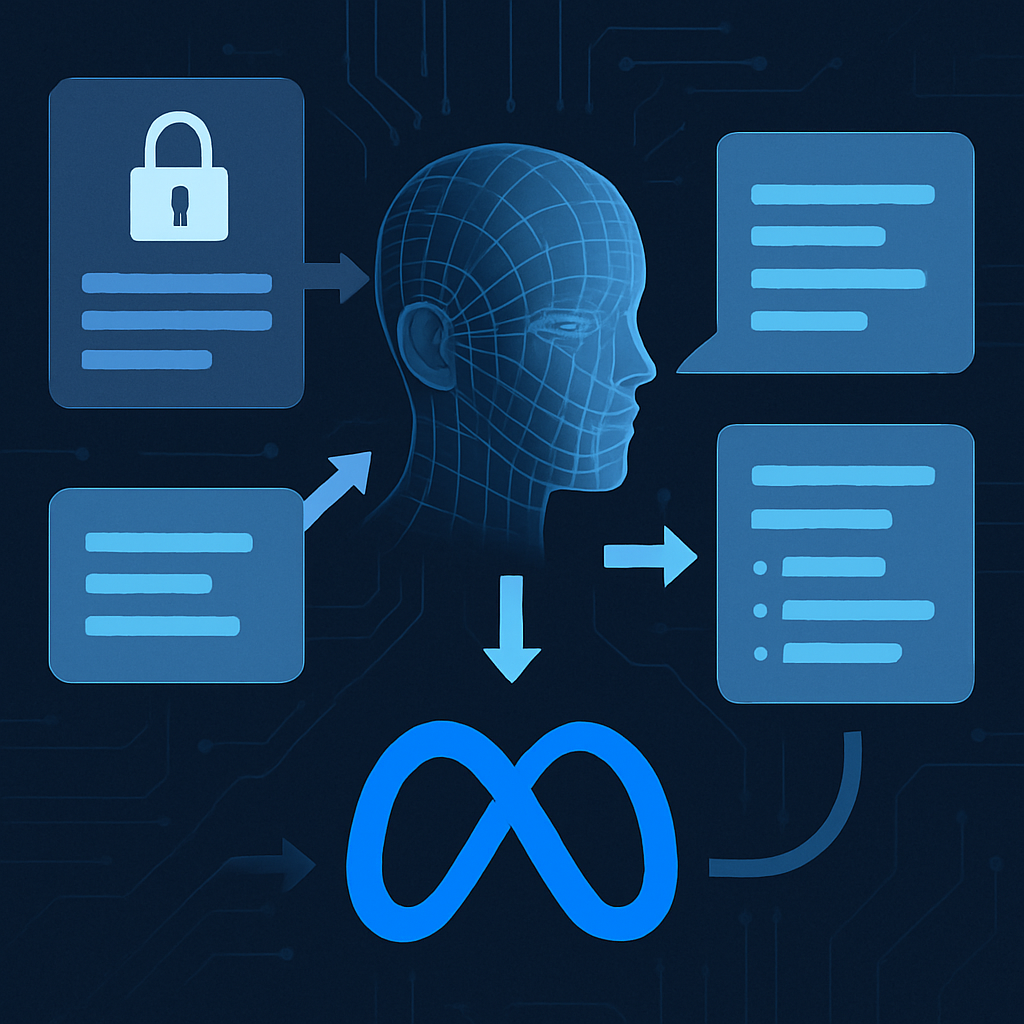
Meta is introducing a new contributor pricing model for its Muse Spark AI tool that gives steep discounts to users willing to share how they use the AI—including both prompts and outputs. This represents a shift in how the company collects usage data, by compensating contributors rather than relying on standard data collection.
How the Contributor Pricing Works
Under Meta’s standard pricing, using one million prompt (input) tokens with Muse Spark costs about $1.25, while one million output tokens are priced at $4.25. With the new contributor tier, users pay approximately $0.10 for one million input tokens, and $0.20 for one million output tokens—significantly lower rates in exchange for allowing Meta to inspect and use the AI interactions. These interactions will help Meta improve future versions of its models. If a user opts out, they must pay the higher, standard price.
What This Means in the Broader Context
The notion of sharing usage data isn’t novel—many AI providers allow opt-outs. But Meta is the first of the major frontier labs to put real discounts on that trade-off. This follows earlier controversies around data collection. A previous internal tool intended to track employee computer use generated criticism and was suspended earlier this year.
Academic and enterprise customers frequently resist having their internal workflows used for model training. AI models used in coding agents, for example, typically improve when all session data is retained and used for fine-tuning—something tools like Claude did by default between spring and fall of 2025. Meta’s program may appeal to organizations who are comfortable sharing non-sensitive usage details and want to experiment without paying full enterprise rates.
At the same time Meta isn’t alone in lowering costs. Competitors recently reduced token-processing charges: one lab’s newest models trimmed pricing, another cut costs for cached tokens, and others slashed rates in various tiers just last month. The contributor model may help Meta stay competitive in price-sensitive AI markets.
Meta says that its contributor tier “lowers the barrier to entry for prototyping, testing integrations, and scaling experiments where training on your data is acceptable.” While some large companies might prefer enterprise plans that guard data retention and privacy, the new model could nudge many to rethink what kinds of data are truly proprietary and what can be shared.
Its success will depend on how Meta handles data privacy and transparency—how much users trust it to protect sensitive information. Also key will be whether the cost savings outweigh the perceived risks. For now, Meta is betting that a financial incentive can loosen the grip of enterprise customers and bring more usage into its feedback loops.