In a significant move to bolster user security, Meta has unveiled a suite of innovative tools designed to protect Messenger and WhatsApp users from the escalating threat of online scams. Announced during Cybersecurity Awareness Month, these enhancements aim to detect suspicious activities in real-time and provide users with robust account protection mechanisms.
Escalating Threats Targeting Vulnerable Populations
The digital landscape has witnessed a surge in scams, particularly targeting vulnerable demographics such as older adults. Scammers exploit messaging platforms and social media to deceive individuals, often building trust to compromise accounts and subsequently target contacts for further fraudulent activities. The FBI’s 2024 Internet Crime Report highlighted the severity of this issue, revealing that Americans over the age of 60 suffered losses amounting to $4.8 billion due to fraud in the previous year.
Meta’s Proactive Measures Against Scam Networks
Since the beginning of 2025, Meta’s dedicated teams have successfully disrupted nearly 8 million accounts associated with global scam operations. These networks, operating from regions including Myanmar, Laos, Cambodia, the UAE, and the Philippines, have been known to exploit dating apps, social media platforms, and cryptocurrency channels to deceive unsuspecting victims.
Enhanced Detection Features and User Alerts
To combat these sophisticated scams, Meta has introduced several key features:
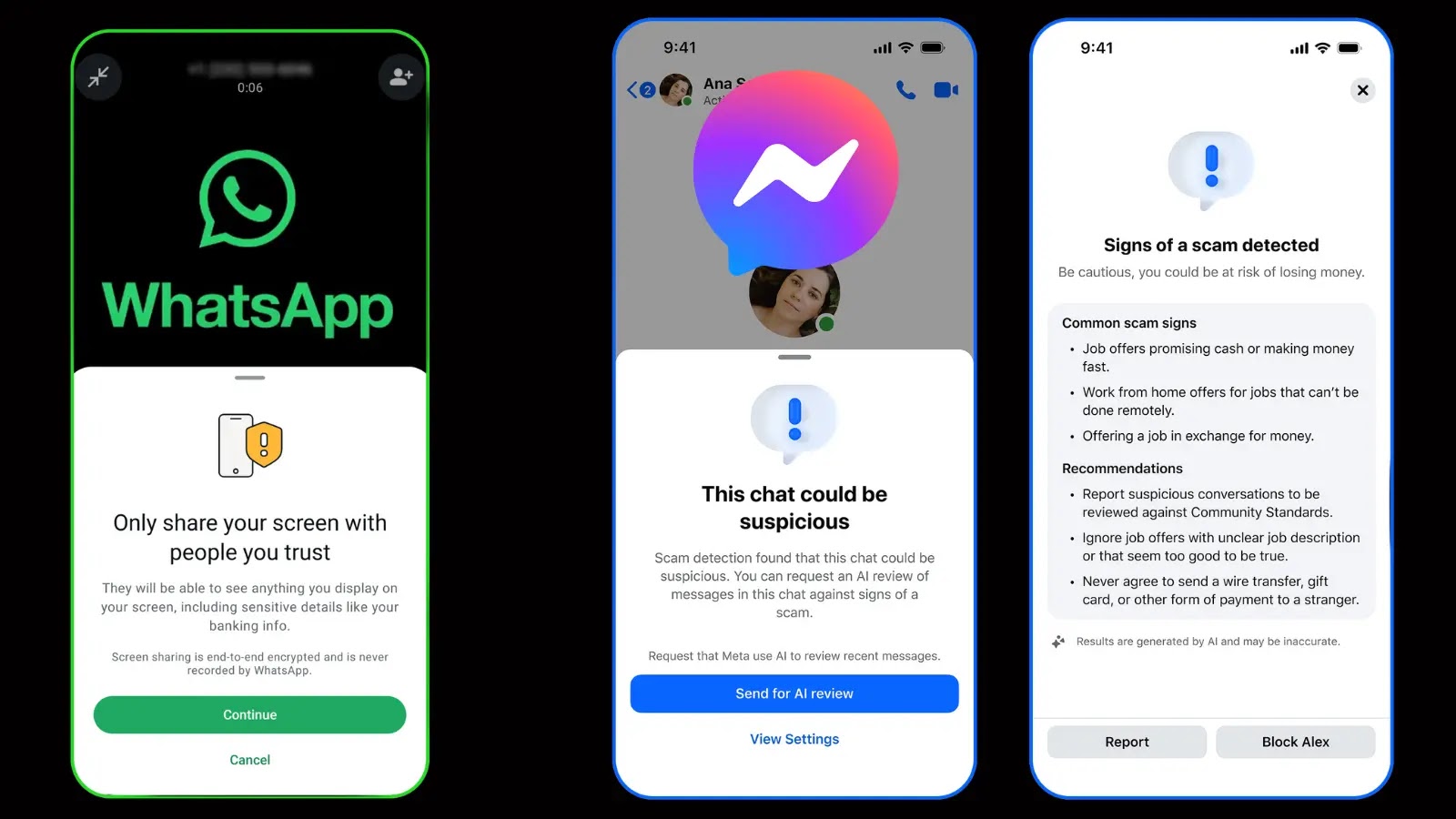
– WhatsApp Screen Sharing Alerts: Users will now receive warnings when sharing their screen during video calls with unknown contacts. This measure addresses a common tactic employed by scammers to extract sensitive information, such as banking details or verification codes.
– AI-Driven Scam Detection in Messenger: Currently in testing, this advanced feature utilizes artificial intelligence to identify potentially fraudulent messages from new contacts. It offers users the option to review chats and provides guidance on blocking or reporting suspicious activity. Additionally, users will receive information on prevalent scams and recommended actions if a potential scam is detected.
Strengthening Account Security with Passkeys
Meta is advocating for the adoption of passkeys across its platforms, including Facebook, Messenger, and WhatsApp. Passkeys offer seamless, biometric logins using fingerprints, facial recognition, or PINs, thereby reducing reliance on traditional passwords, which are often vulnerable to breaches.
Comprehensive Privacy and Security Checkups
To empower users in managing their security settings:
– Security Checkup on Facebook and Instagram: This feature reviews current settings and suggests updates to enhance account security.
– Privacy Checkup on WhatsApp: Users can manage group invitations and other privacy options, ensuring greater control over their interactions.
Identifying and Mitigating Emerging Scam Trends
In collaboration with Graphika researchers, Meta has identified several emerging scam trends:
– Fake Home Remodeling and Debt Relief Sites: Scammers lure seniors with fraudulent government benefits through deceptive ads on platforms like Facebook and Google.
– Impersonation of Official Services: Fraudulent money recovery services mimic the FBI’s Internet Crime Complaint Center (IC3) site, while fake customer support pages hijack brand comments to push refunds through direct messages or forms.
Guidelines for User Safety
Meta advises users to exercise caution with unsolicited messages, refrain from sharing personal or financial information, and verify issues through official channels. Families are encouraged to discuss potential red flags, such as urgency or secrecy in communications. Resources from organizations like AARP’s Fraud Watch Network and the Federal Trade Commission (FTC) offer valuable reporting options and guidance.
Collaborative Efforts to Combat Elder Fraud
Meta is intensifying collaborations to address elder fraud:
– National Elder Fraud Coordination Center: Partnering with AARP, Amazon, Google, and others, Meta aims to tackle elder fraud through shared intelligence and coordinated investigations.
– Tech Against Scams Coalition: In collaboration with Match Group, Meta has dismantled scam-linked Facebook Groups. Globally, initiatives include training seniors in Thailand on digital literacy and launching awareness campaigns in Europe and India featuring local creators.
Ongoing Commitment to User Safety
These initiatives underscore Meta’s unwavering commitment to evolving defenses against cross-border threats. By continuously updating and enhancing security measures, Meta strives to keep users ahead of scammers, ensuring a safer digital environment for all.