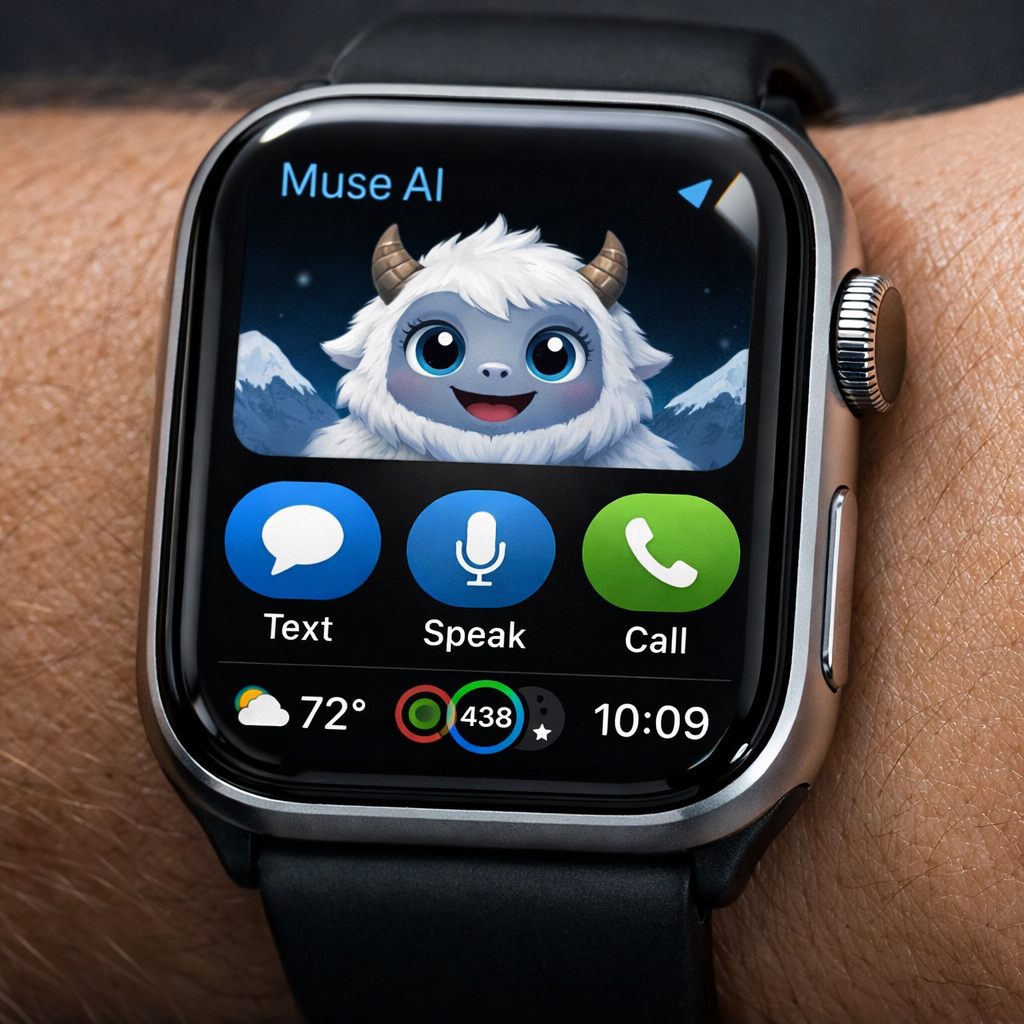
Meta has introduced Apple Watch support for its Muse AI agent, bringing proactive access to the virtual assistant right to your wrist. The latest update to the Muse iOS app enables users to interact with Muse directly from the Watch, whether that’s sending text, dictating messages, or placing voice calls through the agent. There’s also a new Muse complication for faster launch from the watch face.
Muse, a personal AI tool from Meta, is embedded across several Meta platforms including Facebook and Instagram, but today’s release lets it operate as a standalone app on the Watch. The update places Meta’s yeti-like Muse avatar front and center, echoing the design of its physical counterpart, the Muse Charm, unveiled earlier this fall.
With Muse on Apple Watch, users can engage via multiple input types: texting Muse, using voice dictation, or making voice calls, offering flexibility especially when busy or on the move. The complication enhances usability by providing one-touch access from the watch face without navigating through multiple menus.
Design & Integration
The Watch interface aligns closely with Meta’s existing ‘Muse Charm’ device, visually and functionally reinforcing the brand’s design language. Muse’s familiar yeti-like look serves both as a branding element and a user-friendly avatar for the AI assistant.
Before this update, Muse existed primarily on Meta’s mobile apps and as part of its broader AI rollout. This expansion onto wearable tech underscores Meta’s intention to make its AI assistant as ubiquitous and accessible as possible.
What This Means
Adding Apple Watch support gives Muse a new dimension in hands-free utility and convenience. Users who rely on smartwatches for quick actions will find value in being able to use Muse without reaching for their phones. This move also strengthens Meta’s competitive stance in the personal AI space, challenging offerings from Apple and others by tying its assistant into more devices.
Meta’s Muse on the Apple Watch may also hint at deeper integration plans or further wearable expansion down the line, as more companies explore embedding AI into everyday accessories. It’s another example of virtual agents moving beyond phones and PCs into our most personal tech, the devices we wear.