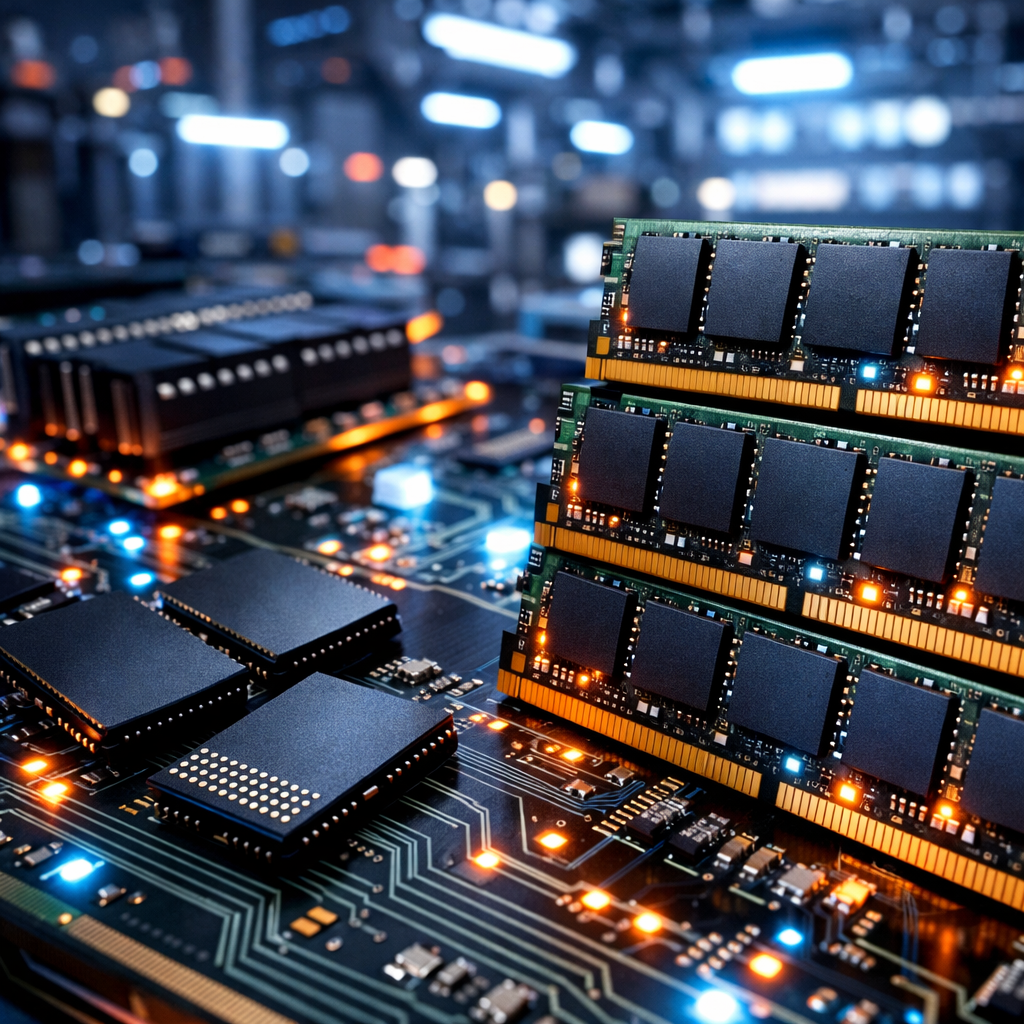
A severe global memory chip shortage—driven largely by surging demand from AI data center buildouts—is expected to drag on until at least 2030, creating broad cost and supply pressures across the electronics industry.
Surging Demand Meets Crimped Supply Chains
Memory manufacturers are seeing unprecedented order volumes as data centers scale up for AI infrastructure. SK Hynix recorded record revenue in Q3—104 trillion won (about $77 billion)—and net profits of 39.7 trillion won (near $29 billion). But even with this financial strength, the company warns that supply won’t keep pace with demand through the rest of the decade. Contributing factors include the complex processes required for next-generation memory chips and the time-intensive nature of building new fabrication plants. Ramping up capacity now won’t meaningfully prevent shortages for several years.
P.C. Boards Also Strained; OEMs Act Preemptively
It’s not just memory under stress—printed circuit boards (PCBs) are also in tight supply. AI servers rely on custom motherboards designed for performance and thermal efficiency. That design specialization has limited what PCB manufacturers can deliver, squeezing supply across the board. Major PC makers like HP and Dell are securing contracts well ahead of delivery to lock in supply and price stability.
Impact for Consumers—And Apple Too
Long-term shortages are expected to drive up prices of consumer electronics, including smartphones, laptops, tablets, and Macs. Apple’s scale and supply chain reach give it more negotiating power and early access to critical components. The company has already taken steps to secure memory chips in advance to shield customers from price surges. Still, even the biggest players can’t indefinitely absorb rising costs. Unless supply begins to match demand—or demand slows—those increases will eventually be reflected in retail pricing.
Analysts warn there’s little hope for relief until at least 2030. The timelines for expanding leading-edge foundries and scaling memory manufacturing make it unlikely that supply will catch up sooner. Unless there is a disruptive change—such as a decline in AI infrastructure investment—the industry is in for several more years of tight margins, inflated costs, and constrained supply.
What this means: For tech users, expect elevated prices across devices and components—RAM, storage, motherboards—for the next few years. For companies, the shortage underscores the importance of supply chain resilience. To ride out what looks like a prolonged squeeze on memory and PCB supply, firms may need to invest in early procurement, diversify suppliers, and consider product designs that are less dependent on scarce leading-edge memory.