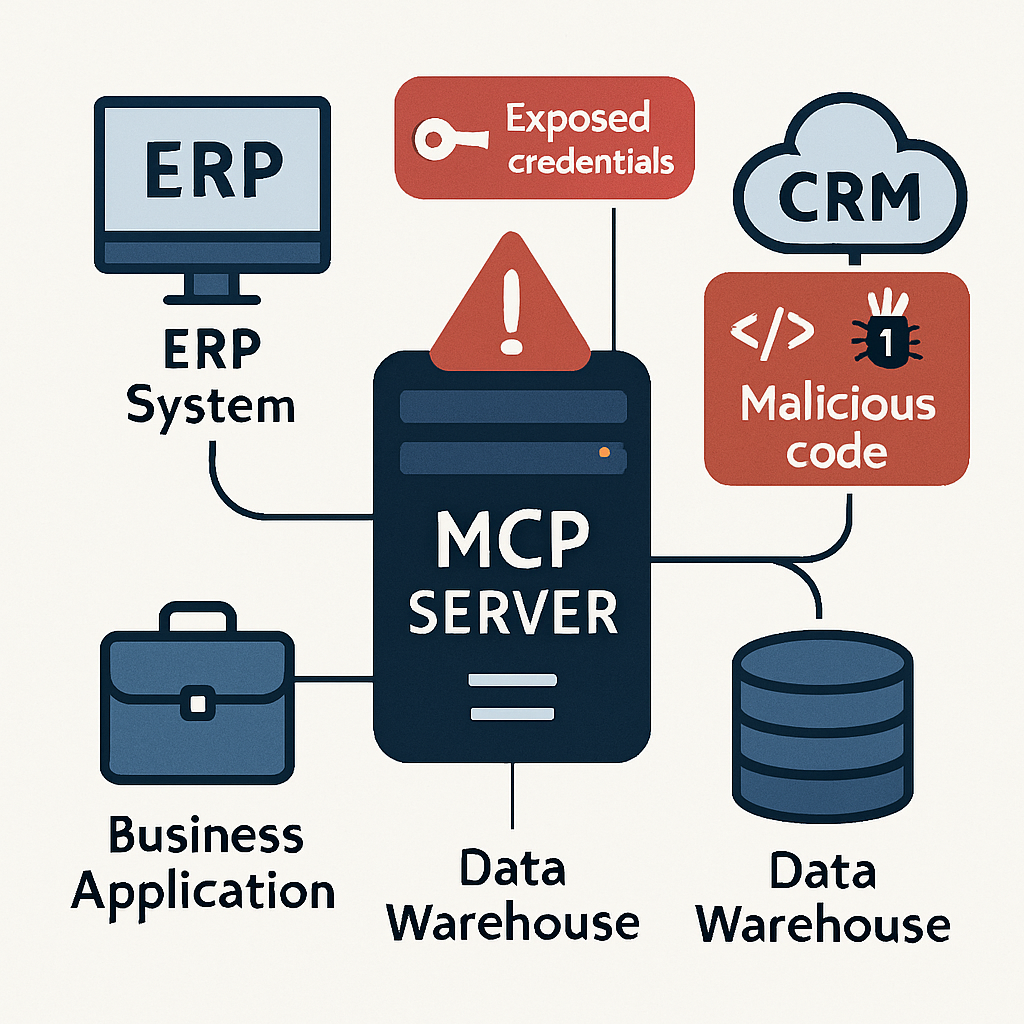
As enterprises increasingly integrate AI agents into their systems, the Model Context Protocol (MCP) has emerged as a pivotal standard. Originally introduced by Anthropic, MCP enables AI assistants to connect seamlessly with external tools and data, allowing them to perform actions such as retrieving database records, accessing files, or invoking APIs. Central to this functionality is the MCP server, which acts as an intermediary between the AI agent and the enterprise systems it interacts with.
However, this integration brings with it significant security concerns. MCP servers often store sensitive credentials—such as API tokens, service account keys, and other secrets—in plaintext configuration files. This practice poses a substantial risk: if these files are inadvertently left on a disk, copied between machines, or committed to a version control system like Git, they become easily accessible to unauthorized parties. An attacker gaining access to these credentials can exploit them to infiltrate enterprise systems, leading to potential data breaches and unauthorized actions.
Another pressing issue is credential sprawl. In the absence of centralized secret management, identical credentials are frequently duplicated across various configuration files and environment variables. This redundancy spans development, staging, and production environments, making it challenging to track and manage these secrets effectively. Consequently, credentials often remain static and unrotated for extended periods, increasing the window of opportunity for malicious actors to exploit them.
Furthermore, MCP servers are susceptible to prompt injection attacks. In such scenarios, an attacker embeds malicious instructions within documents, support tickets, or web pages that an AI agent processes. The AI agent, interpreting these hidden directives as legitimate commands, may execute unauthorized actions, leading to data exfiltration or system compromise.
To mitigate these risks, organizations should adopt robust security practices for MCP server management. Implementing centralized secret management solutions can help control and monitor the distribution and usage of credentials. Regularly rotating secrets and conducting thorough audits of configuration files can reduce the likelihood of credential exposure. Additionally, employing input validation and sanitization techniques can protect against prompt injection attacks, ensuring that AI agents process only trusted and verified inputs.
As AI continues to permeate enterprise operations, the security of MCP servers must be a top priority. By proactively addressing these vulnerabilities, organizations can harness the benefits of AI integration while safeguarding their critical systems and sensitive data.