Developers of Rust-based software were recently targeted in a large-scale supply chain attack that compromised some of the ecosystem’s most trusted crates. Two widely used Rust packages—arrayref and append-only-vec—were altered to depend on a malicious crate called proc-macro1, allowing malware to execute automatically when projects were built. In total, these compromised crates have been downloaded over 244 million times. ([cybersecuritynews.com](https://cybersecuritynews.com/rust-packages-malware/))
How the Attack Worked
The intrusion began with proc-macro1, a crate named to mimic the legitimate proc-macro2—a common Rust dependency. The attackers used typosquatting, copying the description and documentation of the genuine crate to avoid suspicion. ([cybersecuritynews.com](https://cybersecuritynews.com/rust-packages-malware/))
The two main crates, arrayref (version 0.3.10) and append-only-vec (version 0.1.9), both maintained by the same developer, added proc-macro1 as a dependency within a single manifest line, elevating the malicious package from being isolated to being included in real, critical paths. ([cybersecuritynews.com](https://cybersecuritynews.com/rust-packages-malware/))
Pushing Malware Through the Build
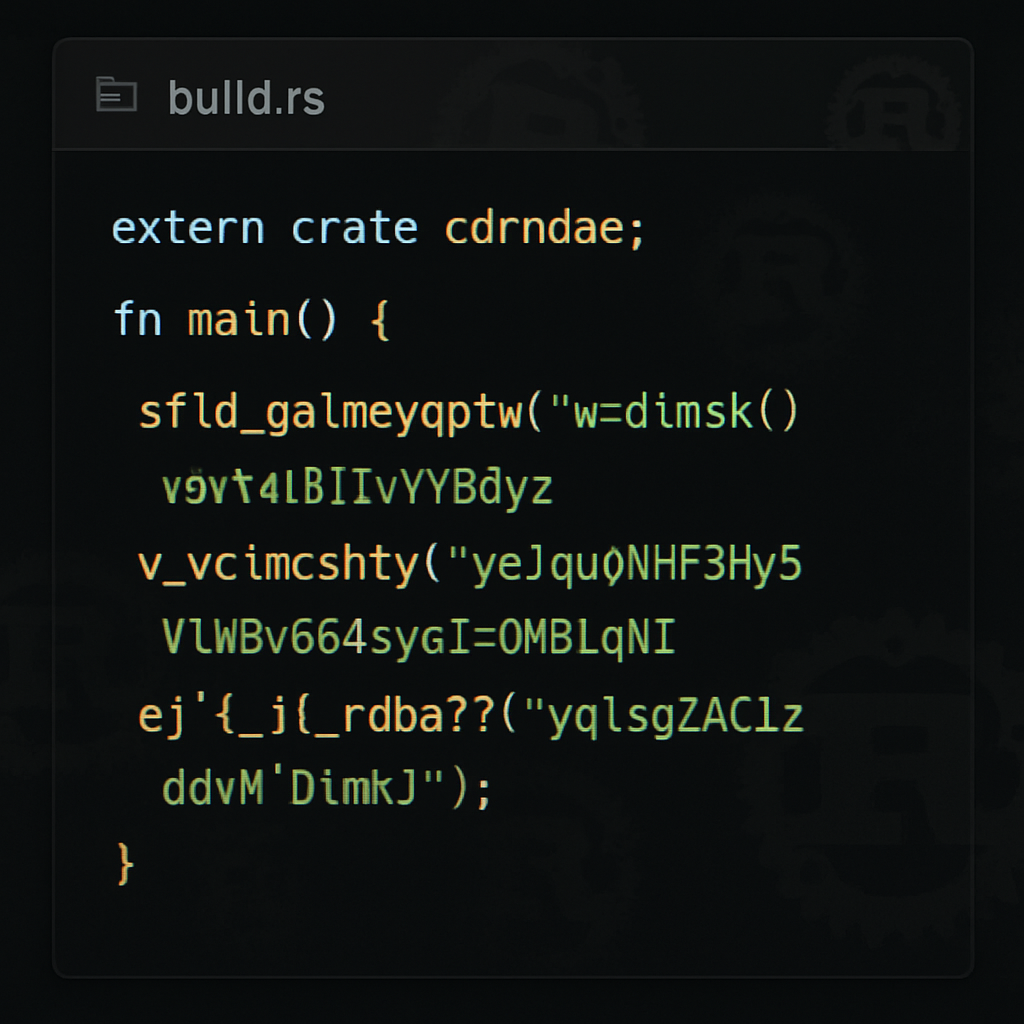
The visible code in arrayref and append-only-vec was unchanged—only the build configuration was altered. The scandalous code was tucked into proc-macro1’s build.rs, which Cargo compiles and runs automatically during builds. This meant developers didn’t have to call any function from the compromised packages to get exposed. ([cybersecuritynews.com](https://cybersecuritynews.com/rust-packages-malware/))
Once built, the script downloaded a platform-specific binary from a remote server referenced by IP. Attempts were made to hide the payload’s destination via base64-encoded strings. On macOS and Unix systems, the malware made itself executable and launched in the background, persisting across reboots through mechanisms like LaunchAgent. The payload functioned as an infostealer—harvesting credentials from Chromium-based browsers and wallets via browser extensions. Remote shell capabilities for command “call-backs” were also built in. ([cybersecuritynews.com](https://cybersecuritynews.com/rust-packages-malware/))
The Response & Fallout
Researchers at Aikido Security flagged proc-macro1 minutes after the incident began. Rust’s Security Response Team (RustSec) then yanked proc-macro1 and several related lookalikes—packages with names like “aovine”, “arone”, “arone naoi”, and “tinymember.” They also removed the tainted versions of arrayref, append-only-vec, and internment (version 0.8.7), and locked the maintainer’s account. Early signs suggest the maintain-er’s credentials were compromised, not that the maintainer acted maliciously. ([cybersecuritynews.com](https://cybersecuritynews.com/rust-packages-malware/))
The entire breach, from initial publishing of tainted content to remediation, ran for about two hours early on August 20, 2026. ([cybersecuritynews.com](https://cybersecuritynews.com/rust-packages-malware/))
Protecting Yourself From Similar Attacks
If your project built within this two-hour window, your systems—especially CI pipelines and local cache—may already be compromised. Key defensive steps include pinning arrayref to a safe version (below 0.3.10), reviewing recent build logs, and enabling two-factor authentication on crate publication accounts. ([cybersecuritynews.com](https://cybersecuritynews.com/rust-packages-malware/))
This incident underscores a broader risk in open-source package ecosystems: code executed at build time, such as build.rs scripts, can operate with full privileges, sidestepping manual code reviews focused on visible source. Dependency trust must be as rigorously checked as the code itself. ([cybersecuritynews.com](https://cybersecuritynews.com/rust-packages-malware/))
This marks one of the biggest compromises of Rust crates ever seen by download volume—244 million downloads—because thousands of projects transitively include crates like arrayref. ([cybersecuritynews.com](https://cybersecuritynews.com/rust-packages-malware/))
Analysis: This supply chain assault isn’t an isolated fluke. It illustrates a growing weaponization of development tools and build automation. Attackers no longer need to inject malicious logic into the main application code—they can hide in invisible, auto-executed build steps, mining credentials silently. Organizations relying on open-source ecosystems must build better safeguards: force dependency audits, pin versions, adopt publishing best practices, and strengthen account security. Watch how RustSec and other package authorities evolve rules around forced 2FA, manifest file review, and build-time script permissions. These will likely be central to preventing the next breach.