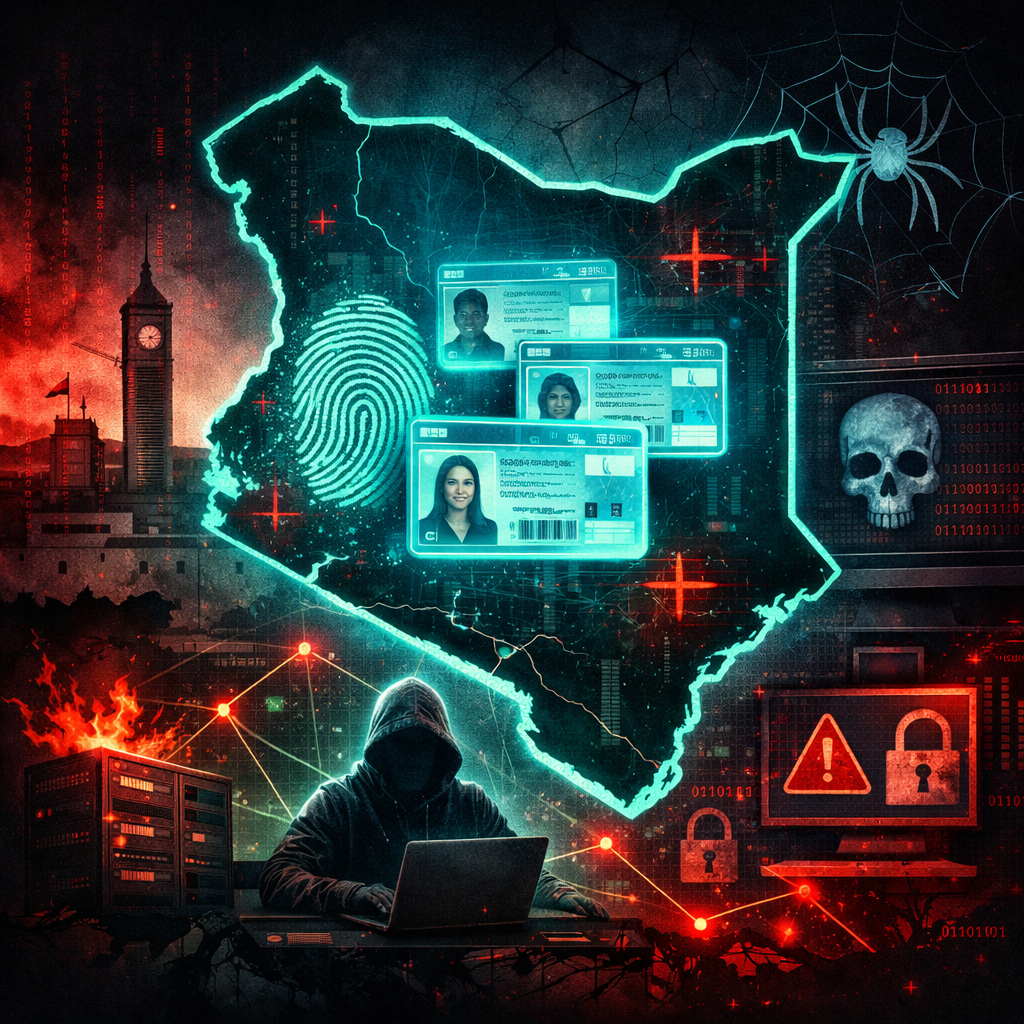
Kenyans are facing a major privacy crisis as an alleged data breach on the government’s eCitizen platform has compromised identity records of more than 32 million people. The exposed information reportedly includes national ID numbers, passport data, dates of birth, fingerprints, tax identification numbers, and digital health IDs — though health records themselves appear untouched. The Kenyan government has started investigating after reports surfaced on November 24 of unauthorized access. Despite the breach, the eCitizen portal is still live and functional.
What Was Leaked and What Remains Unclear
An examination of the leaked files revealed highly sensitive details including Kenyan national ID numbers, copies of passports, fingerprint data, and Kenya Revenue Authority (KRA) PINs. Digital health IDs issued by the Social Health Authority were also included, even though no medical histories or specific health records seem to have been exposed. The total amount of data allegedly taken—about 740 gigabytes—consists of 600 GB of identity documents, 100 GB of database content, and 40 GB of source code, as claimed by a group calling itself ByteToBreach. However, those figures haven’t been independently confirmed.
It’s also claimed that systems connected to eCitizen’s single sign-on (SSO) framework might have been accessed, potentially giving the hacker avenues into other government services. Officials have not yet verified if the breach extended beyond eCitizen’s stored files to live authentication systems.
Official Response & Required Protections
Kenya’s State Department for Immigration and Citizen Services has acknowledged the breach and is probing the scope and source of the incident. As per Kenyan law, any entity that controls personal data must report a breach to the Data Commissioner within 72 hours if there’s a risk of harm.
Residents have been advised to immediately change their eCitizen passwords and remain cautious of phishing or impersonation scams via phone, SMS, email, or messaging platforms. The government emphasized accessing the portal directly rather than through links and warned against sharing verification codes or financial PINs like those used in mobile money systems.
Nonetheless, experts warn that even after securing login credentials, the danger lingers. Identity documents and biometric data—even once passwords are reset—can still be used by fraudsters in identity theft, impersonation, or social engineering attacks.
Why This Breach Is Significant
eCitizen is central to how Kenyans interact with government: it’s used for passport and driver’s license applications, business registrations, and payments for public services. It is deeply embedded in the national digital identity infrastructure, so any attacker’s access to its data could allow misuse across multiple government systems.
The potential damage extends beyond Kenya’s borders: fingerprint data, identity numbers, and biometric identifiers are highly coveted in global identity fraud markets. Exposure of such data can lead to long-term, unfixable harm for millions.
The full scope of this event is still being mapped. It remains to be confirmed which records were truly accessed, how the breach occurred, and who inside or outside the system might be held accountable. Transparency in the coming days will be critical.
Why This Matters: This breach underscores the risks governments face in protecting large pools of digital identity data. As nations digitize services and rely on centralized identity platforms, gaps in security or delayed detection can lead to cascading damage. For Kenya, this is a moment to reinforce governance, accelerate forensic analysis, and share clear guidance to mitigate damage for affected individuals. Globally, the incident serves as a warning that no system — even one as foundational as identity infrastructure — is immune. What comes next will test Kenya’s ability to respond, rebuild trust, and secure its digital ecosystem.