Apple appears to be dropping the long-touted “MacBook Ultra” name in favor of sticking with MacBook Pro for its upcoming laptop lineup. Invitations for an event in Los Angeles later this week carry the tag “Pro and tell,” hinting that the rumored 14- and 16-inch models—expected to feature touch-enabled OLED displays—will remain under the Pro banner, not Ultra.
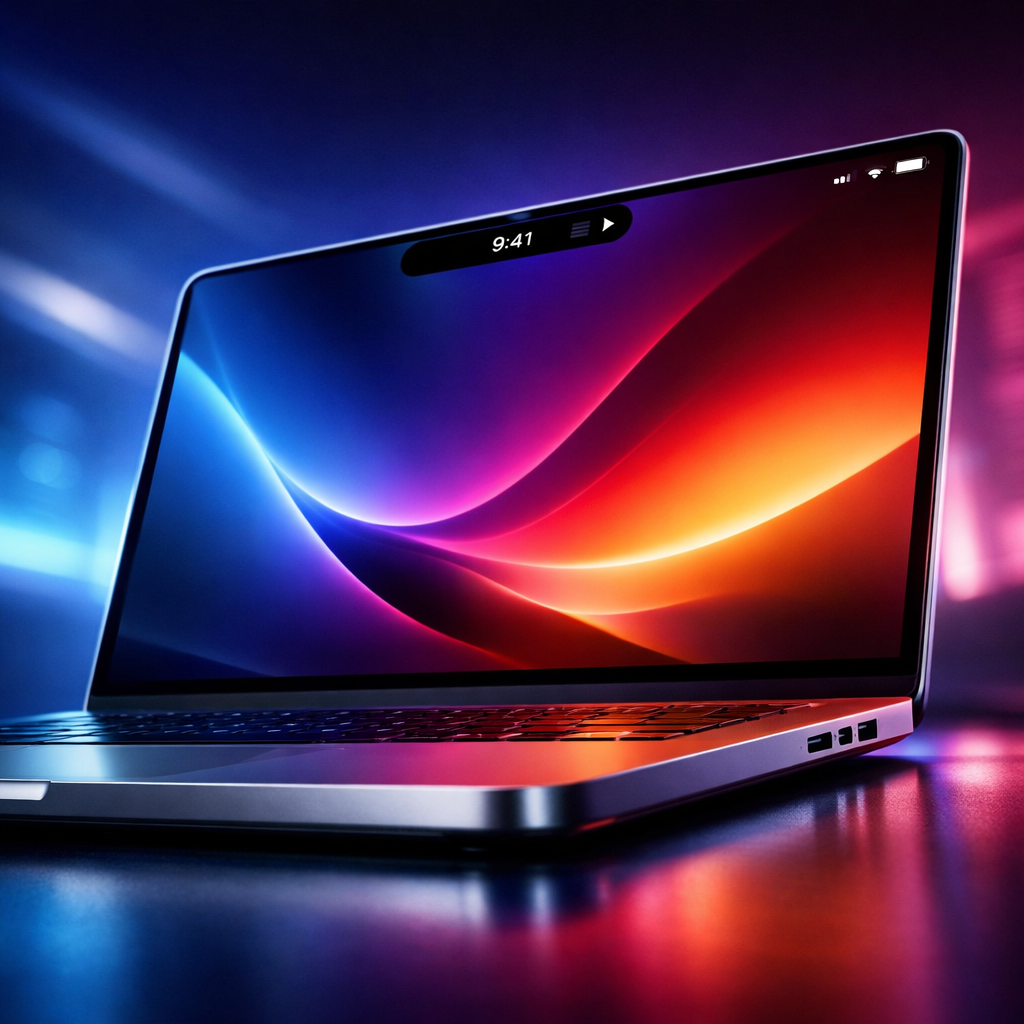
The event kicks off at 10:00 a.m. Pacific Time tomorrow, where Apple is expected to unveil the new MacBook Pros along with refreshed versions of the iPad mini and iMac. A base 14-inch MacBook Pro model has also been teased among the launches. Rumored specs include thinner bezels, Dynamic Island replacing a notch, and upgraded chipsets labeled M5 Pro and M5 Max, all wrapped in a lighter, slimmer chassis.
What We Knew So Far
The name “MacBook Ultra” had circulated heavily among analysts and leakers as the likely branding for Apple’s next wave of premium laptops. macOS Golden Gate beta code suggested support for touch interactions in apps such as Safari, Notes, Photos, and Quick Look—features often associated with touchscreens. These hints reinforced expectations that Apple would finally bring touch to its laptop line.
Yet earlier projections appear to have shifted. The “Pro and tell” tagline aligns with the idea that these more significant design updates—OLED displays, thinner bezels—are enhancements to the Pro lineup, not a new Ultra series. This suggests Apple concluded the Ultra label might complicate its naming strategy rather than enhance it.
Why Apple Might Be Holding Off
Establishing a new product family isn’t trivial. Introducing Ultra would require defining what sets it apart from the Pro line—design, performance, price. It also carries the risk of consumer confusion. Speculation around Ultra had set high expectations for transformative changes. By upgrading the Pro line instead, Apple can deliver most of the anticipated innovation while leveraging an existing, trusted brand.
Another factor is timing. The Pro models are expected tomorrow, alongside hardware refreshes of other devices. With so much happening, introducing an Ultra line might dilute the focus. Staying with MacBook Pro ensures consistency and clarity across announcements.
Ultimately, the decision signals that Apple’s new flagship laptops will bring major upgrades—OLED display, touch support, new chips, sleeker design—but under the familiar MacBook Pro name. The Ultra moniker lives on in rumors, but won’t appear in the upcoming releases.
What this means: Apple is focusing on evolutionary improvements within its MacBook Pro line rather than launching a separate Ultra tier. Buyers should expect a next-gen Pro with touch-enabled OLED screens, thinner bezels, Dynamic Island, and new M5 Pro/Max chips, but not a rebranding. What to watch: pricing, release dates, and whether Ultra emerges later as a distinct model or remains an abandoned concept.