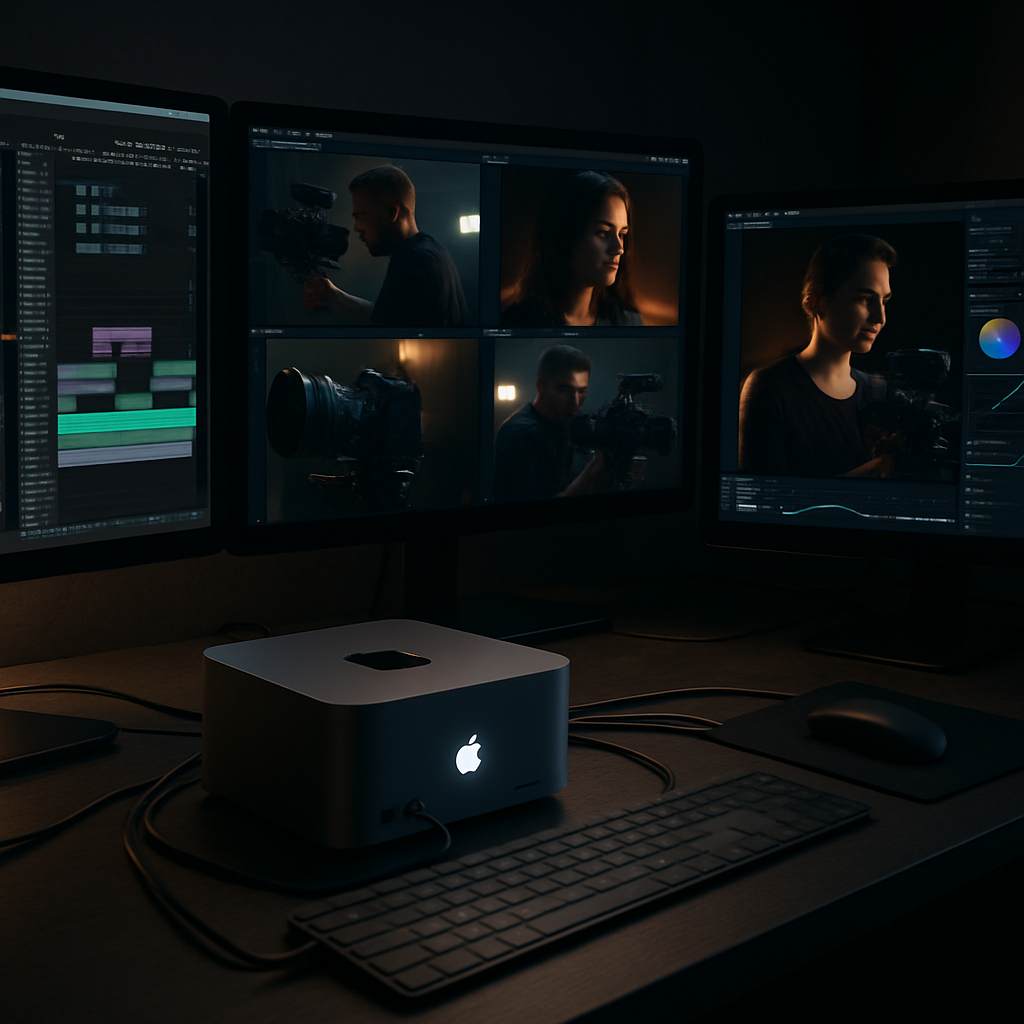
Apple’s latest Mac Studio and the updated Mac mini (with the M5 Pro) now include built-in Genlock—a timing technology long used in broadcast studios. This marks a shift for video creators, as Genlock has until now required bulky and pricey external hardware to sync multiple cameras and audio sources manually. With it integrated, productions can avoid hours spent aligning footage frame-by-frame.
What’s Changing for Filmmakers and Streamers
Genlock was introduced last year to select iPhones—namely the iPhone 17 Pro and Pro Max—as part of a push to give creators more professional-grade tools. Apple also rolled out APIs so third-party developers could support Genlock workflows.
With the new hardware, video editors using Mac Studio and the latest Mac mini models get footage that’s already time-aligned the moment it’s brought into apps like Final Cut Pro. That means synced audio even when you switch between microphones or camera angles, and smoother playback—especially on external monitors or in setups prone to dropped frames.
Where It Still Falls Short
Even with Genlock built into Apple’s newer Macs, there’s no live feed functionality from Final Cut Camera on iPhones to Mac Studio. That limits how much can be monitored in real time during shoots, meaning some productions will continue using iPads or other devices for live control.
An illustrative test came in May 2026, when Apple covered an LA Galaxy vs. Houston Dynamo FC match using only iPhone 17 Pros and live switching. Its use of over a dozen phones highlighted how far mobile-visual tech has come—but also exposed issues like heavy compression, aggressive image processing, and shakiness in tracking where Genlock alone couldn’t fix everything.
These new Mac Studio models include Thunderbolt 5 ports, which will likely factor into video-centric workflows as edit suites adopt the update.
The inclusion of Genlock at the hardware level in Mac Studio and M5 Pro Mac mini models is a watershed moment for video professionals. It delivers big gains right out of the box—tighter syncing, fewer hours of tedious manual work, and better playback where it counts. But integration isn’t perfect yet; there are still gaps in live monitoring and image fidelity. Going forward, what matters is how software and hardware continue to evolve in tandem. With this step, however, Apple has clearly raised its baseline for what creators can do without needing a loft full of gear.