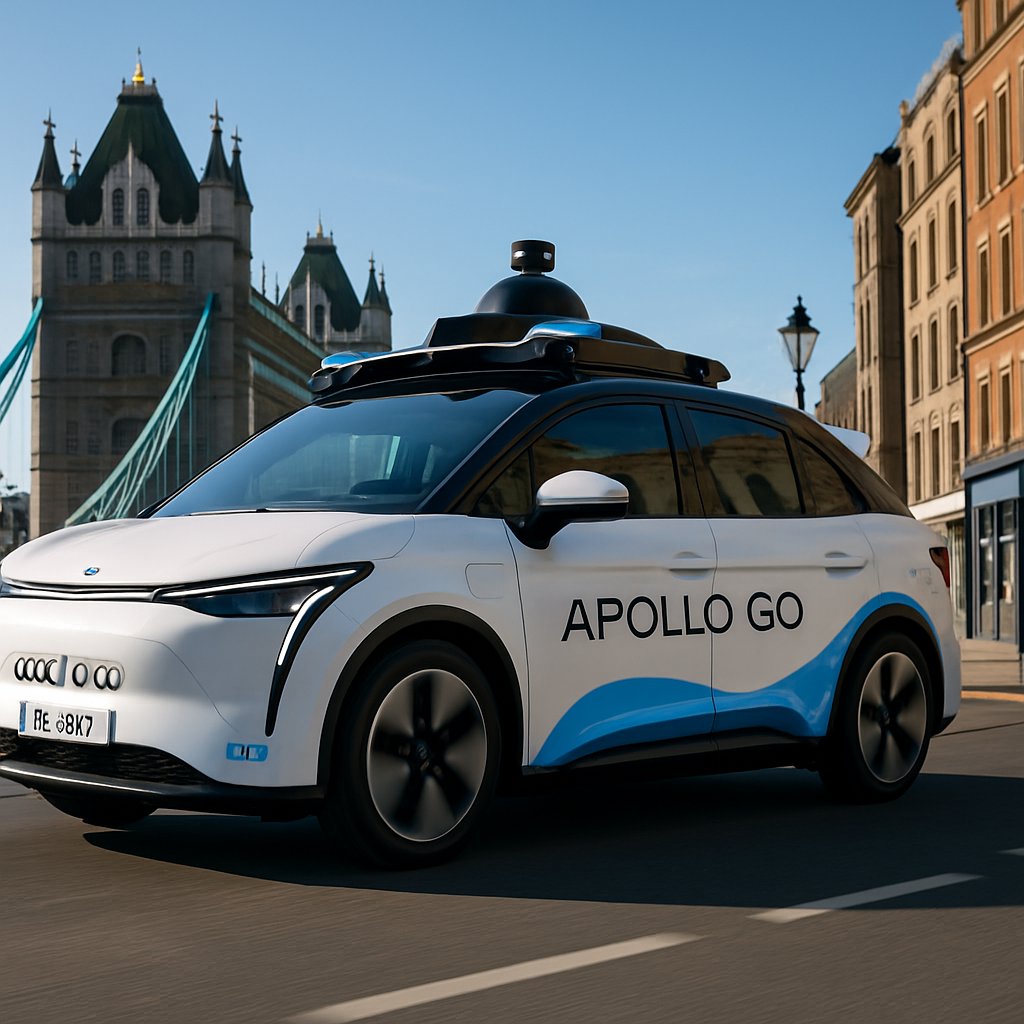
Lyft and Chinese technology giant Baidu have commenced testing autonomous vehicles in London, marking a significant step toward introducing robotaxi services in the United Kingdom. This initiative follows their strategic partnership established nearly a year ago, aiming to deploy Baidu’s Apollo Go RT6 robotaxis across key European markets via the Lyft platform.
The testing phase began on Tuesday in London’s borough of Brent, with human safety operators present to monitor the vehicles’ performance. This initial phase focuses on collecting road data, validating vehicle performance, and refining the system’s ability to navigate London’s complex urban environment. The companies plan to invite the public to hail these robotaxis starting in 2027, pending regulatory approvals.
Lyft’s acquisition of Freenow, a German taxi and multi-mobility app, in 2025 for approximately $197 million, has provided the company with a foothold in Europe’s ride-hailing market. The robotaxi services will eventually be available through Freenow, expanding Lyft’s presence in the region.
London is becoming a focal point for autonomous vehicle testing, with several well-funded companies vying to be first to market with robotaxis. In April, Waymo began testing its autonomous vehicles with human safety operators in the city. Uber, in partnership with self-driving tech company Wayve, also announced plans to launch a robotaxi service in London this year, initially with human safety operators before transitioning to fully driverless operations.
Lyft and Freenow are collaborating closely with safety and city officials, including Transport for London (TfL) and the Centre for Connected and Autonomous Vehicles (CCAV), to ensure compliance with evolving autonomous vehicle regulations. The UK government is in the process of creating such regulations and has opened applications for companies interested in an autonomous vehicle pilot program under government oversight.
Upon launch, Freenow by Lyft plans to operate a hybrid network, integrating human drivers operating taxis and private-hire vehicles alongside robotaxis. This approach aims to support professional drivers while introducing autonomous technology to the market.
The entry of Lyft and Baidu into London’s autonomous vehicle landscape underscores the rapid advancements in self-driving technology and the growing competition among companies to establish a presence in this emerging market. As testing progresses and regulatory frameworks develop, the success of these initiatives will depend on public acceptance, safety performance, and the ability to seamlessly integrate autonomous vehicles into existing transportation networks.