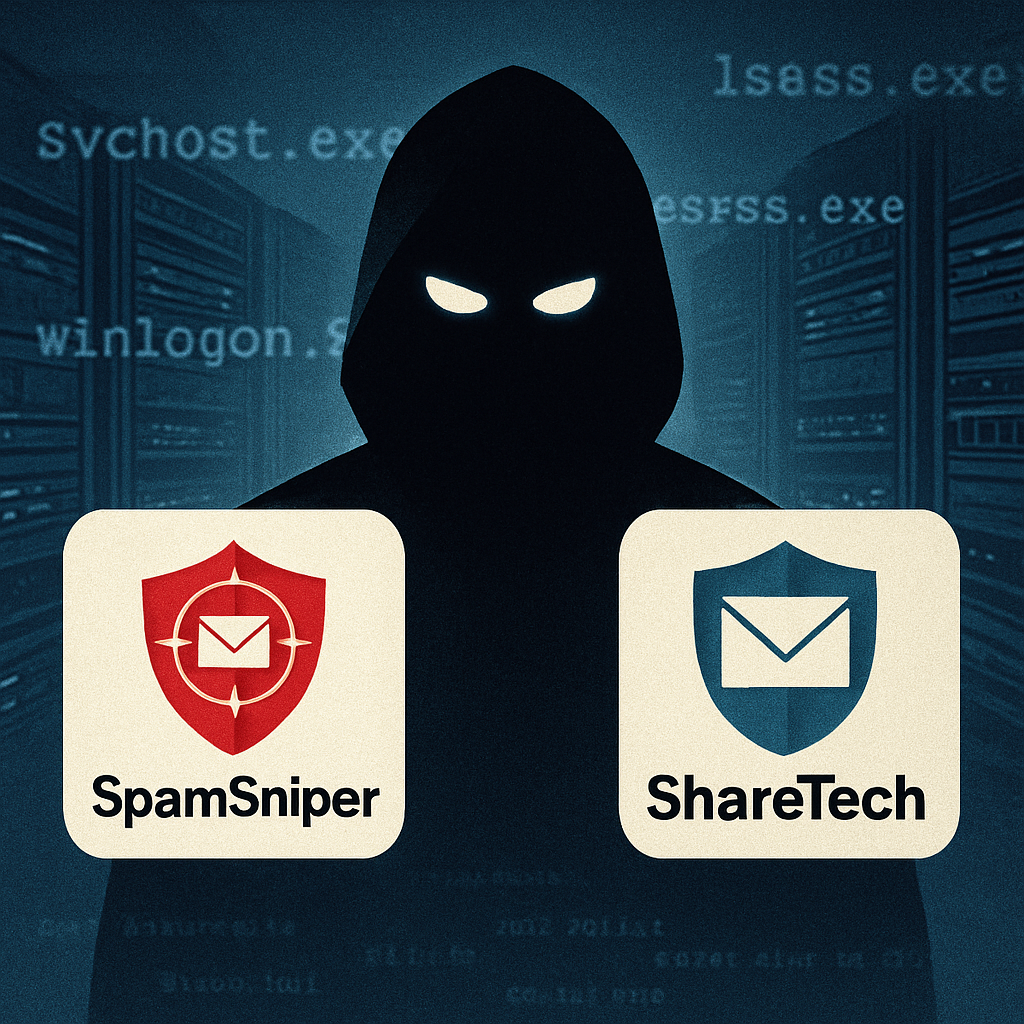
Attackers targeting telecom and network gear in South Korea and Taiwan have upgraded their stealth game: instead of simply reusing system binary names, new Linux backdoors now impersonate legitimate email security tools to evade detection. Researchers uncovered these threats disguised as well-known software like SpamSniper and ShareTech—used in enterprise environments in those countries—making them harder to spot during routine checks.
Impersonation Beyond Simple Names
Traditionally, malware authors disguised their tools by borrowing familiar file or process names from operating system components. The newest variants go further, replicating security software names—some even taking on conventions tied to specific vendors’ tools. For example, one backdoor mimics SpamSniper’s PID file or process names, while others assume names typically reserved for Oracle database components like ora_pmon. These tweaks are not cosmetic but strategic evasion techniques designed to fool system administrators and defenders.
New Variants: BPFDoor and AVERAT
These backdoors are part of a family tracked by security firm Rapid7. The BPFDoor variants—seen in South Korea—exploit Linux’s Berkeley Packet Filter (BPF) functionality to activate only when triggered by a specific “magic packet.” New features include wrapping that packet inside standard HTTPS POST traffic to bypass deep packet inspection.
Meanwhile, Taiwan is facing infections from a Linux implant called AVERAT. Delivered via a dropper in ShareTech devices, this threat uses SMTP as a communication channel with its command-and-control server. Its dropper installs two malicious binaries, clears them after ten seconds to cover its tracks, and supports a broad set of commands—from directory traversal and process control to full interactive shells and remote code loading. The implant also mimics the names of legitimate services like those of SpamSniper and ShareTech for added camouflage.
Threat Actor & Tactics
The backdoor activity is tied to a group known by many names—Red Menshen, Earth Bluecrow, DecisiveArchitect, Red Dev 18—that has been active since at least 2021 against telecoms across Asia and the Middle East. These actors appear to be refining their toolkit in response to public threat analysis.
Key evasive measures include abusing common enterprise tools and behavior: using process names of known services, hiding in encrypted traffic, and leveraging BPF (Berkeley Packet Filter) to avoid detection. The use of SMTP and repeated, timed checks to C2 servers furthers the stealth—all while making the attack look like legitimate network operations.
Defensive Posture: What Organizations Should Do
To protect their systems, enterprises need to look for rare or abnormal BPF filters and raw sockets when such capabilities are not required. They should watch for outbound connections via TCP port 25 coming from processes that aren’t mail servers, detect processes masquerading as system daemons, and lock down management access to edge appliances like routers and DVRs.
This development underscores how attackers are exploiting the assumed trust in secure email gateways. By mimicking processes and behaviors tied to email filtering tools widely installed in South Korea and Taiwan, they’re hiding in plain sight inside organizations’ perimeter defenses.
What this means: alerting mechanisms based solely on process names or signature-based network rules are no longer sufficient. Defenders must shift to behavioral analytics, zero-trust network designs, and stronger baseline visibility to detect these localized watering-hole threats. Watch for unusual activity from processes that “look” legitimate—because they may not be.