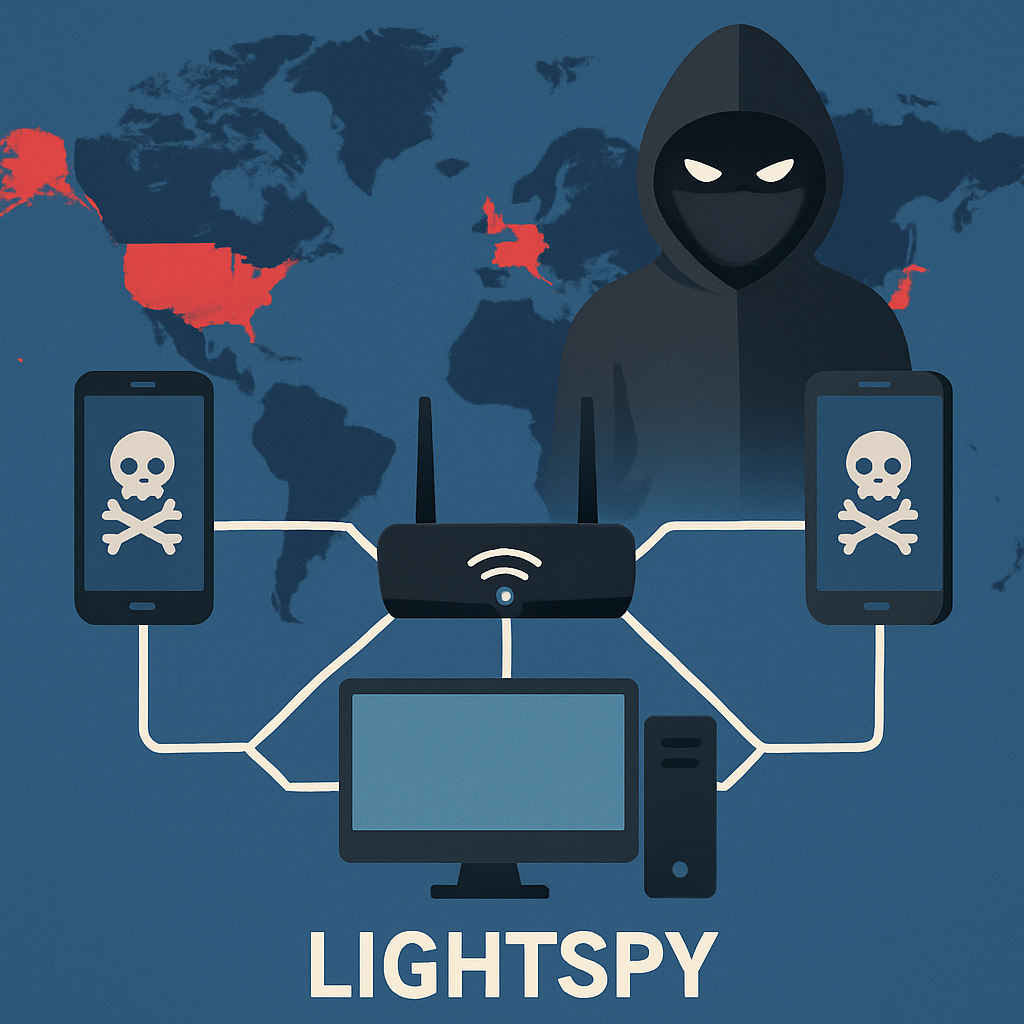
Security researchers have uncovered that the LightSpy spyware, previously associated with Chinese state-backed hackers, has expanded its reach to victims in over a dozen countries, including the United States and several European nations. This development marks a significant escalation in the spyware’s deployment beyond its initial confines.
Originally identified in 2018, LightSpy has evolved into a sophisticated commercial spyware platform. Operated by a single threat actor, it now offers custom branding, billing systems, and demonstration capabilities, catering to a clientele that includes governments, enterprises, and military organizations. This evolution underscores the growing commercialization of spyware tools, extending their availability beyond traditional nation-state actors.
LightSpy’s modular architecture enables it to target a wide array of devices, encompassing smartphones, Apple devices, Linux servers, and Windows PCs. By exploiting vulnerabilities specific to each platform, the spyware can exfiltrate sensitive data such as precise location information, chat messages, screen recordings, and stored passwords. Notably, it also possesses the capability to remotely wipe and destroy data on compromised devices, adding a layer of destructiveness to its arsenal.
A recent and concerning development is LightSpy’s ability to infect routers, a tactic not previously observed. By compromising routers, attackers can gain visibility into and access to all devices connected to the same network. Some of these compromised routers have been linked to NATO member countries, highlighting the potential geopolitical implications of such intrusions.
Arctic Wolf, the cybersecurity firm that conducted the research, reports that LightSpy operates a network of at least 117 servers distributed across multiple countries. This extensive infrastructure facilitates the spyware’s widespread deployment and management.
In a revealing operational security lapse, one of LightSpy’s operators used the spyware’s administrative panel to place a food order, inadvertently exposing his real name and office address. This misstep provided researchers with valuable information, linking the latest activities to a Chinese contractor.
The expansion and commercialization of LightSpy reflect a broader trend in the cyber threat landscape, where sophisticated surveillance tools are increasingly accessible to a wider range of actors. This proliferation poses significant challenges for global cybersecurity, as it blurs the lines between state-sponsored and private sector cyber operations. Organizations and individuals must remain vigilant, implementing robust security measures to protect against such advanced threats.