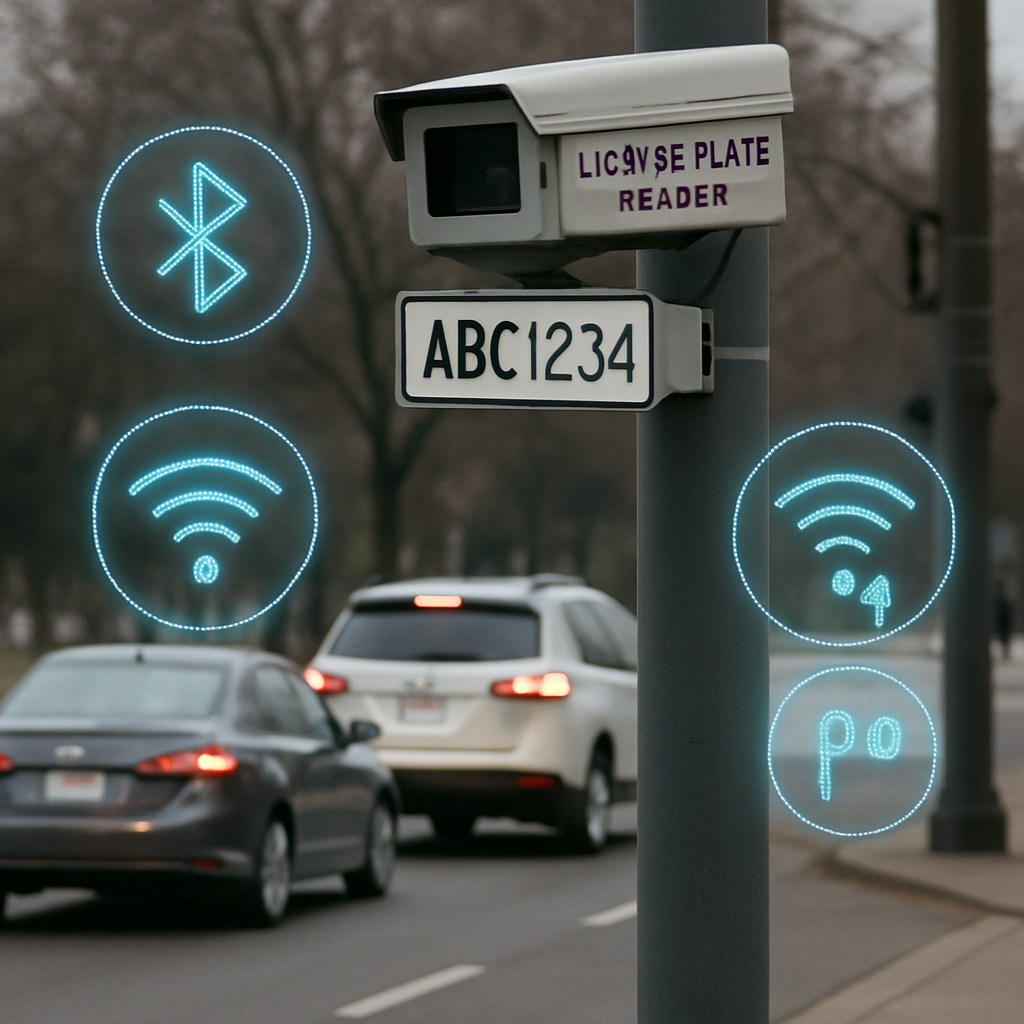
Law enforcement agencies are set to enhance their surveillance capabilities by upgrading automated license plate readers (ALPRs) to detect and track personal electronic devices such as iPhones, AirPods, and Apple Watches. This advancement aims to create comprehensive profiles of individuals’ movements by linking their vehicles to the devices they carry.
Traditionally, ALPRs have been utilized to capture and log license plate numbers, assisting in identifying stolen vehicles or tracking suspects. However, companies like Leonardo are now integrating technologies like SignalTrace into these systems. SignalTrace is designed to detect Bluetooth, Wi-Fi, and RFID signals emitted by personal devices, allowing the system to associate these devices with specific vehicles. This integration enables law enforcement to monitor not just the vehicle but also the occupants and their electronic devices.
These personal devices continuously broadcast unique identifiers, such as MAC addresses, through Bluetooth and Wi-Fi signals. By capturing these signals, the upgraded ALPRs can establish patterns of association between devices and vehicles. Over time, this data can be used to track individuals’ movements and associations, providing law enforcement with a more detailed understanding of a person’s activities and contacts.
While this technology offers potential benefits in crime prevention and investigation, it also raises significant privacy concerns. The ability to monitor individuals’ movements and associations so closely could lead to potential abuses and infringements on personal privacy. The lack of clear regulations governing the use of such surveillance technologies exacerbates these concerns, as there is little oversight on how the collected data is stored, shared, or used.
As these enhanced ALPR systems are deployed, it is crucial for policymakers, privacy advocates, and the public to engage in discussions about the balance between security and privacy. Establishing clear guidelines and oversight mechanisms will be essential to ensure that the use of such technologies respects individual rights while serving public safety interests.