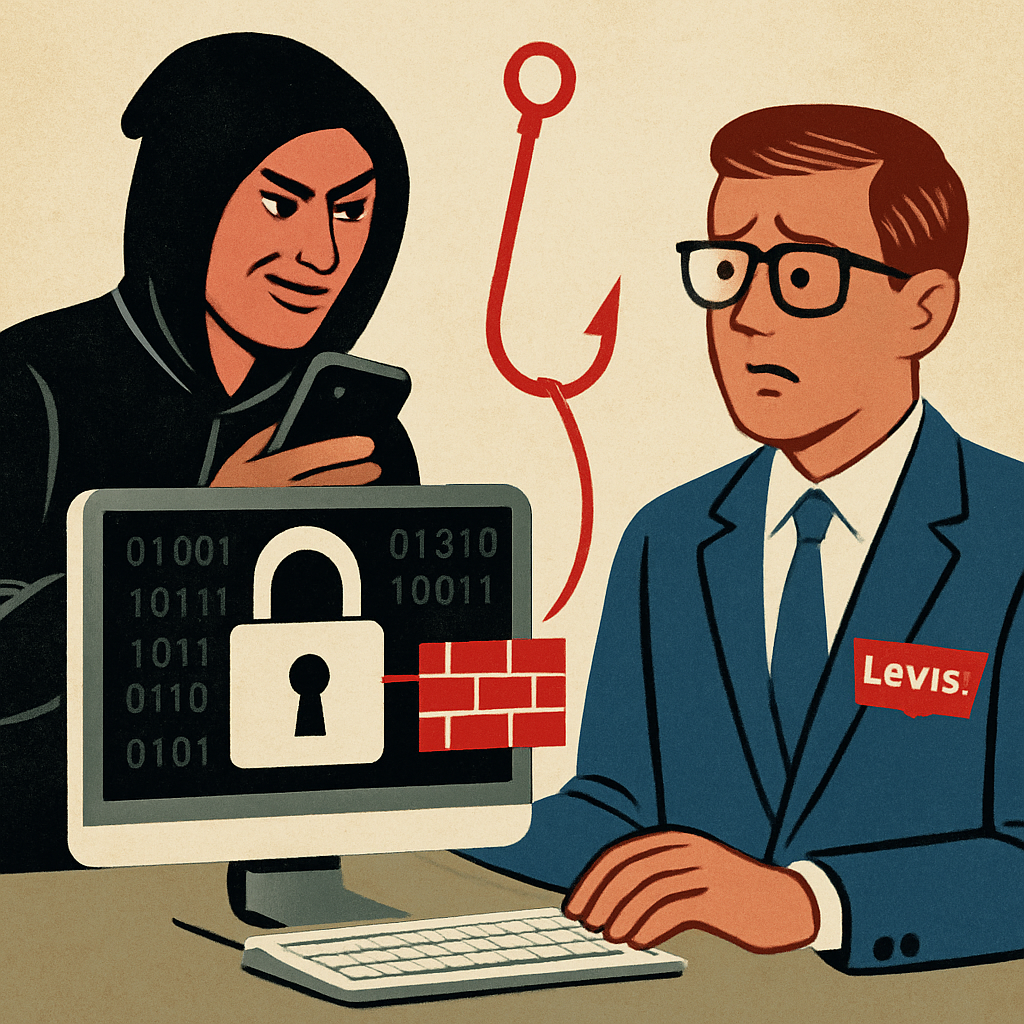
Levi Strauss & Co., the renowned denim manufacturer, has disclosed a cybersecurity incident involving unauthorized access to its internal systems. The breach was executed through a social engineering attack that targeted three employees, leading to the compromise of company-issued computers and the exfiltration of certain corporate files.
In a regulatory filing with the U.S. Securities and Exchange Commission, Levi Strauss detailed that the attackers employed psychological manipulation techniques to deceive employees into granting access to their devices. While the specific methods used—such as phishing emails, deceptive phone calls, or impersonation—were not explicitly stated, similar recent attacks have often utilized voice-based phishing, known as vishing, where attackers impersonate IT staff or help-desk personnel.
Upon detecting the breach, Levi Strauss promptly activated its incident response protocols. The company isolated the affected systems and engaged third-party cybersecurity experts to assess the extent of the intrusion. Preliminary findings indicate that consumer data remained unaffected, and business operations continued without disruption. The company is in the process of notifying relevant parties and regulators in accordance with data protection laws.
In its SEC filing, signed by Senior Vice President and General Counsel David Jedrzejek, Levi Strauss stated that it does not currently anticipate the breach will have a material impact on its business strategy, financial condition, or operating results. However, the investigation is ongoing, and further details may emerge as it progresses.
This incident places Levi Strauss among a growing list of major corporations targeted by social engineering-driven cyberattacks. Recent data indicates that over 200 companies have fallen victim to such tactics in a span of five weeks, highlighting a significant trend in cyber threats.
The Levi Strauss breach underscores the critical need for robust employee training programs focused on recognizing and responding to social engineering attempts. Implementing multi-factor authentication and stringent verification protocols for IT support requests are essential measures to mitigate the risk of similar attacks. As cybercriminals increasingly exploit human vulnerabilities, organizations must prioritize comprehensive security awareness to protect their systems and data.