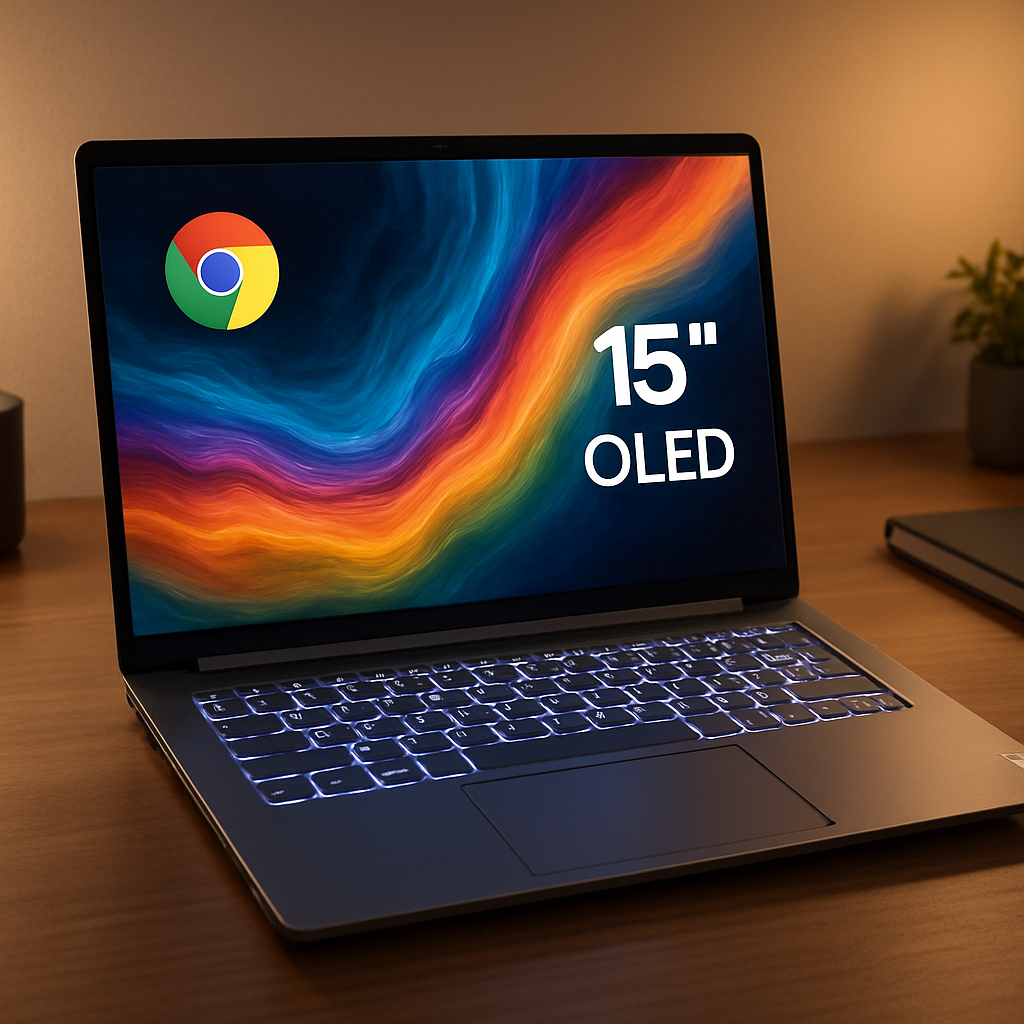
Lenovo has cut the starting price of its Googlebook 15 by $200—bringing it down to $1,099 from the previously announced $1,299. This version packs a 15-inch OLED display at 120 Hz, up to 32 GB of RAM, and up to 512 GB of storage, powered by an Intel Core Ultra 5 chip. It’s one of the first five laptops shipping with the new Googlebook OS, aimed at creators, professionals, and business users. The 16-GB/512-GB/Ultra 5 model is the baseline for this pricing. The metal-chassis machine also features a haptic trackpad, Dolby Atmos speakers aimed forward, and a battery Lenovo claims will last up to 12.5 hours, all while staying under 3 pounds in weight.
Lenovo confirms availability for the Googlebook 15 beginning October 4. Despite the official announcement lowering its price, one retailer—Google’s own store—was still listing it at $1,149 for the same configuration.
Other Googlebooks Also Repriced
It’s not just Lenovo making adjustments. The Dell XPS Googlebook, originally priced at $1,199, will now launch at $999. In contrast, the Asus and HP Googlebooks retain their $1,299 starting price, while the Acer model is selling for $899, the lowest in the lineup so far. These price shifts appear driven by retailer listings rather than consumer feedback. Best Buy was showing the new, lower prices before Google itself corrected its listings.
These Googlebooks are part of Google’s push to replace ChromeOS over time, with Googlebook OS designed to serve users needing more power and flexibility, especially in business and creative workflows. The shift brings more capable hardware, higher refresh-rate displays, and more premium build materials than many existing Chromebook models.
Price corrections like these suggest a tighter calibration between what manufacturers originally announced and what retailers are actually offering. For buyers, it’s a clear win—especially if you were considering the Dell or Lenovo models. Expect more clarity from Google as the lineup fully rolls out in the coming weeks.
What this means: Googlebook’s launches now seem better aligned with market realities. By lowering prices on flagship models and leaving cheaper options untouched, the strategy makes the high-end offerings much more competitive. Keep an eye on how software support, availability, and the promise of extending ChromeOS legacy support play out—these will make or break whether Googlebook is more than just a rebrand with premium hardware.