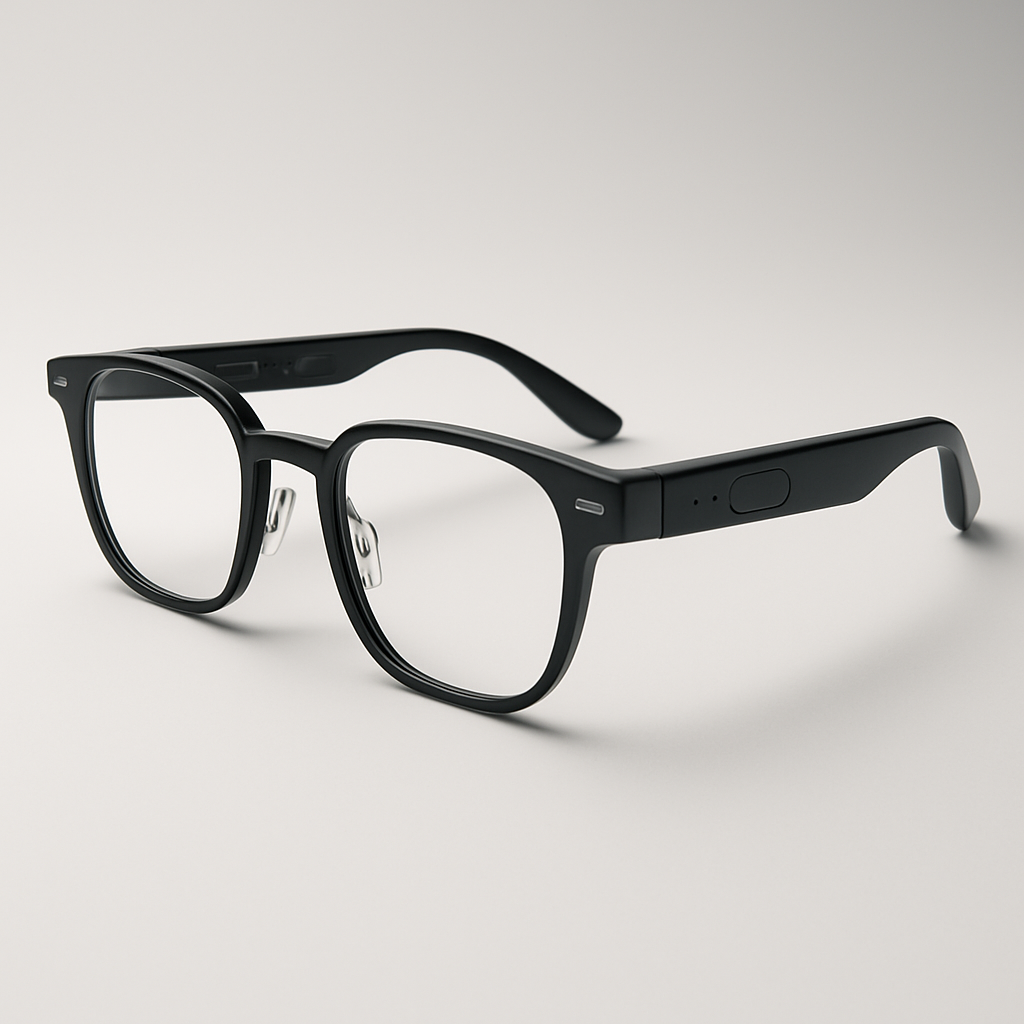
Hearing loss affects approximately 50 million adults in the U.S., yet only about one in five with diagnosed hearing loss receive treatment. Aiming to bridge that gap, startup Legato has emerged from stealth with $12 million in funding and revealed its first product: AI-powered hearing glasses named Legato Frames. These smart glasses integrate assistive hearing technology into the arms of eyewear and are set to launch later this fall.
Founders with deep roots in wearables and hearing care
The company was founded in late 2024 by Mehul Trivedi and Steve Romine, both veterans of the hearing tech and smart eyewear space. Trivedi previously oversaw Bose Frames and later led smart eyewear efforts, including work on Meta Ray-Bans, during his time at EssilorLuxottica. Romine comes from leadership roles at Bose’s hearing aids division and later served as COO at hearing care firm Audicus. Their combined experience shapes Legato’s direction.
Designing for discretion, comfort, and accessibility
Legato is focusing on users with mild to moderate hearing loss—the largest segment of the hearing-loss population. Its Frames are built with a lightweight, discreet profile, employing a proprietary acoustic design, signal processing pipeline, and mechanical architecture to ensure comfort without compromising performance. Instead of traditional directional microphones that often struggle in noisy settings, these glasses use AI to distinguish between voices and background noise, boosting clarity in conversations without causing listening fatigue.
The open-ear design delivers sound through dual speakers aimed at the wearer, while minimizing audio leakage. The system reportedly reduces sound leakage by 99% just inches away from the ear—ensuring privacy and less disturbance to others.
Funding, retail strategy, and pricing
Legato raised $12 million from investors including Neotribe Ventures, Listen, and Village Global. The capital has been directed toward product development and marketing efforts.
Upon launch later this year, the Frames will be sold through select eye-care providers nationwide. They’re expected to cost significantly less than traditional hearing aids and may be eligible for coverage under vision insurance when purchased via eye clinics.
Why this could shift hearing care standards
Legato’s mission is to make hearing as commonplace as vision—in other words, to normalize and simplify care so that addressing hearing loss becomes natural, invisible, and part of daily life. The approach tackles key barriers: cost, discomfort, stigma, and usability. Users benefit from a form factor that looks and feels like standard glasses, minimal configuration, and an always-on assistive experience.
Because untreated hearing loss is linked with greater risks of dementia, depression, and social disconnection, improving accessibility could have wide-reaching public health benefits. Legato believes an affordable, attractive product could help more people stay connected—to conversations, communities, and their wider lives.
Ultimately, Legato Frames could mark a turning point in hearing tech. By marrying smart eyewear with AI hearing assistance, the startup hopes to redefine what it means to address hearing loss—offering something users might wear naturally, throughout the day, without stigma or compromise.