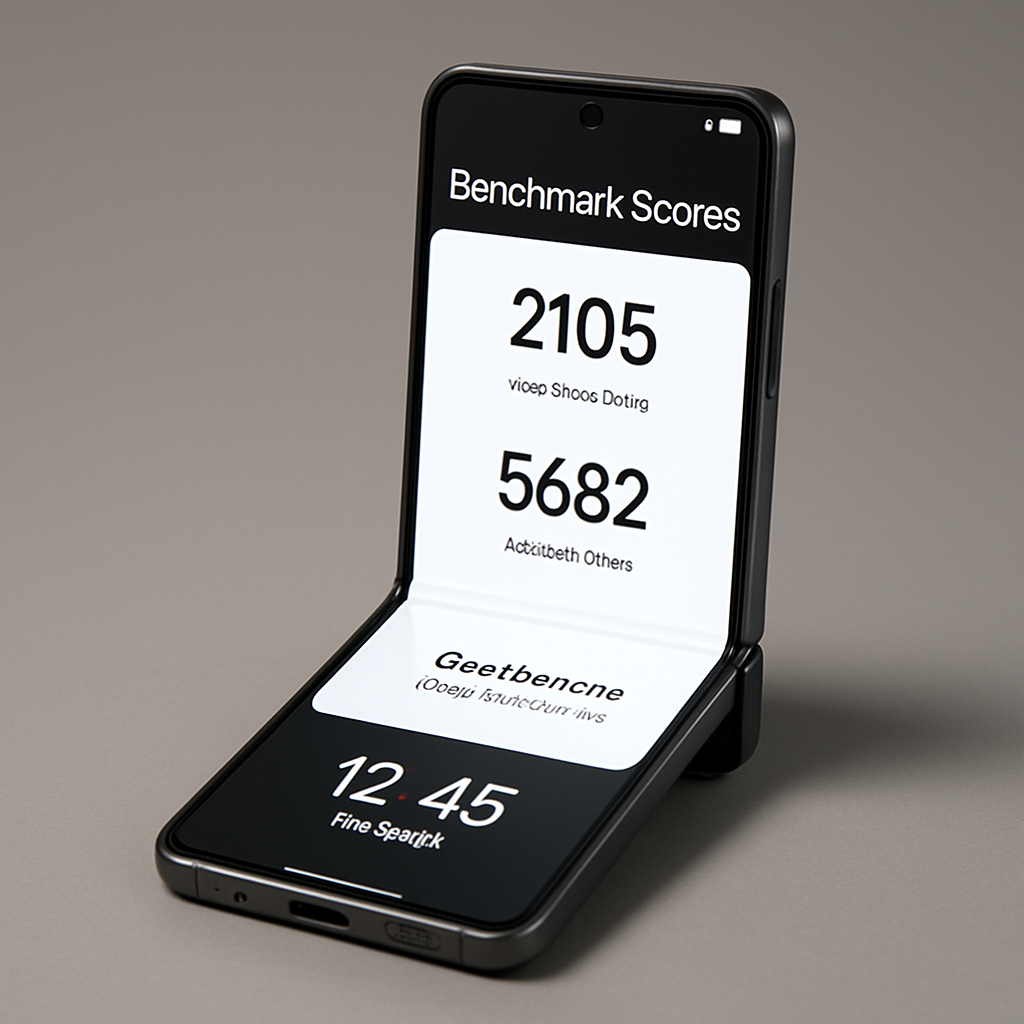
Apple’s upcoming iPhone Duo has surfaced in Geekbench 7 ahead of its October launch, revealing performance nearly identical to that of the iPhone 18 Pro. Early benchmarks show the Duo houses the same 2-nanometer A20 Pro chip, equipped with a six-core CPU and a seven-core GPU. The test device, running iOS 27.1, turned in a single-core score of about 3,986 and a multi-core mark of around 11,067. Those numbers line up closely with scores that have surfaced for iPhone 18 Pro and Pro Max units.
One detail to note: the iPhone Duo in this benchmark shows ~11.30 GB of memory. That suggests Apple has provisioned it with 12 GB of RAM, matching recent Pro models. The CPU clock speed also appears consistent with the iPhone 18 Pro’s; both list a 4.93 GHz base frequency.
There are reasons this benchmark might not tell the full story. While chipset and clock speeds are shared, the Duo’s foldable form factor—with its dual-screen setup—brings thermal and engineering challenges that could affect sustained performance. Since this level of multitasking is unique, the Duo may still diverge from single-screen Pro phones under heavy load.
Apple claims the A20 Pro delivers up to 20 percent improved CPU performance over its predecessor, the A19 Pro, and up to 40 percent boosted GPU performance. However, these benchmarks don’t cover GPU performance yet, leaving those claims still to be validated in real-world usage.
Pre-orders for the iPhone Duo begin October 16, with the full launch slated for October 23. This model represents Apple’s first entry into the foldable smartphone category, pairing its new chipset with a hinge design that supports both an outer display and a larger inner display when unfolded.
What This Suggests
If the benchmark holds up, Apple’s foldable debut may not mean sacrificing performance for form. Matching the specs of the flagship iPhone 18 Pro means the Duo could appeal to users who want both premium power and novel design. That said, foldables live and die by durability, hinge mechanisms, and how gracefully they handle heat—especially with two active screens. Unless Apple nails those engineering challenges, the Duo may deliver top performance for bursts but fall short under sustained demand.
Moving forward, it will be key to see GPU benchmarking, long-term stress tests, and real-world battery performance. If Apple manages to balance power, efficiency, and design, the Duo might set a new standard. If not, it could remain more of a curiosity than a revolution.