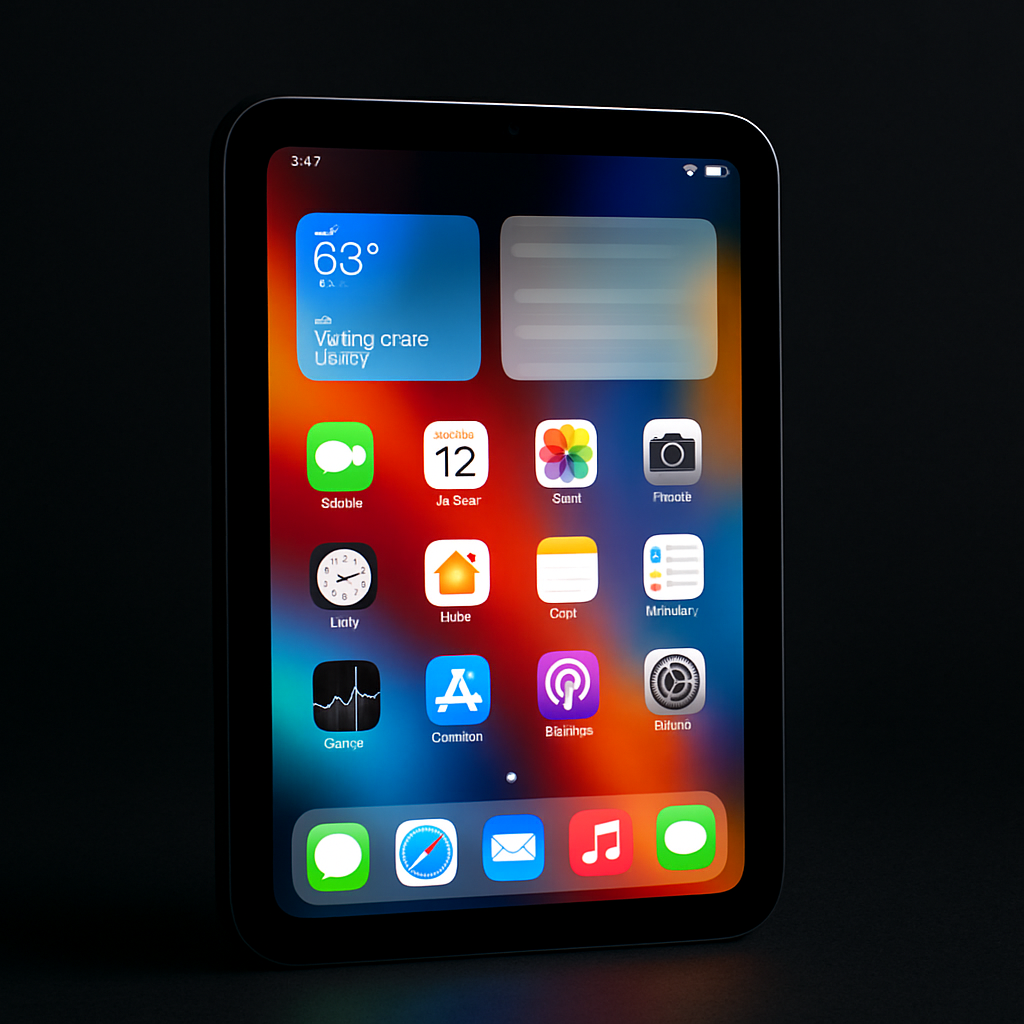
Apple’s next-generation iPad mini won’t feature ProMotion, according to a leaker who insists the new model will have a fixed 60Hz display rather than the variable refresh rate offered by ProMotion. This comes as OLED has been widely expected for the mini, but recent claims suggest Apple isn’t upgrading the display tech to support dynamic refresh.
What’s Announced and What’s Still Speculation
The leaker, known online as yeux1122, asserts that the new iPad mini—rumored to use an OLED panel—will rely on LTPS (Low-Temperature Polycrystalline Silicon) technology. That technical choice is key: LTPS can’t support variable refresh rates the way LTPO (Low-Temperature Polycrystalline Oxide) can. Thus, in this scenario, the display will be fixed at 60Hz. A ProMotion screen—which can drop down to as low as 10Hz and go up to 120Hz—seems off the table for the iPad mini under this version of the rumors.
Elsewhere in industry chatter, there’s talk of the new iPad mini packing the A20 Pro chip—one already slated for use in the iPhone 18 Pro. But display tech remains the biggest point of uncertainty: OLED is nearly certain, but how Apple balances quality, brightness, and cost may depend heavily on whether LTPS or LTPO is used.
Why Refresh Rates Matter
Variable refresh rate displays like ProMotion can dynamically adjust how often the screen redraws. That allows smoother scrolling and better responsiveness in tasks like gaming, while also conserving battery during static content like reading. A fixed 60Hz display can never match those dynamic advantages, particularly because lower Hz modes—possible with LTPO tech—are more efficient for power draw.
However, even with a fixed-rate OLED screen, the new mini could still benefit from advantages of OLED over LCD: deeper blacks, higher contrast, and more vibrant color. The trade-off is likely in brightness and smoothness of UI transitions.
OLED in iPad mini has been rumored for some time—many sources expect a launch by the end of 2026. The ProMotion omission claim reinforces a split in earlier reporting: some sources envisioned ProMotion, others suggested limitations in display hardware might prevent it.
What this means: If the leaker is correct, this iPad mini model represents a compromise: moving to OLED but foregoing ProMotion. That would differentiate the mini from its Pro siblings, which are expected to keep advanced display features. The inclusion of the A20 Pro chip suggests Apple still sees this as a performance-oriented device, but without display tech that fully pushes the envelope.
Analysis: The decision to skip ProMotion would mark a clear stratification in Apple’s iPad lineup, reinforcing the “Pro” devices as the top-end tier for display tech. For users, it could mean a less fluid experience, especially for animation and scrolling—though OLED’s color and contrast gains may soften the blow. Pricing will be crucial: if the base mini is priced aggressively, users might accept lower refresh rate. If not, there could be buyer discontent. It will be important to watch for confirmation from Apple on the display’s panel supplier, brightness metrics, and whether any model variants (e.g. higher storage or cellular) might get a different screen tech.