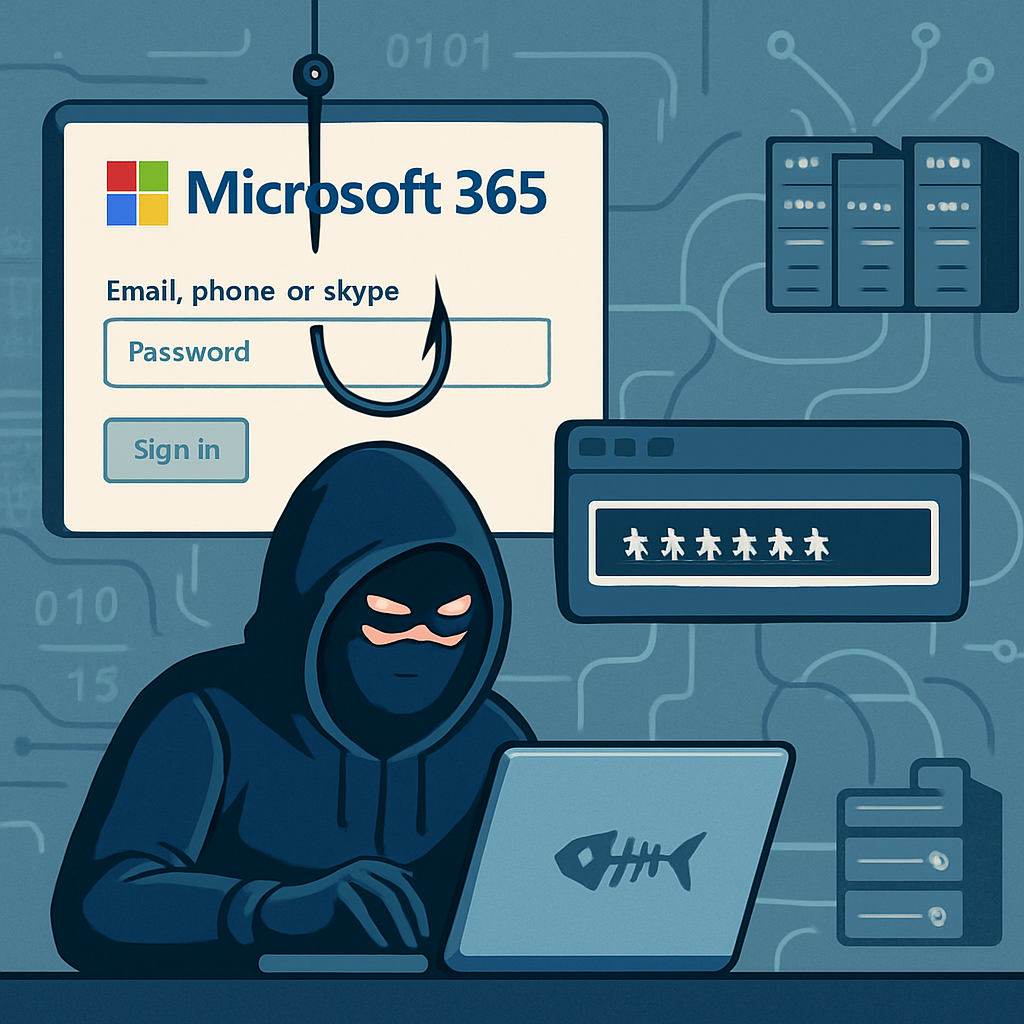
A new Phishing-as-a-Service (PhaaS) platform named Kratos has emerged, posing a significant threat to Microsoft 365 users. This service enables cybercriminals to execute advanced phishing campaigns with minimal effort, leveraging sophisticated techniques to bypass traditional security measures.
Kratos operates by providing subscribers with ready-made phishing kits that mimic legitimate Microsoft 365 login pages. These kits are designed to harvest user credentials and session tokens, effectively circumventing multi-factor authentication (MFA) protections. The platform’s user-friendly interface allows attackers to configure campaigns, monitor victims, and collect stolen data efficiently.
One of the distinguishing features of Kratos is its use of adversary-in-the-middle (AitM) techniques. By positioning a malicious server between the victim and the legitimate authentication service, Kratos intercepts authentication sessions in real-time. This method enables attackers to capture session cookies and tokens, granting them unauthorized access to user accounts without needing the actual passwords.
The infection chain typically begins with well-crafted phishing emails that appear to originate from trusted sources. These emails contain links that redirect users through multiple domains, often utilizing URL shortening services to obscure the final destination. Upon clicking the link, victims are led to a counterfeit Microsoft 365 login page hosted on domains that closely resemble legitimate ones, increasing the likelihood of deception.
To evade detection, Kratos employs several advanced techniques. The phishing pages are often hosted on low-reputation domains with top-level domains like .icu, .xyz, and .top, and are protected by services like Cloudflare to mask the real server IP addresses. Additionally, before displaying the phishing page, victims may be presented with CAPTCHA challenges to confirm human interaction, further complicating automated detection efforts.
The backend infrastructure of Kratos utilizes dynamic DNS services to host ephemeral AitM proxy engines and customer-facing admin panels. This setup allows for rapid deployment and takedown of phishing campaigns, making it challenging for defenders to track and mitigate the threats effectively.
The emergence of Kratos underscores a troubling trend in the cyber threat landscape: the commoditization of sophisticated phishing tools. PhaaS platforms like Kratos lower the barrier to entry for cybercriminals, enabling even those with limited technical expertise to launch effective phishing campaigns. This development necessitates a reevaluation of current security strategies.
Organizations must adopt a multi-layered security approach to defend against such advanced threats. Implementing phishing-resistant MFA methods, such as FIDO2 tokens, can provide an additional layer of security. Regular employee training on recognizing phishing attempts, coupled with robust email filtering solutions, can help mitigate the risk. Additionally, monitoring for anomalies in authentication patterns and implementing strict access controls can further enhance an organization’s security posture.
As PhaaS platforms continue to evolve, staying informed about emerging threats and adapting security measures accordingly is crucial. The rise of services like Kratos highlights the need for continuous vigilance and proactive defense strategies in the ever-changing cybersecurity landscape.