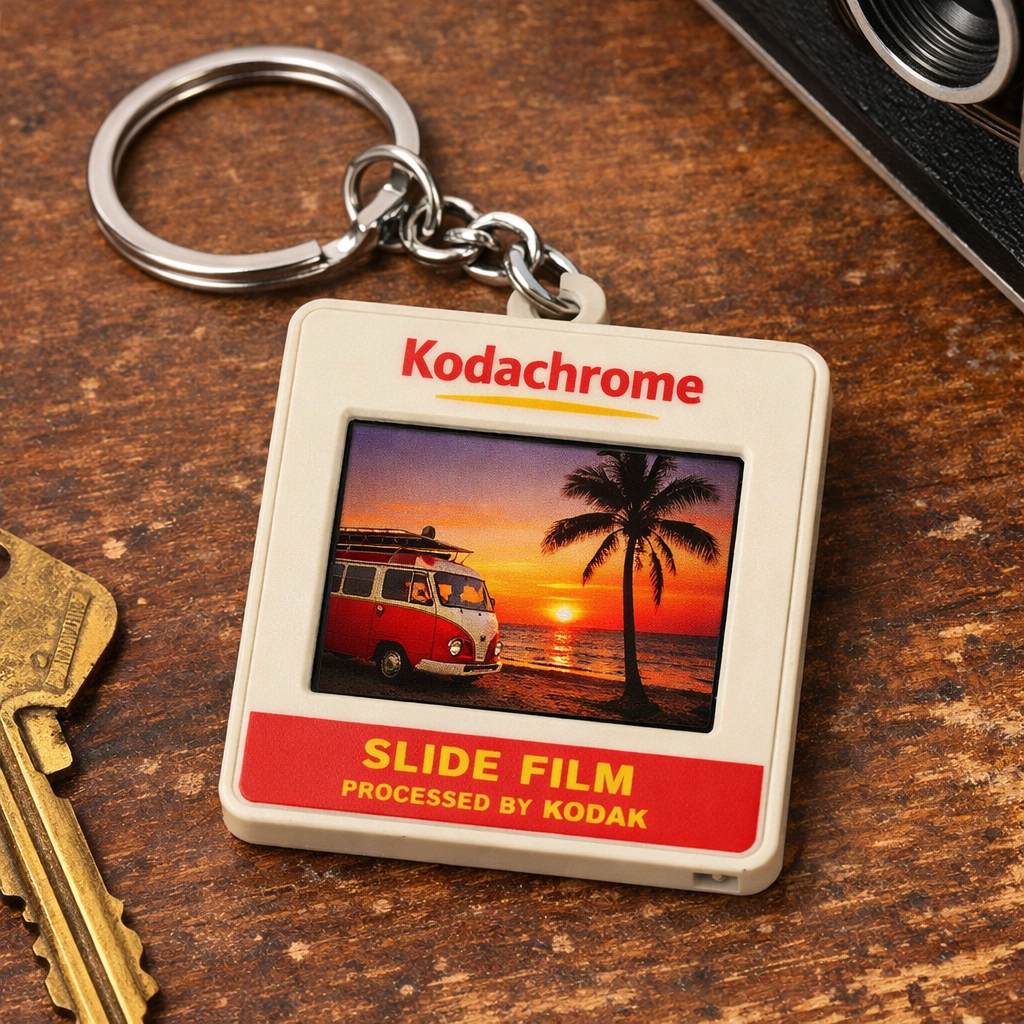
Kodak, via Reto Production under official licensing, has introduced a hybrid nostalgic gadget—meet the SlideTag. It’s a keychain-sized digital photo frame with a color E-Ink display, and it doubles as a Bluetooth tracker compatible with both Apple’s Find My network and Google’s Find Hub. The device went on sale on November 22, 2026, at a price of $34.99 each. Developers warn, though: it lacks ultra-wideband precision, a staple in AirTags and Pixel Tags.
Key Specs & Features
The SlideTag features a 1.54-inch, six-color E-Ink panel with a 240×240-pixel resolution housed in a frame designed to mimic a vintage 35mm slide mount’s aesthetic. Its body measures 39.3 × 46 × 7.58 mm and weighs just 16.6 g. A CR2032 coin cell provides power, and the unit offers IP54 protection against dust and splashes—though it isn’t waterproof.
Through the Kodak Memory Link app on Android (Android 9+) or iOS, users can load up to 12 photos to display in a looping slideshow or manually cycle through them with a double-press of the rear button. The screen can also show QR codes, countdown timers, calendar layouts, contact badges, or a short to-do list. For tracking, Bluetooth 5.4 lets the SlideTag communicate with Find My and Find Hub networks and includes a 75 dB buzzer to help locate it within about 30 meters in open air.
Designs, Pricing, & Availability
The SlideTag is sold via “blind boxes,” where buyers don’t know which design they’ll receive. There are eight standard retro designs plus a rare “secret” metallic edition with odds of about 1-in-64 in individual boxes. A full set of the eight standard designs costs $279.92—a premium bundle. Each single box includes bonus items like a collector poster, a slide-frame accessory, a mini film strip, and a keyring.
Battery life is estimated at around 12 months under average use, but heavy screen activity or frequent tracking will shorten that. It uses the standard, replaceable CR2032 cell, with low-battery alerts below 10%. Saved settings and photos survive battery replacement, though event countdowns must be reset.
Tracking limitations include no ultra-wideband support, which means it lacks directional precision when you’re nearby, unlike flagship tags from Apple or Google. Also, camera-style blind-box sales don’t allow returns once an order is placed, and stock could be constrained during the holiday rush.
Retail availability includes Reto’s Kodak-branded store and Amazon, with global shipping options at certain thresholds.
What this means: Kodak’s SlideTag fills a niche at the intersection of nostalgia, personalization, and item tracking. For owners of both Apple and Android phones—especially those who like to show off memories, art, or personal flair—it offers dual-platform compatibility that many trackers don’t. It avoids the hype around ultra-precise location, but for daily carry, keyrings, or bags, it provides enough functionality. Watch for whether the blind-box model limits consumer satisfaction, and whether competitors respond with similar photo-display trackers—or a version with UWB direction finding. {@analysis end}