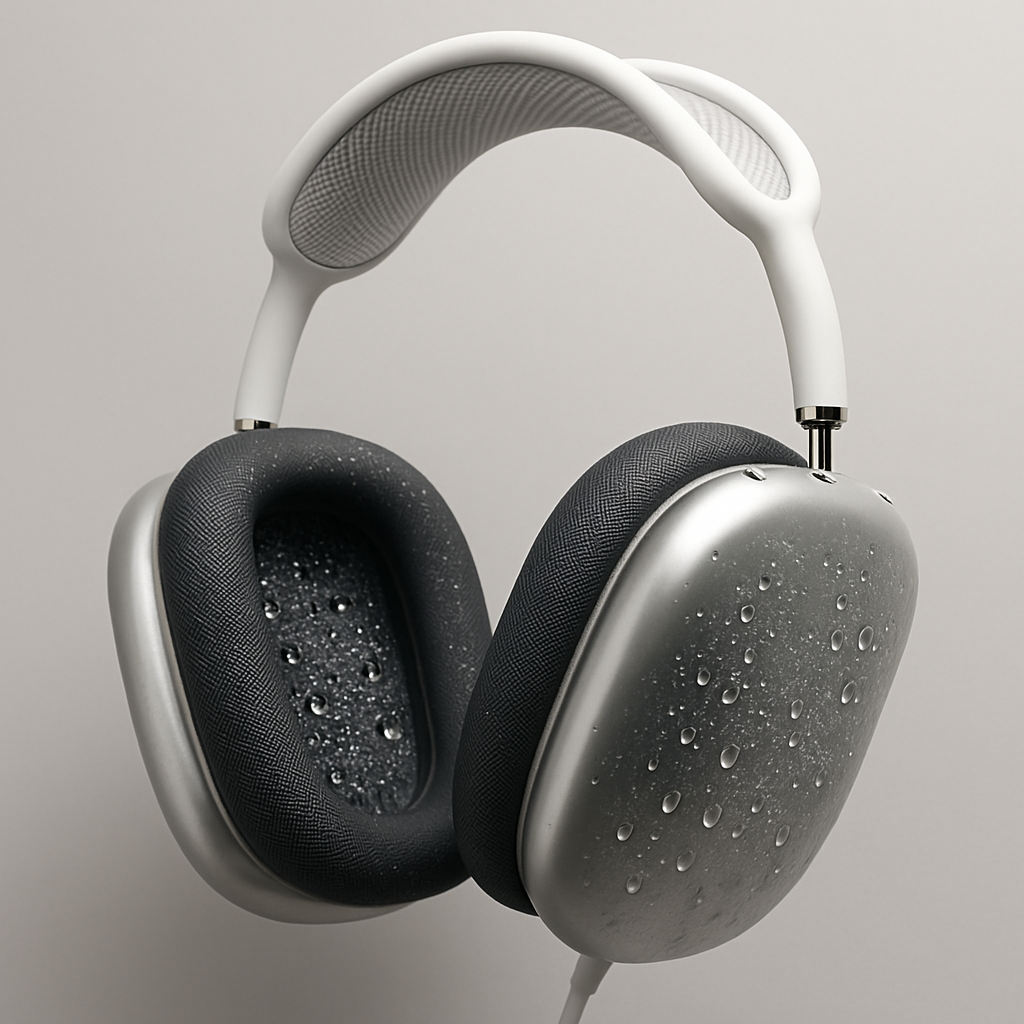
A federal judge has significantly narrowed a class-action lawsuit alleging that Apple’s AirPods Max headphones suffer from a condensation defect. The case, initiated by plaintiffs from New York and Washington, claimed that moisture accumulation inside the ear cups during regular use led to various functional issues.
Shortly after the AirPods Max debuted in December 2020, users began reporting condensation forming within the aluminum ear cups, even during light activities or while watching movies. Some users noted that the moisture appeared to seep through the speaker openings toward the drivers, potentially causing connectivity problems, degraded sound quality, ear-detection failures, and battery issues.
In April 2025, plaintiffs Arthur Apicella of New York and Dustin Amundson of Washington filed a lawsuit alleging that Apple was aware of this defect but failed to disclose it. They argued that the condensation compromised the headphones’ performance and durability.
On July 6, 2026, Judge Orelia E. Merchant of the Eastern District of New York dismissed all claims brought under New York law with prejudice, effectively removing Apicella from the case. The judge determined that New York’s implied warranty of merchantability requires only that a product meets a minimal level of quality, not perfection. Since Apicella acknowledged using the AirPods Max to watch a movie, the judge concluded that the headphones performed their basic function.
However, the lawsuit will proceed with Amundson’s claims under Washington state law’s implied warranty of merchantability and the federal Magnuson-Moss Warranty Act. The judge dismissed his express warranty and unjust enrichment claims but allowed the case to continue on these two grounds. Amundson has until August 5 to seek permission to revive his Washington consumer-protection and fraud claims, with Apple’s opposition due by September 4.
Apple has not publicly acknowledged the condensation issue as a widespread defect. In previous legal filings, the company argued that moisture accumulation is more noticeable in the AirPods Max due to their design, emphasizing that the headphones are not waterproof or water-resistant.
This ruling highlights the challenges consumers face when alleging product defects, especially when the product continues to perform its primary functions. As the case proceeds, it will be important to monitor how the court addresses the remaining claims and whether Apple will take any steps to address user concerns regarding condensation in the AirPods Max.