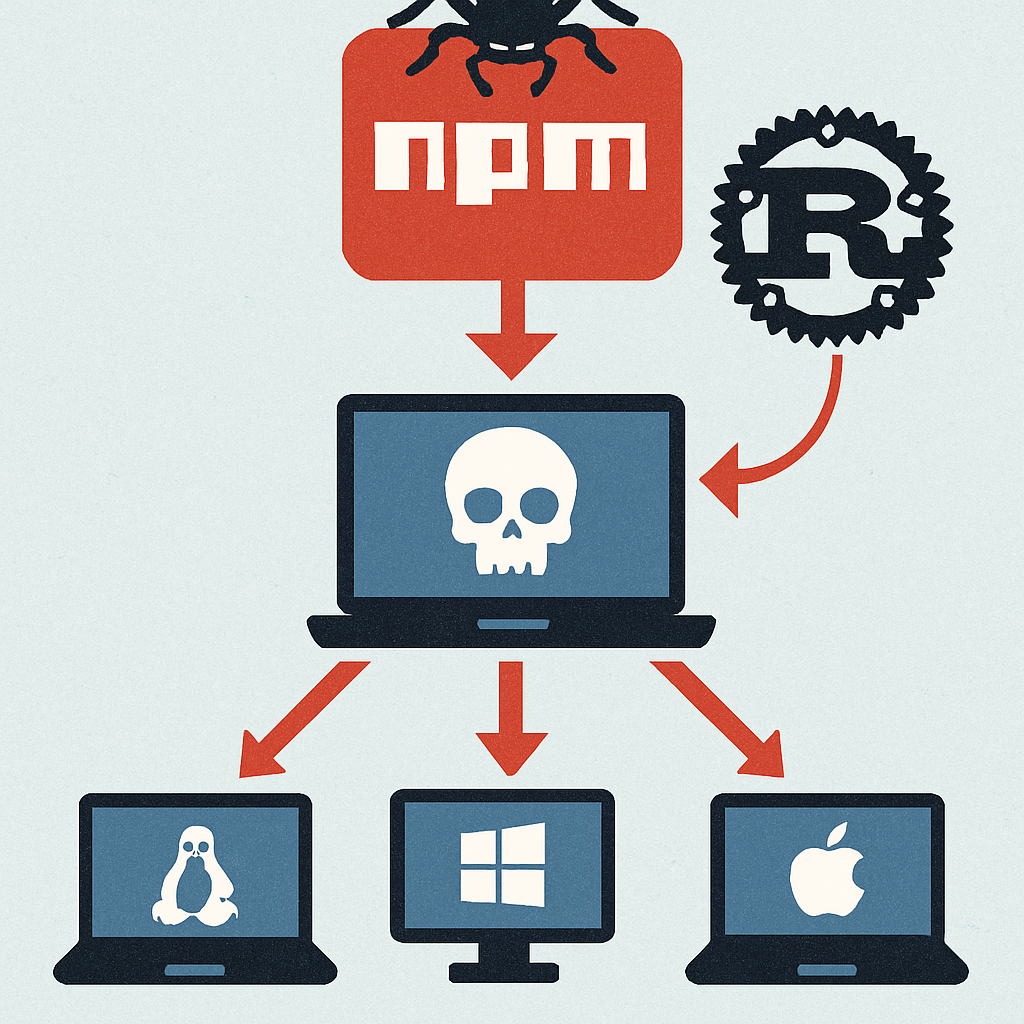
The recent release of Jscrambler version 8.14.0 on the npm registry has been compromised, containing a malicious preinstall hook that deploys a Rust-based infostealer during installation. This incident underscores the persistent vulnerabilities in software supply chains and the critical need for enhanced security measures.
Published on July 11, 2026, the compromised version executes the malicious payload automatically upon installation, without requiring any import or command-line interface (CLI) invocation. The infostealer is designed to operate across multiple platforms, including Windows, macOS, and Linux, making it a versatile threat to a broad range of systems.
Security firm Socket identified the malicious release within minutes of its publication. However, any systems that installed version 8.14.0 during this brief window are at risk, as the payload would have executed with the same access privileges as the installation process.
The attack vector involves two new files added to the package: setup.js and intro.js. The setup.js script selects the appropriate binary for the host operating system from intro.js, writes it to the system’s temporary directory, assigns executable permissions, and launches it as a detached process with hidden output. Notably, these files are present in the published package but absent from the project’s public source code, indicating a potential compromise of the publishing process.
Further analysis by Socket revealed that the payload is a Rust-based infostealer targeting developers’ machines. It is capable of extracting a wide array of sensitive information, including:
- Cloud service credentials from AWS, Azure, and Google Cloud, including metadata endpoints used by continuous integration (CI) runners.
- Cryptocurrency wallets and seed phrases from applications like MetaMask, Phantom, and Exodus.
- Stored passwords and cookies from web browsers.
- Session tokens from communication platforms such as Discord, Slack, Telegram, and Steam.
- Configuration files for AI coding tools, including Claude Desktop, Cursor, Windsurf, Visual Studio Code, and Zed, which may contain API keys and server credentials.
The infostealer employs encryption for its sensitive strings and includes mechanisms for privilege escalation and persistence, enhancing its ability to evade detection and maintain access to compromised systems.
Jscrambler is typically utilized as a development dependency or within CI environments, placing the infostealer in a position to access critical assets such as cloud keys, deployment tokens, and source code repositories. While Jscrambler averages approximately 15,800 weekly downloads—a smaller footprint compared to other widely used npm packages—the targeted nature of this attack suggests a focus on high-value development environments rather than widespread distribution.
This incident is part of a series of npm supply chain attacks observed since late 2025. Notable examples include the Shai-Hulud worm, which propagated through install hooks to steal tokens and spread across numerous packages, and the compromise of the widely used chalk and debug packages via a phished maintainer account, leading to rerouted cryptocurrency payments. In March 2026, a hijacked account introduced a cross-platform trojan into Axios, an HTTP library with over 83 million weekly downloads.
In response to these ongoing threats, npm released version 12 on July 8, 2026, which disables dependency install scripts by default. This security enhancement requires explicit user approval for scripts like preinstall hooks to execute, potentially mitigating similar attacks in the future. However, users operating older npm clients remain vulnerable, as these versions continue to execute such scripts without additional prompts.
The Jscrambler compromise highlights the critical importance of securing the software supply chain. Developers and organizations must remain vigilant, regularly audit their dependencies, and adopt security best practices to protect against increasingly sophisticated attacks targeting development environments.