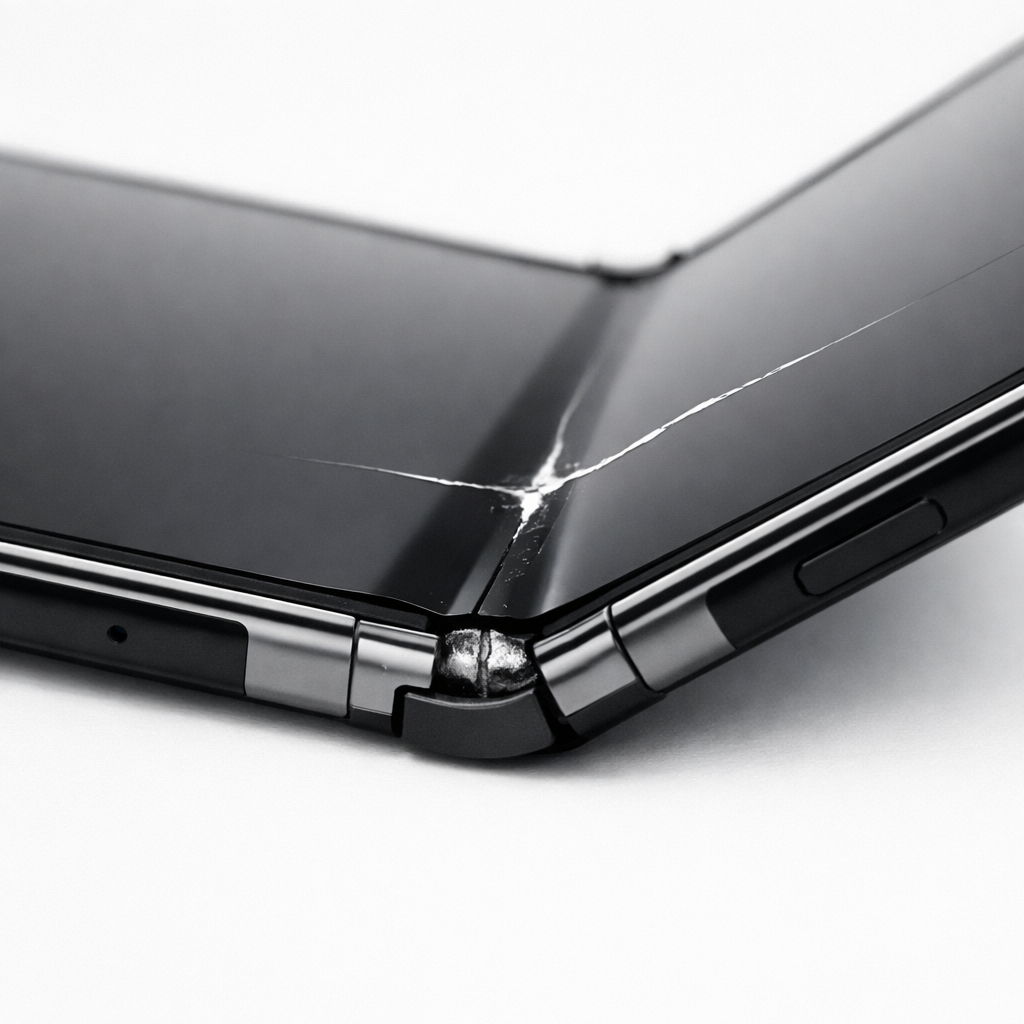
Apple’s inaugural foldable phone—the iPhone Duo—is already showing signs of serious durability issues. Users are reporting that the inner display is cracking in precisely the same way across multiple units: a green line emerges along the screen’s right-hand side, followed by worsening damage over time. These cases suggest a systemic flaw, possibly tied to the device’s hinge design. If confirmed, this could mark a misstep reminiscent of Samsung’s original Galaxy Fold launch.
Hinge Design Under Scrutiny
Early investigations point toward structural stress in the hinge as the root cause. A teardown conducted by iFixit suggests that a support bar inside the Duo isn’t retracting enough, applying excessive pressure against the display when folding. This concentrated stress might explain why cracks consistently appear in the same location—and why affected users reported hearing a crack before visible damage.
These mechanics echo what plagued the Galaxy Fold back in 2019. In that case, users—or reviewers—removed a protective top layer the manufacturer hadn’t intended to be removed, and debris infiltrated the hinge area, compromising the screen. Samsung’s fixes included extending the top layer under the bezel, reinforcing the hinge, and adding caps to block out dust.
Apple Follows with a Troubled Debut
The similarity is stark: just as the Galaxy Fold’s defects were reported post-launch, so has the Duo’s. Unlike Samsung, however, Apple is still fielding early reports rather than pre-release reviews. As of now, Apple hasn’t issued a formal statement. Customers who are experiencing screen failures say that support responses have been inconsistent.
There’s no reliable way yet to determine just how widespread the issue is. Forums and community threads are filling up, but without aggregated data or official recall notices, assessing the scale remains guesswork.
It’s easy to draw parallels between the Galaxy Fold’s chaotic debut and the Duo’s current reliability concerns. Initial hardware faults in a category as novel and technically complex as foldables are not surprising, but whether this becomes a broader problem depends on Apples’s response. Engineering tweaks—and possibly software checks—might help, but only if sufficient evidence prompts decisive fixes.
Why this matters: Apple’s move into foldables signals a major bet, not just a new product. The category challenges norms around display engineering, durability, and hinge mechanics. If the Duo’s failure rate becomes significant, it could harm confidence in the foldable segment—especially among premium customers. For Apple, already known for design polish, this is a test not just of innovation, but of execution. Moving forward, the industry will be watching how Apple addresses hinge fatigue, screen stress points, and long-term durability. The fix—or failure—could set the tone for what foldables become next.