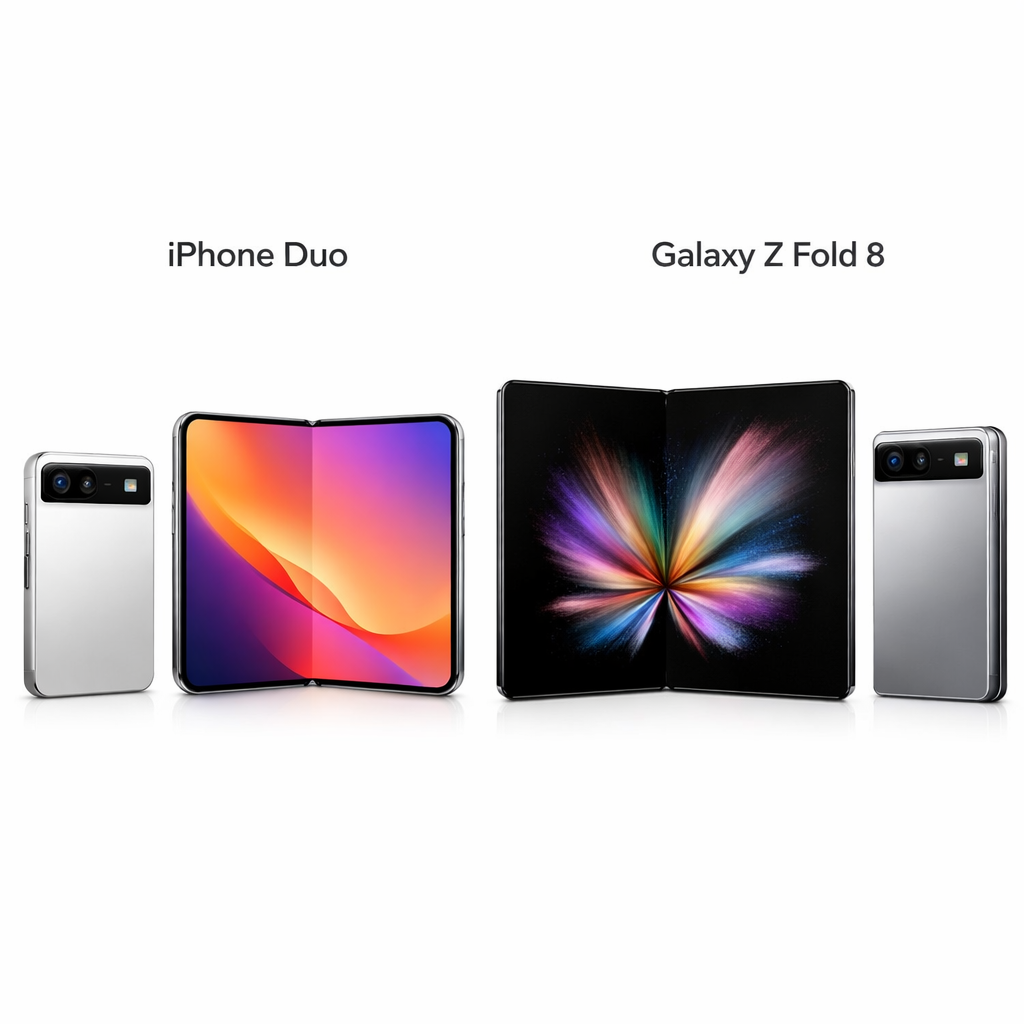
The race between Apple’s first foldable, the iPhone Duo, and Samsung’s veteran Galaxy Z Fold 8 comes down to a balance of design trade-offs, screen preferences, and OS allegiances. Based on a month of regular use with both, here’s where each device shines—and where they still have room to grow.
Featherweight Foldables vs All-Round Design Choices
Out of the box, the Z Fold 8 impresses with its light build—201 grams compared to the Duo’s 254 g. That lighter frame makes a noticeable difference when the phone is folded shut. While the Duo’s titanium-built design has premium feel—and edges that feel less prone to dents than aluminum—it doesn’t shake the sense that it’s bulkier when carried in hand. It’s a case where Samsung’s years refining foldables show, especially in closed mode comfort.
Then there’s the matter of screen proportions. The Duo hits a near-ideal width for one-handed use, yet its inner display feels a bit short, especially when the on-screen keyboard eats into viewing space. The Fold 8 stretches upward, allowing a bit more visible content above the keyboard, making reading and typing easier during extended sessions. Interestingly, despite visual layout differences, transparent navigation bars on the Duo balance out screen real estate against OneUI’s opaque bars in many uses.
Where Apple Still Pulls Ahead
The Duo scores high on finish and ergonomic touches. Rounded device corners make holding the phone more comfortable overall, though left-handed users might still notice sharper edges on the outer screen. The rear camera bar’s horizontal layout also contributes—less finger interference than the Fold 8’s that sometimes blocks grip. For selfies, the Duo’s under-display inner camera isn’t great in low light, but with dual other camera paths photo-wise, many users may find the compromise acceptable for the payoff: truly unbroken visuals when viewing content.
Display Creases and First Foldable Verdicts
Creases are inevitable in foldables, and both phones show them—but mostly only off-angle. The Duo features a nano-texture layer to help tame visible light reflections along the fold, though it’s unclear if it makes a dramatic difference. Up close or straight-on, the crease is far less noticeable on both, reinforcing that this isn’t a decisive issue for most users.
Despite the Duo being Apple’s first attempt, both devices stand as impressive engineering feats. Samsung’s eight years of foldable experience show, especially when comparing weight, hinge stability, and screen layout. Still, Apple’s design choices bring unique strengths: comfort, screen smoothness, and camera placement.
When pressed to choose, leaning toward the lighter, more slim design of Fold 8 makes sense—especially if weight and portability top your list. But if you prioritize grip comfort, clean screen visuals, and Apple’s ecosystem, the Duo adds value.
What this means: The iPhone Duo shows that Apple isn’t just stepping into foldables—it’s staging a strong opening salvo. The Fold 8 reminds us that the category is no longer experimental. What to watch for next: Duo revisions that trim weight, expand height, or improve inner camera quality could close the gap; Samsung will need to keep pushing finesse in materials, crease technology, and perhaps software polish to maintain its lead. This isn’t just a matchup of phones—it’s proof that foldables have reached a crossroads where design and software choices can tip a user’s loyalty.