Apple’s first foldable phone, the iPhone Duo, has reached a remarkable 451,000 fold cycles in a continuous stress test—and while it’s still alive, signs of fatigue are starting to show in its hinge.
What the Folding Machine Revealed
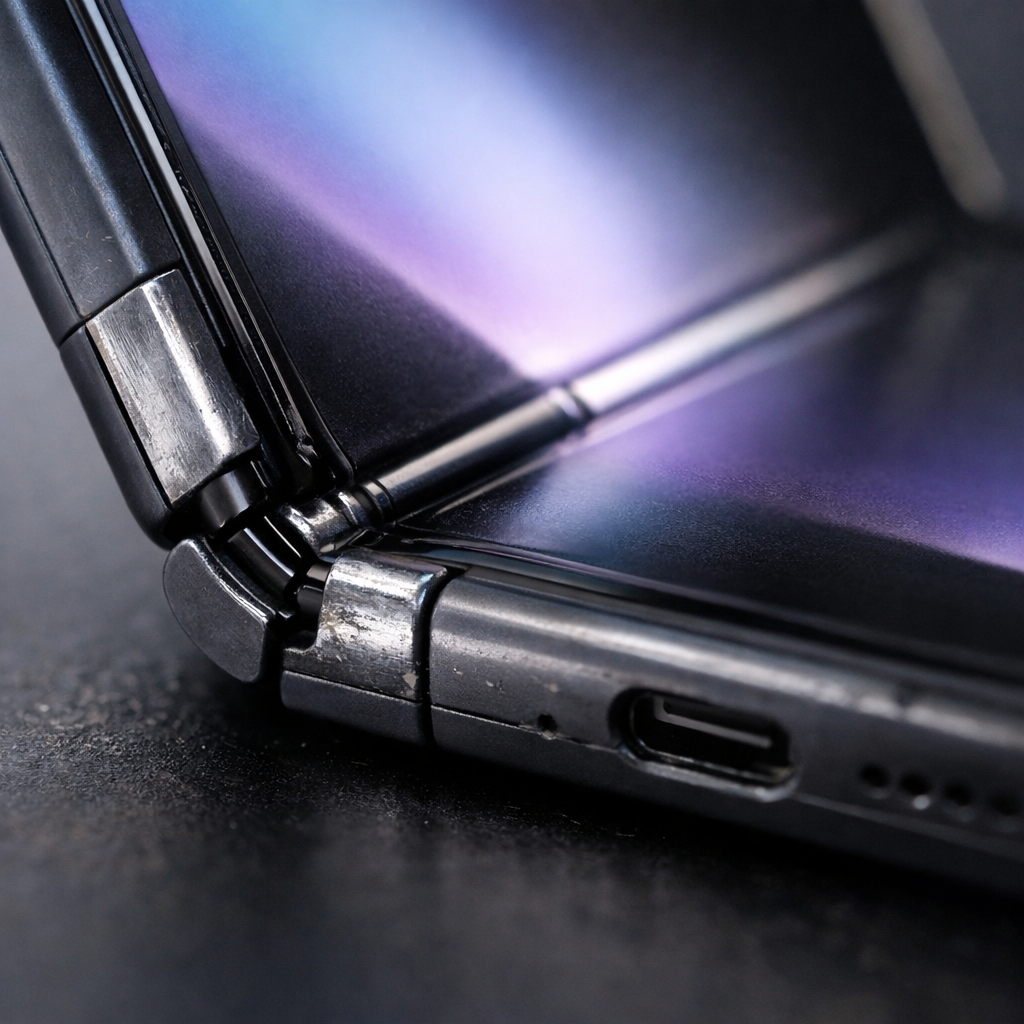
Over the past three weeks, CNET has been running the iPhone Duo through an automated “Fold-a-Phone” machine that opens and closes the device repeatedly—24/7 during weekdays. After roughly 451,000 folds, the phone exhibits noticeable hinge looseness. Around fold 390,000 the hinge began to feel less tight under motion tests. By approximately 440,300 folds, the screen no longer opened all the way automatically, stopping short of its fully open position by 5-10 degrees, and the satisfying snap when it closed was missing. Despite that, the device remained operable, with no cracking or full structural failure. The machine continues until pre-defined failure conditions are met, such as power loss or display blackout.
Display Durability and Industry Benchmarks
The Duo uses OLED panels from Samsung Display. Samsung’s foldable screens—such as the one in the Galaxy Z Fold7—have previously passed independent 500,000-fold durability certification tests. While Apple likely isn’t using the exact same panel, current performance suggests the Duo is on track to match those leading benchmarks. At 450,000 folds, the Duo could translate to more than 10 years of daily folding at about 100 cycles a day—assuming the hinge and mechanism hold up.
Meanwhile, earlier tests by tech reviewers laid groundwork for what’s now playing out more extremely:
- Joanna Stern ran over 32,000 folds on a custom “Hingey” rig and found the hinge felt slightly stiffer but largely unchanged in hand-use compared to day one. The display crease deepened slightly but remained subtle. The phone had a case on, and some folds were partial rather than fully closed.
- YouTuber Tim Pan carried out an aggressive test: 10,500 folds at room temperature plus 1,000 in near-freezing conditions. The deeper crease was clearly visible. But even under cold, the hinge kept its motion smoothly.
What to Watch Going Forward
Engineers still haven’t reached any definitive failure mode—the Duo is still functioning and maintaining most screen angles. But hinge looseness and diminished closure snap may hint at wear that some users will eventually notice during everyday use. Apple has not released any official fold-count durability spec for the Duo’s hinge or screen.
For reference, Samsung Display’s panel in the Galaxy Z Fold7 passed 500,000 folds under certification. If the Duo matches that, it could offer comparable lifespan, assuming 100 folds per day adds up to more than a decade of use. That said, observed looseness around 390,000 folds suggests the durability might start tapering off before hitting the finish line.
Additional potential trouble spots include the display crease, which becomes more visible both to the eye and to touch after thousands of folds—especially if the outer nano-texture layer is removed. Users have also reported that dust or sand can sneak into the hinge, which like on earlier foldables, can impair closure and introduce wear to screen layers around the folding seam.
The test continues. CNET will keep folding the Duo until it fails one of the failure conditions, livestreaming regular progress on YouTube during weekday afternoons (Pacific Time).
This level of abuse testing underscores both how far folding phone tech has come and how challenging it still is. Apple’s materials choices—OLE D panel, mats display, titanium-rich hinge—are keeping the Duo in the race. But real users will want to pay close attention to early signs of hinge looseness or changes in closure behavior. How Apple supports durability, replacements (especially for the cover layer), hinge warranty, and whether other Duo units show similar wear could define whether this foldable is one for the long haul—or a fancy experiment with a limited shelf life.