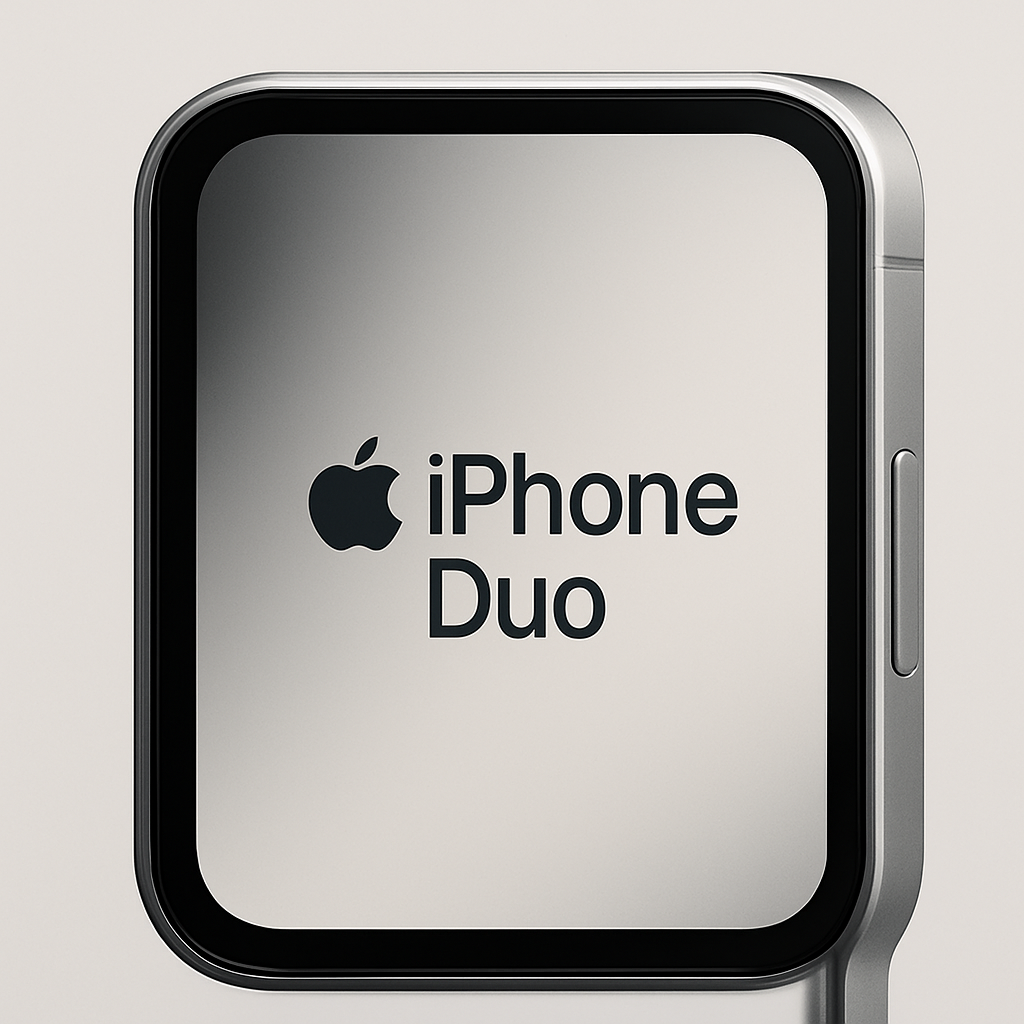
With the launch of iPhone Duo, a new display setting called “Shift Left Edge” has been discovered that adds a fake bezel on the outer screen’s left side. Intended for cases that overlap the screen, this feature pushes content inward so that edges aren’t obscured by protective cases.
Developer and blogger Nicolas Lellouche found “Shift Left Edge” during hands-on time with the Duo. When turned on, the setting introduces a solid black border on the left side of the outer display, moving on-screen content away from the fold and any potential overlap from a case. In his demo, the bezel roughly doubles in width compared to when the setting is off.
The setting is explained in the menus as useful when using a case that partially covers the left edge of the outer display. This suggests it’s not just meant for Apple’s cases, but also third-party designs that may not align perfectly with display edges.
Apple is launching with two first-party accessories for the iPhone Duo: the standard Duo Case, and a Folio with Kickstand. It’s unclear whether either of these overlaps the left edge of the display enough to need “Shift Left Edge.” Based on initial impressions, overlap doesn’t seem severe for Apple’s cases, but this setting could be more relevant for rugged or oversized third-party protectors.
Why It Matters
Foldable and dual-screen phones often struggle with how cases align with display edges—especially when bezels are minimal. What seem like minor overlaps can cut off content or interfere with touch functionality. By letting users create a margin manually, Apple is giving more flexibility for case compatibility without forcing thicker bezels or limiting case design.
The trade-off is that enabling this setting effectively wastes part of the screen real estate, creating a blank margin where nothing appears. Users will need to decide whether the benefit of screen preservation outweighs the reduced usable area on the outer edge.
What to Watch For
Soon after release, third-party case makers may leverage this setting to design accessories that align with the fake bezel, giving users more protective options. Also worth observing: whether upcoming firmware tweaks allow adjusting bezel width dynamically, or if Apple will add something similar on other edges depending on case design.
This small display tweak for iPhone Duo is a strategic nod toward balancing case design versatility and screen usability. It won’t solve all compatibility issues, especially for bulky cases, but it shows Apple is aware of the challenges foldable or dual-screen devices face when it comes to accessories. For anyone buying cases, checking for fit at the edges—and considering whether to enable “Shift Left Edge”—might be the difference between perfect protection and awkward overlap.