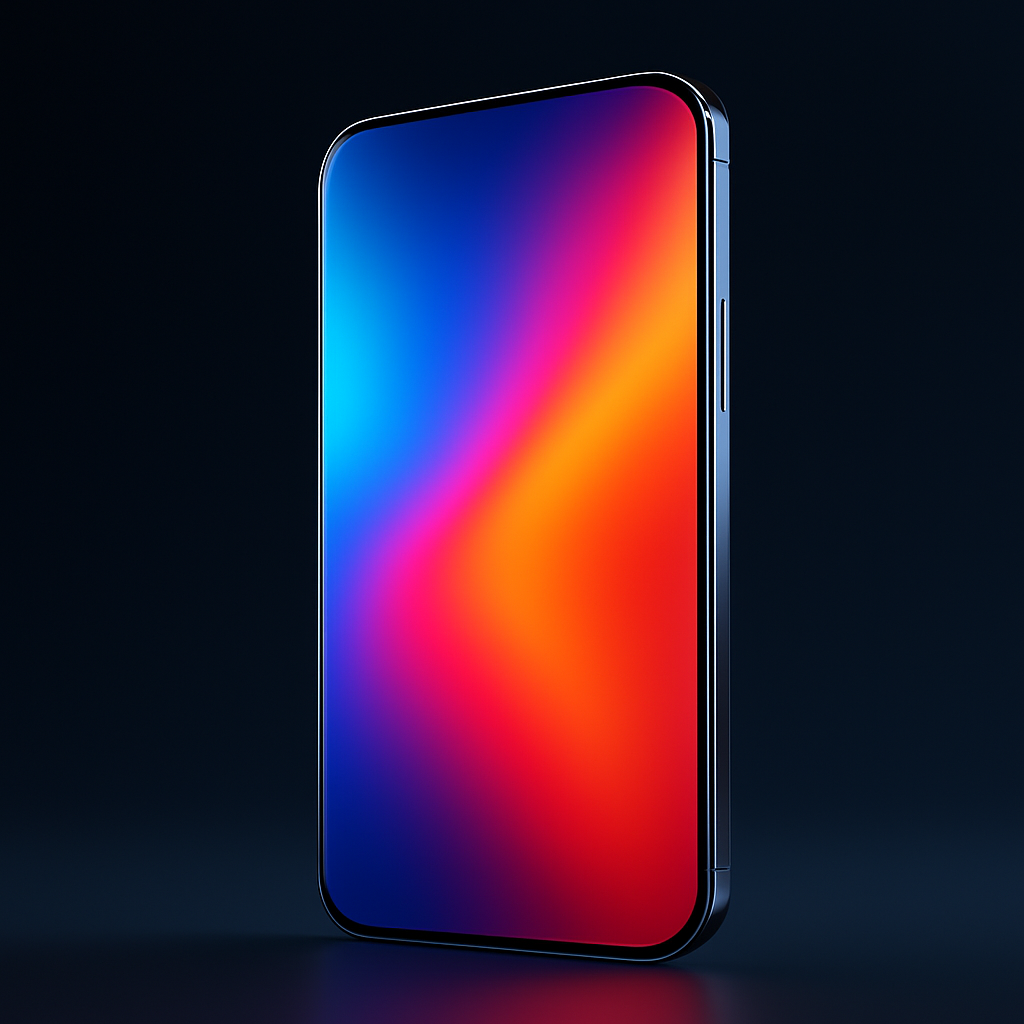
Apple’s iPhone 20, scheduled for release in September 2027, is shaping up to be its boldest redesign in years. Multiple leaks and insider reports suggest the device could deliver sweeping visual overhauls and internal upgrades that mark the 20th anniversary of the iPhone. From fully curved displays to proprietary modems, here’s a breakdown of the ten most talked-about changes—and what each could mean.
What the rumors are saying
Fully quad-curved, all-glass exterior. The iPhone 20 might ditch visible edges in favor of a display glass that curves on all four sides to cover the metal frame. To pull this off, Apple is apparently partnering with Samsung on an equal-depth quad-curved screen that smooths out the edges when viewed head-on.
Advanced OLED display tech. New screen tech is expected too. Reports point to a thinner, brighter OLED panel using “Color Filter on Encapsulation” (COE) technology built by Samsung. The change could allow more light through, boosting brightness while lowering power demands.
No visible front cutouts: under-display Face ID and camera. Apple is testing removing the front camera notch and Face ID sensor from the bezel, placing them under the screen. Whether this will be ready for 2027 is still unknown, since it’s long been teased—and repeatedly delayed.
Solid-state buttons. The physical buttons for side, volume, action, and camera control are reportedly being replaced by haptic versions embedded in the frame. These buttons wouldn’t move mechanically but would still deliver tactile feedback when pressed.
An Apple-designed modem for U.S. models. Apple has been building its own modem chips (C1, C1X, presumably C2 outside the U.S. currently), and the iPhone 20 may be the first in the premium line to use an in-house modem in U.S. models, claiming gains in speed and AI integration.
Proprietary image sensor with stacked design. Leaks suggest Apple is working on its own stacked image sensor built with LOFIC (Low-Frequency/Intensity Component) tech, shifting away from Sony sensors. The sensor could stretch up to 20 stops of dynamic range, allowing more sophisticated light capture per pixel.
Next-gen 2-nm A21 chip. Apple’s “A20” is expected with the iPhone 18 line in 2026, so iPhone 20 is likely to roll out a second-generation 2-nanometer chip named A21, promising faster performance and better efficiency.
Silicon-anode battery. One of the most significant internal changes would be the adoption of a silicon anode battery. Its ability to hold more lithium ions could boost battery life without increasing the battery’s physical size.
Mobile high-bandwidth memory (HBM). To support on-device AI and heavy multitasking, Apple is reportedly exploring vertically stacked DRAM architectures, similar to HBM, to improve memory bandwidth substantially.
Two size options, matching iPhone 18 Pro and Pro Max. The anniversary phones are expected in two sizes: approximately 6.3-inch and 6.9-inch displays, mirroring what’s planned for the iPhone 18 Pro and Pro Max models.
Expectations vs. reality: what might slip
It’s still over a year until launch, so Apple’s final feature set could change. Under-display Face ID has already been promised for several generations and repeatedly delayed. Ambitious features like solid-state buttons or the silicon anode battery could land later than planned—or in only select models.
Even so, taken together, these rumors suggest the most ambitious redesign since 2017’s iPhone X, which set the tone for Apple’s current designs. If even a few of these upgrades make it into production, the iPhone 20 could reset expectations for what an iPhone should be.
Analytical take: If Apple delivers on a subset of these changes—the quad-curved display, solid-state buttons, in-house modem, and custom sensor—it would signal a massive shift in control over both hardware design and component sourcing. That could reduce reliance on long-standing partners, smooth incremental improvements, and set Apple up for a tech stack more tightly integrated with AI and power efficiency demands. For consumers, it may mean paying more upfront but getting more durable, future-proof hardware. What we’ll watch next: which of these are confirmed by prototype leaks, which make it to mass production, and whether these innovations influence Apple’s broader product line.