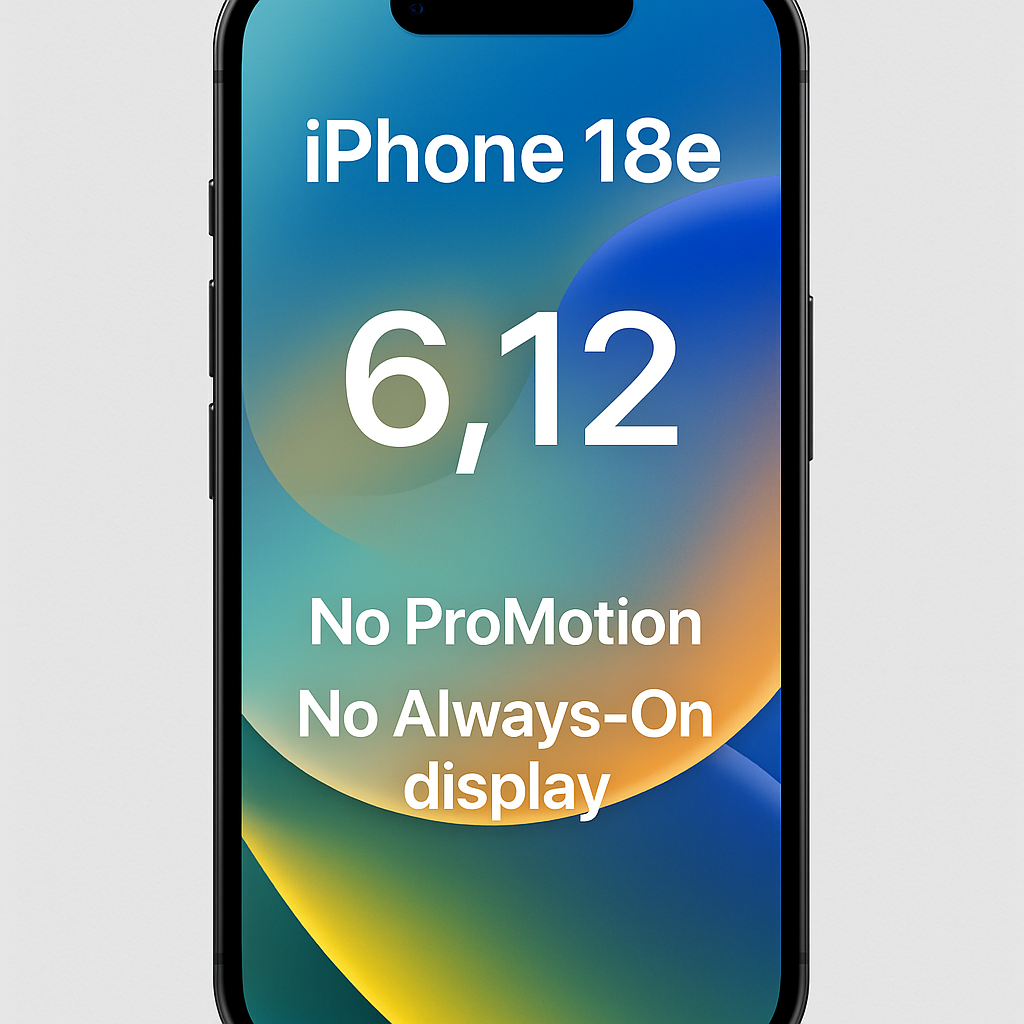
Recent leaks suggest that Apple’s upcoming iPhone 18e will continue to lack ProMotion and Always-On display features, maintaining a 60Hz refresh rate similar to its predecessor. This information comes from a leaker with a history of accurate predictions, who detailed the display specifications for the forthcoming iPhone models.
According to the leak, the iPhone 18 will feature a 6.3-inch LTPO OLED display with a 120Hz refresh rate, while the iPhone 18e will have a 6.12-inch LTPO OLED display capped at 60Hz. The absence of a higher refresh rate means the iPhone 18e will not support ProMotion, a technology that adjusts the display’s refresh rate up to 120Hz for smoother scrolling and more responsive touch input. Additionally, the lack of an Always-On display means users won’t have the convenience of viewing information like time and notifications without waking the device.
ProMotion, introduced in higher-end iPhone models, dynamically adjusts the screen’s refresh rate between 1Hz and 120Hz based on the content being displayed. This not only enhances the visual experience during activities like gaming and video playback but also conserves battery life by lowering the refresh rate when displaying static content. The Always-On display feature allows users to glance at essential information without fully activating the screen, a functionality appreciated for its convenience and energy efficiency.
The decision to omit these features from the iPhone 18e aligns with previous reports indicating that Apple may implement certain downgrades in the base iPhone 18 model to maintain its price point. These compromises could include reduced display specifications and lower screen quality. Such measures are reportedly aimed at keeping manufacturing costs in check amid ongoing component shortages and rising production expenses.
It’s worth noting that while the iPhone 17e also lacked ProMotion and Always-On display capabilities, the continuation of this trend in the iPhone 18e suggests a deliberate strategy by Apple to differentiate its standard and budget models. By reserving advanced display technologies for higher-end devices, Apple can offer a range of products that cater to different consumer preferences and price points.
In the broader context, this approach reflects a balancing act between innovation and affordability. As smartphone components become more expensive and supply chain challenges persist, manufacturers like Apple must make strategic decisions about which features to include in various models. For consumers, this means carefully considering which features are essential and whether the trade-offs in lower-priced models align with their needs.
Looking ahead, it will be interesting to see how Apple continues to navigate these challenges and whether future iterations of the iPhone ‘e’ series will eventually incorporate features like ProMotion and Always-On displays. For now, consumers seeking these advanced display technologies will need to look towards Apple’s higher-end offerings.