New leaks suggest Apple’s upcoming iPhone 18 Pro will include a more powerful A20 Pro chip with meaningful upgrades in its graphics and memory subsystems. A fresh set of circuit-board diagrams shared by a Chinese tipster hint at a seven-core GPU—one more than the A19 Pro—and faster RAM interface, among other changes.
What the leak reveals about A20 Pro
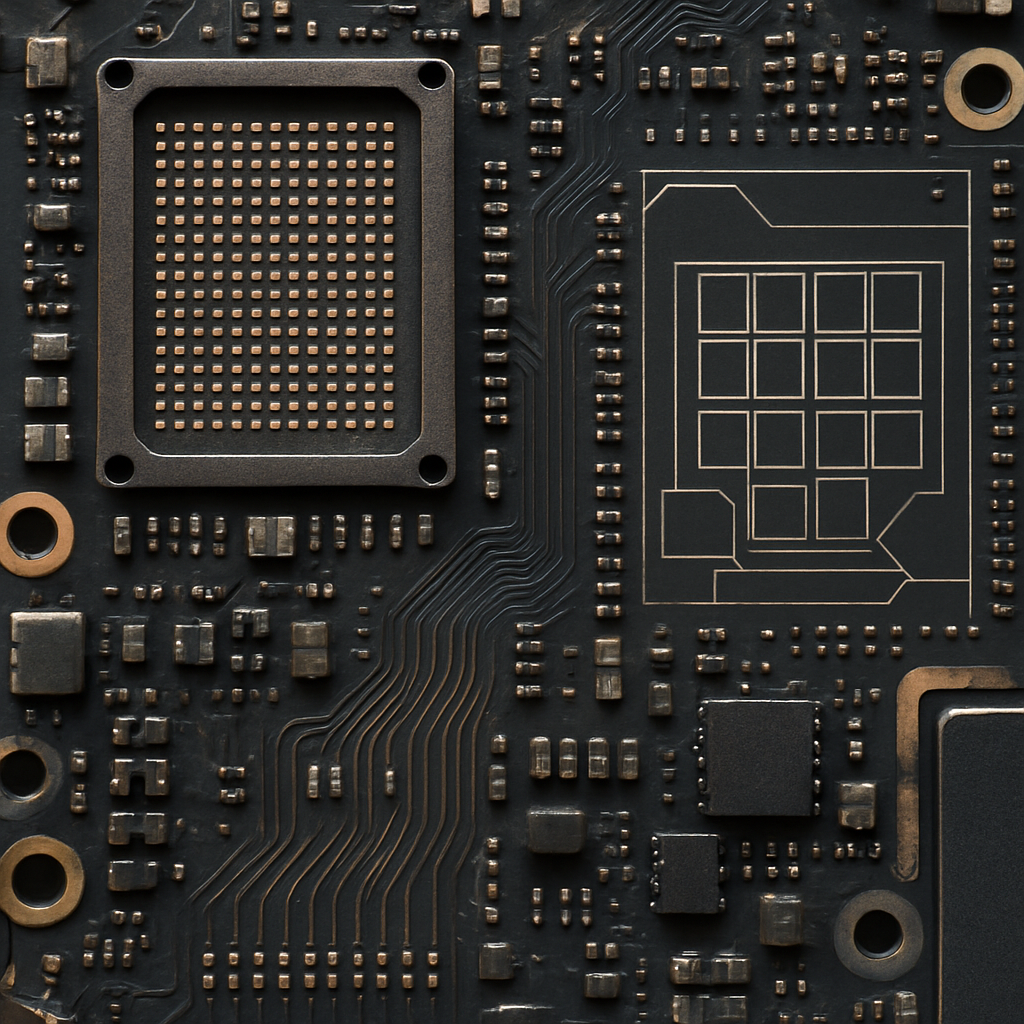
The schematics, attributed to Weibo user “Fried White Rice,” don’t show the chip itself but rather the solder points where the A20 Pro will connect to the board. Analysts gleaned two main improvements from those layouts. First, the CPU configuration appears to stay the same: two high-performance cores and four efficiency cores. However, the small cores’ L2 cache seems to have been upgraded, likely rising from 6 MB in the A19 Pro to 8 MB, while the big cores remain at roughly 16 MB of L2 cache.
Second, the GPU core count is under close scrutiny. By studying the outlines and solder-ball positions in the diagrams, several possible layouts were considered—six, seven, or eight GPU cores. The evidence points most plausibly to seven cores, marking a step up from the current six-core design.
Other performance improvements & trade-offs
On top of the GPU bump, there are signs that memory will get a performance boost. The interface for RAM is expected to be faster in this generation, which could lead to better bandwidth and responsiveness. One analysis suggests that the A20 Pro may deliver roughly 18% higher performance along with about 30% greater energy efficiency compared to its predecessor.
It’s worth noting these predictions are based on indirect clues—mounted boards, cache arrangements, solder patterns—not solid hardware disclosures. While the leaker has some credibility, many of the findings remain speculative until Apple confirms them.
Context: Why this matters
Apple has steadily iterated its Pro chips each generation, focusing on balancing performance gains with efficiency. The move to a seven-core GPU, if real, is a shift upward likely aimed at improving graphics rendering, gaming, and perhaps work with mixed reality or AR/VR tasks. Enhanced RAM speed would complement that, enabling faster data movement and smoother overall system performance.
With the next iPhone cycle expected later in 2026, customers and competitors alike will be watching to see whether these changes materialize—and whether they’ll deliver material benefits under real world conditions.
From a broader perspective, this leak underscores how much can be deduced from board-level design and solder-ball layouts: not just what chip components will exist, but how they’re arranged—and what that means for performance. If Apple succeeds in increasing GPU cores and memory speed with minimal trade-offs, it could tighten the gap with rivals in the premium phone segment. What to watch next: final benchmarks, details on RAM type and bandwidth, and how Apple manages heat and power in demanding tasks.