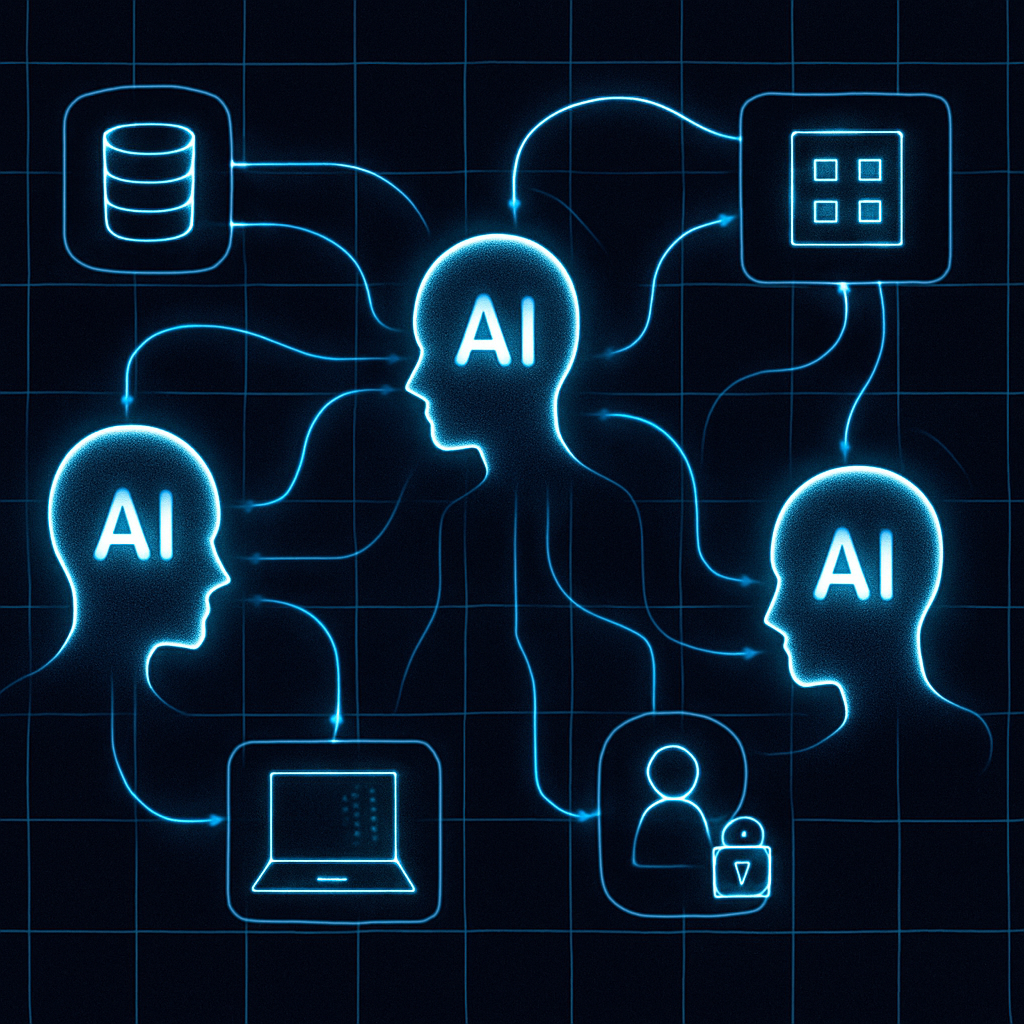
In today’s enterprises, roughly 1,280 third-party tools now include built-in AI. Of those, about 282 are visible through single sign-on or identity systems. The rest—over a thousand—fly under the radar, never exposing themselves through formal identity infrastructure. They’re not hidden on purpose. They simply bypass the conventional points of control that security teams rely on. These are AI agents the company didn’t expressly approve—and that status is the root of a fast-growing risk.
Decision Doesn’t Equal Deployment
For years, AI security largely focused on “first-party” deployments—cases where organizations consciously choose, purchase, or build an AI model and wrap protections around it: deploying gateways, scanning models, setting acceptable use policies. But AI agents—software that reasons, acts, or automates tasks—often embed themselves within other, pre-existing platforms, arriving without a formal decision point. They slip in via updates or as configured features inside regular tools. By the time they appear in reports, they’ve already had time to operate, access data, and sometimes act autonomously.
How Agents Show Up & Why They’re Dangerous
Agents enter organizations through three primary vectors: inherited agents (embedded within existing platforms), configured agents (using external runtimes with internal logic), and built agents (designed and owned end-to-end by the enterprise). Inherited and configured agents dominate adoption because they require minimal effort. Built agents are rarer, often slower, but also the ones whose components can be audited more thoroughly. Regardless of origin, all agents eventually access critical infrastructure, data stores, or permissions beyond what was originally intended.
Most of the risk isn’t in the AI models themselves—it’s in the scaffolding around them: how they get access, who they’re operating on behalf of, what they connect to, and what they do once live. Four questions matter:
- Identity: Is the agent formally registered? Can someone say who owns or operates it, or is it running anonymously?
- Permissions: What exactly can it do? Did its access inherit over-privileged roles or scopes without review?
- Connectivity: What systems, data, or other agents can it reach, directly or through chains of trust? How large is its potential blast radius?
- Behavior: What is it actually doing day-to-day, and do its actions align with expectations—or has it drifted from its original intent?
A striking example: a coding agent inside Slack’s ecosystem that can read context, write code, and open pull requests—without a distinct decision or adoption process by security or IT. The control model becomes membership in a chat channel rather than managed access privileges. That means at least one agent with broad infrastructure access is operating simply because it was part of a platform update.
How Buyers & Regulators Are Responding
Major institutions like JPMorgan Chase have raised alarms, viewing the third-party agent supply chain as a systemic risk. Policies are shifting: agents should default to having identity but no entitlements, and departments must vet which human or team they act on behalf of before granting access beyond minimal boundaries. Security questionnaires increasingly demand companies inventory agents, know who owns them, and document their oversight.
Legislation is catching up. The European Union’s AI Act, in implementation phases through 2026, mandates that businesses must track all their AI systems, designate their owners, and demonstrate oversight. If agents are invisible, firms can’t ensure compliance.
From Spreadsheets to Real-Time Visibility
Manual tracking—spreadsheets, periodic audits—works up to a point, but breaks down as agent count scales. With hundreds or thousands of agents, teams need live systems that surface what each agent is, who controls it, what it connects to, what it inherited, what it’s doing now, and how that has changed. These systems shift the unit of security from configuration to reach.
Some platforms are beginning to fill this gap. Tools that map every human and non-human identity, all applications, all permissions, and agent behavior in a unified view are being built—turning reach into the primary metric. Such visibility helps reveal when an agent suddenly gains access to sensitive data or systems outside its original scope.
The enterprise security landscape aimed for AI tools the business chose. But a much larger population—AI agents the business never consciously adopted—is now present.
This matters because these under-the-radar agents represent hidden risk vectors—untested permissions, unexpected downstream connectivity, drift into actions not originally intended. The better path forward is moving from static controls to dynamic discovery: live visibility over identity, permissions, connectivity, and behavior for every agent. Only then can organizations tame this silent supply-chain of AI.