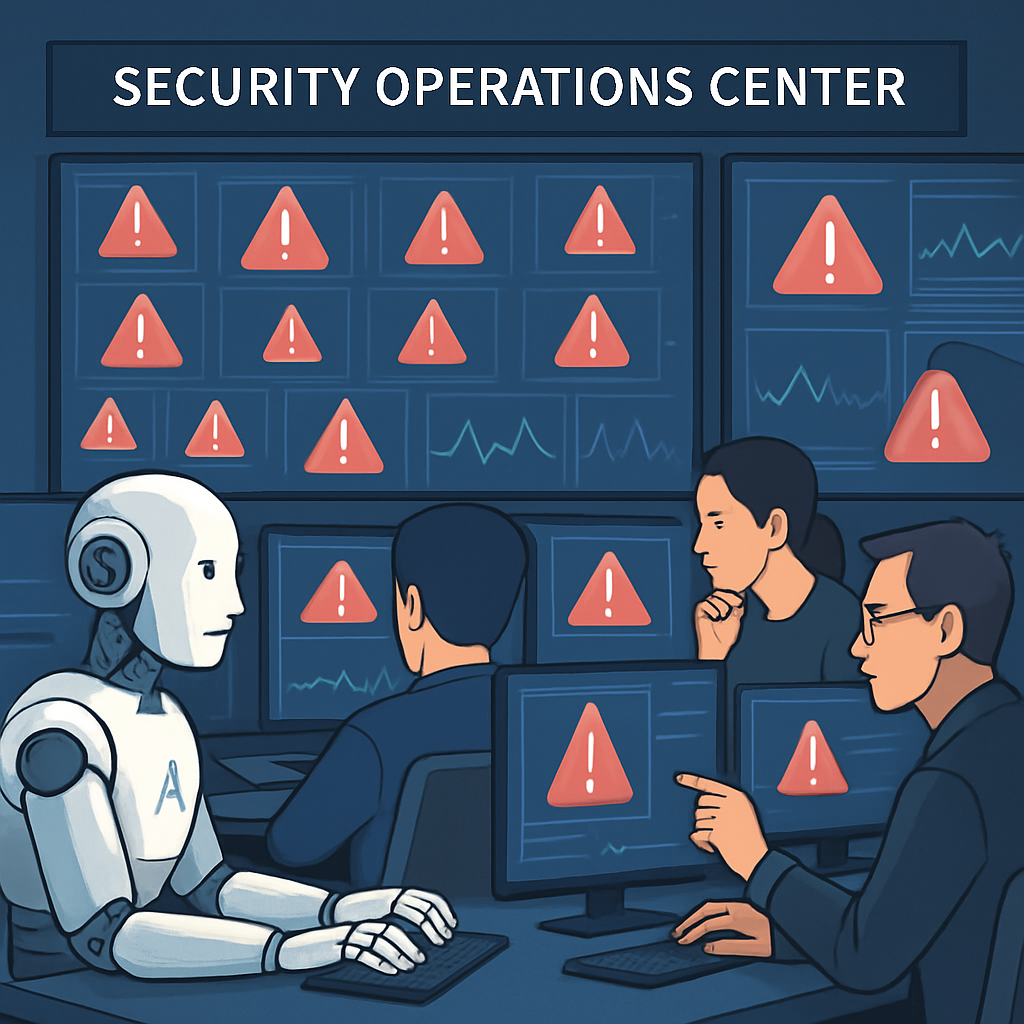
Security Operations Centers (SOCs) are increasingly integrating artificial intelligence (AI) to enhance their capabilities. However, a common oversight in this integration is the disproportionate reliance on human analysts for tasks that AI could efficiently handle, leading to analyst fatigue and potential oversight of critical threats.
Daniel Kahneman’s seminal work, “Thinking, Fast and Slow,” delineates two cognitive systems: System 1, which operates automatically and quickly, and System 2, which is deliberate and slower. In the context of SOCs, this translates to AI handling routine, high-volume alerts (System 1 tasks), while human analysts focus on complex, nuanced threats (System 2 tasks).
Research analyzing over 25 million enterprise alerts indicates that approximately 98% can be resolved autonomously, leaving about 2% requiring human intervention. This mirrors Kahneman’s findings, suggesting that an effective SOC should employ AI for the majority of alerts, reserving human expertise for the minority that necessitate deeper analysis.
Despite this, many SOCs still design their AI architectures to rely heavily on human analysts for tasks that could be automated. This misallocation not only exhausts analysts but also increases the risk of missing genuine threats buried within low-severity alerts. For instance, in an enterprise handling 450,000 alerts annually, around 54 real threats could be overlooked due to this imbalance.
To address this, SOCs should adopt a dual-system approach: leveraging AI for rapid, automatic processing of the vast majority of alerts, and engaging human analysts for the small fraction that require nuanced judgment. This strategy not only enhances efficiency but also aligns with the natural cognitive processes, ensuring that both AI and human resources are utilized optimally.
Implementing such a balanced approach necessitates a thoughtful design of AI architectures within SOCs. By aligning AI capabilities with the appropriate tasks and reserving human expertise for complex cases, organizations can improve their threat detection and response times, reduce analyst burnout, and ensure a more robust security posture.
In conclusion, the integration of AI into SOCs should be guided by an understanding of cognitive processes, ensuring that tasks are assigned to AI or human analysts based on their respective strengths. This balanced approach is crucial for enhancing the effectiveness and sustainability of security operations.