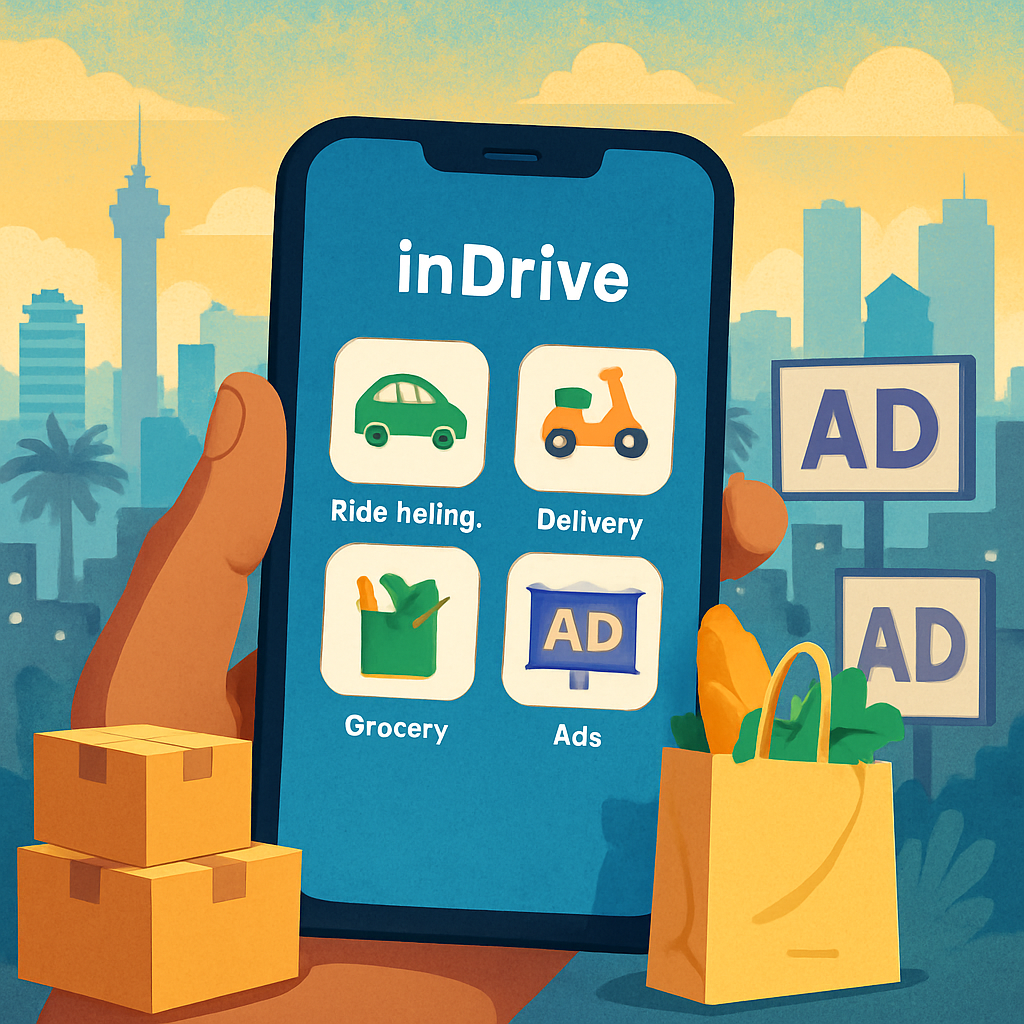
inDrive, the ride-hailing app known for letting drivers and passengers haggle fares, is aggressively expanding into new businesses—from delivery to ads to driver lending—as it moves beyond mobility to win more share of consumer spending. The company says it’s already making traction across its base in emerging markets with multiple verticals showing early promise.
Advertising: struck gold or early promise?
The advertising arm, which was tested first in mid-2025 then pushed into its top 20 markets by January, has now spread to 25 countries. More than 2 billion ad impressions have been served so far and the platform pulls over 2,000 monthly advertisers—with about two-thirds coming back again. inDrive is rolling out “Ride Media,” which displays ads while riders wait or ride in cars. Targeting today is based on locations a user has visited over time; real-time targeting is coming.
Delivery, groceries, fintech, and more
Cross-selling efforts show early signs of success: in 2025, roughly 13% of users with active mobility accounts also used at least one delivery service. Financial services aimed at inDrive’s drivers are growing too. inDrive.Money, offering short-term credit in Latin America, saw driver usage spike by 118% year-over-year during the first half of 2026. For now, groceries and food seem positioned to absorb the lion’s share of future investment. Food delivery tests are underway via partner networks, although those trials are at an early stage.
Leadership changes reflect this new multipronged direction. Raphaël Zennou, formerly leading quick commerce at Delivery Hero, is now Vice-President of Food and Groceries. Max Silin, ex-Google ad exec, is heading up inDrive’s ads business. Valentin Laykov oversees delivery, while Alexander Kurchin remains at the helm of inDrive.Money. These hires bring experience from companies that have scaled delivery, grocery, and ad businesses globally.
Emerging markets edge, scale dependency
Operating in over 1,200 cities across 48 countries, inDrive leans heavily on its presence in emerging markets to reach audiences brands find harder to touch via traditional platforms. While revenue figures for these newer verticals weren’t disclosed, inDrive’s growth officers believe the advertising and financial services arms have strong upside and relatively low capital intensity. Grocery and delivery expansion will require bigger investments.
It’s not yet clear when or if any of these businesses will become a material piece of inDrive’s revenue mix, but the plan hinges on the multiplier effect: as delivery and grocery grow, so does ad inventory and potential, which could accelerate monetization.
—
Why this shift matters: inDrive’s pivot from ride-hailing toward an ecosystem of mobility, delivery, groceries, ads, and lending shows it isn’t content being a low-margin transport provider. With leaders drawn from Delivery Hero and Google, it has the executive muscle to build these verticals. If its businesses beyond rides scale fast—especially in the cost-sensitive emerging markets—it could reshape competition with Uber, especially in places where price sensitivity and ad reach are under-served.