Critical HTTP/2 Bomb Vulnerability Exposes Major Web Servers to Remote DoS Attacks
A newly identified security flaw, termed the HTTP/2 Bomb, has been discovered, posing a significant threat to major web servers such as NGINX, Apache HTTPD, Microsoft IIS, Envoy, and Cloudflare Pingora. This vulnerability enables remote attackers to execute denial-of-service (DoS) attacks, potentially rendering affected servers inoperable.
Understanding the HTTP/2 Bomb Vulnerability
The HTTP/2 Bomb exploit combines two known attack techniques: a compression bomb and a Slowloris-style hold. The compression bomb targets HPACK, the header compression scheme used in HTTP/2, by inflating a single byte into a full header allocation on the server, repeated thousands of times per request. This manipulation leads to excessive memory consumption. Simultaneously, the Slowloris-style hold involves maintaining numerous open connections to the server, preventing it from freeing up resources and exacerbating the memory strain.
Technical Breakdown of the Attack
HPACK is designed to compress HTTP/2 headers efficiently, reducing their size by approximately 30% through Huffman encoding. However, the HTTP/2 Bomb exploit manipulates this compression mechanism by creating headers that are nearly empty, causing the server to allocate significant memory for each entry. This approach circumvents traditional defenses that cap the total decoded header size, as the actual decoded size remains minimal.
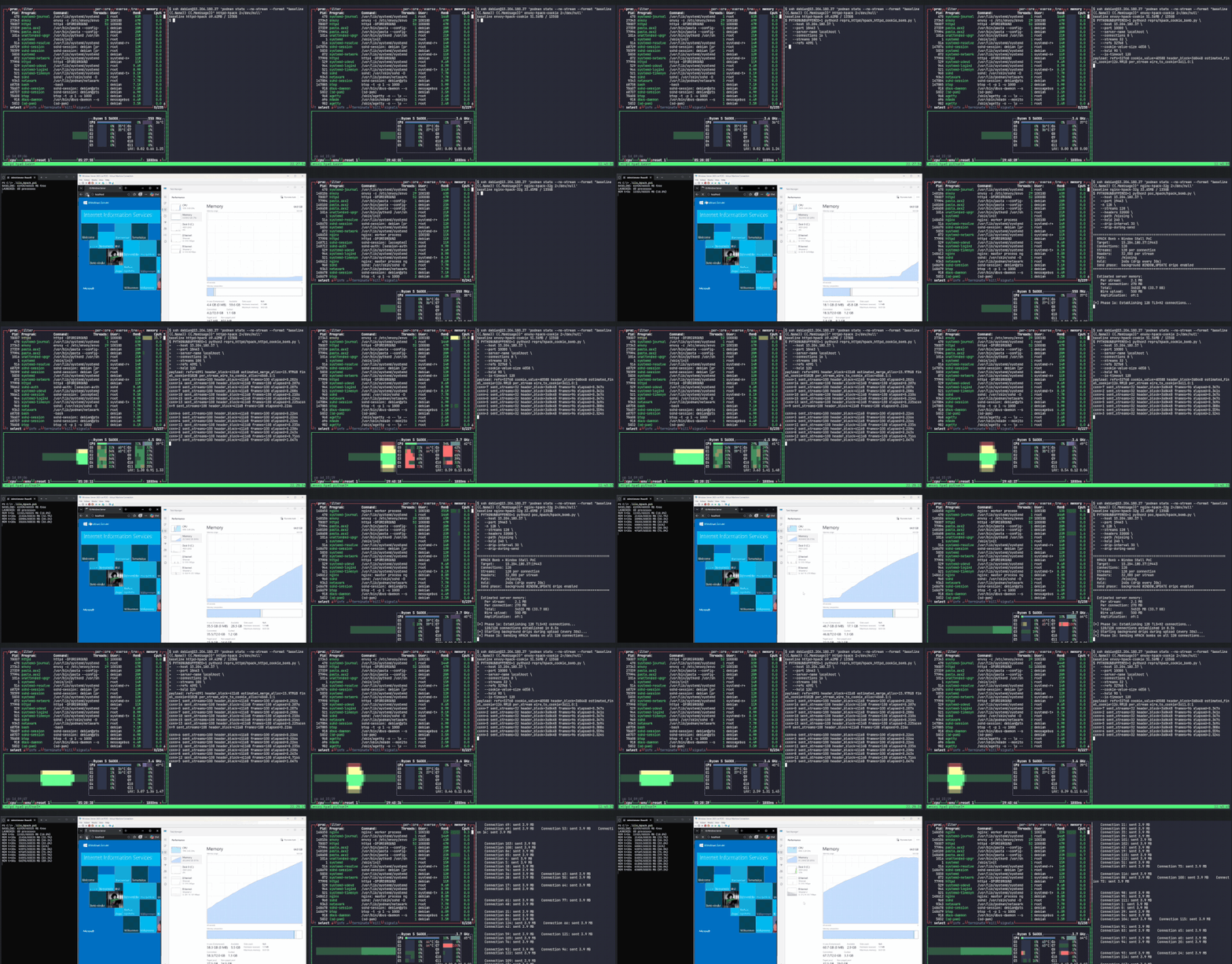
In a practical attack scenario, an attacker with a standard 100Mbps internet connection can incapacitate a vulnerable server within seconds. For instance, a single client can consume and hold 32GB of server memory against Apache HTTPD and Envoy in about 20 seconds, leading to severe service disruptions.
Mitigation Strategies
To address this critical vulnerability, server administrators are advised to implement the following measures:
– NGINX: Upgrade to version 1.29.8 or later, which introduces the `max_headers` directive with a default limit of 1,000. If upgrading is not feasible, disable HTTP/2 by setting `http2 off;` in the configuration.
– Apache HTTPD: Apply the fix available in `mod_http2` version 2.0.41. If upgrading is not an option, disable HTTP/2 by configuring `Protocols http/1.1`.
– Microsoft IIS, Envoy, and Cloudflare Pingora: As of the latest reports, patches are not yet available. Administrators should monitor official channels for updates and consider disabling HTTP/2 temporarily to mitigate risk.
Broader Implications and Recommendations
The discovery of the HTTP/2 Bomb vulnerability underscores the importance of continuous vigilance in web server security. While HTTP/2 offers performance enhancements over its predecessor, it also introduces complexities that can be exploited if not properly managed.
Administrators should regularly review and update server configurations, apply security patches promptly, and consider implementing additional monitoring to detect and respond to unusual traffic patterns indicative of DoS attacks.
Furthermore, this vulnerability highlights the need for a holistic approach to security that considers both the amplification potential of certain attacks and the mechanisms that allow attackers to sustain these attacks over time.
Conclusion
The HTTP/2 Bomb vulnerability presents a significant risk to web servers worldwide, with the potential to disrupt services and compromise data integrity. By understanding the mechanics of this exploit and implementing the recommended mitigations, organizations can protect their infrastructure and maintain the availability and reliability of their online services.