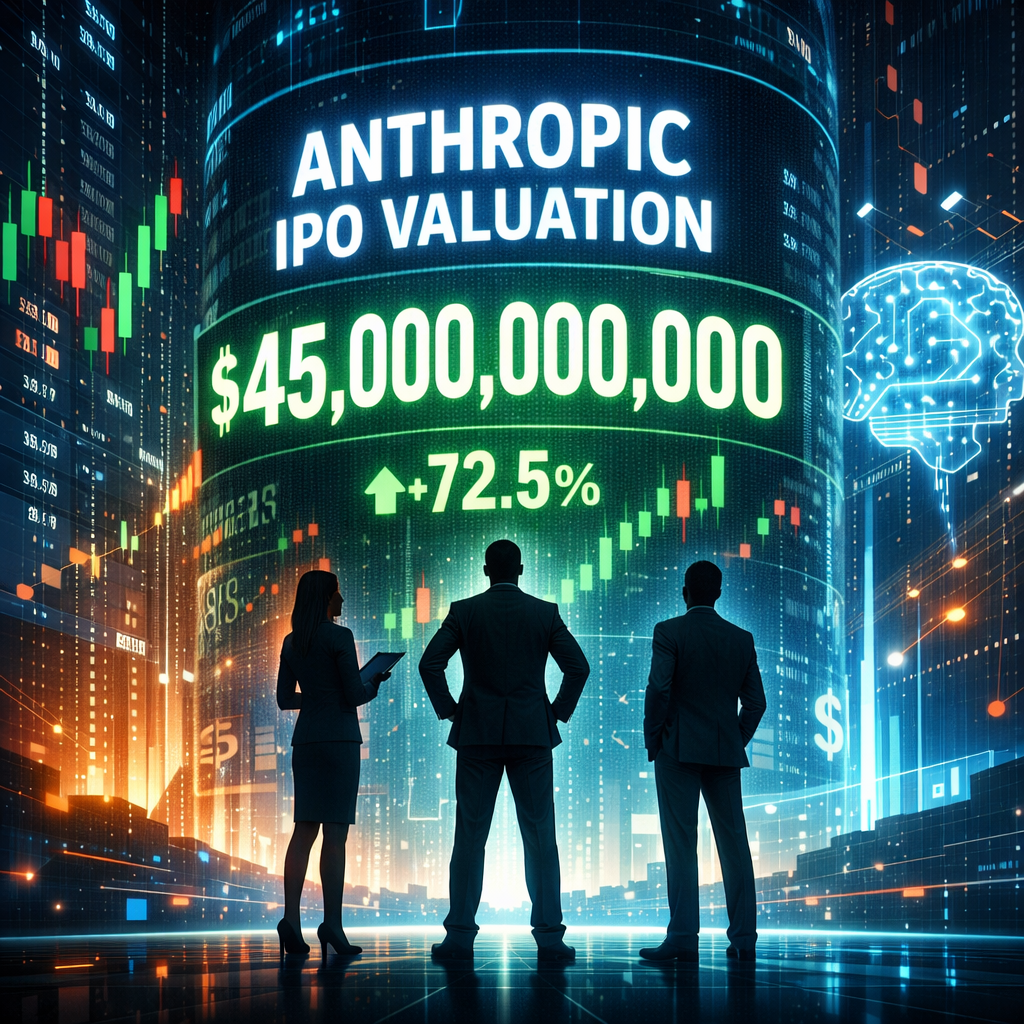
Anthropic’s IPO turned out to be the biggest in history—one with payoffs so enormous that early bets by certain venture players looked prescient. Notable Capital, GIC (Singapore’s sovereign wealth fund), and Baillie Gifford were among the most aggressive backers, staking billions in rounds well before Anthropic went public. Their confidence looks fully justified now.
Notable Capital’s bold leap
Notable Capital—formerly the U.S. arm of GGV Capital—committed a staggering ~10% of its over-$1 billion U.S. fund toward Anthropic’s Series E. That decision stood out for several reasons: Anthropic trailed OpenAI, a rival with greater visibility; a competitor called DeepSeek had just unveiled its own model (R1), threatening to challenge closed-source AI labs. On top of that, the valuation—$61.5 billion—for the Series E round represented the highest price tag Notable had ever placed a bet on in its 25-year history. Yet the firm was swayed by developer engagement metrics: Claude, Anthropic’s signature model, was being chosen 70% of the time versus ChatGPT, a reversal from previous years. Notable also believed that critical AI workloads would stay rooted in U.S.-based, closed-source offerings—a belief molded by its experience navigating U.S.-China tensions.
GIC and Baillie Gifford follow suit
Singapore’s GIC had been tracking Anthropic since 2024, and by early 2025—after a pivotal meeting between GIC’s tech lead, Chris Emanuel, and Anthropic’s CFO Krishna Rao—the sovereign fund made its first move in Series F at a valuation of $183 billion. GIC later co-led the Series G round (at a $380 billion valuation) with Coatue and invested heavily again in the pre-IPO round, when Anthropic’s valuation neared $965 billion. Total investment across those rounds exceeded $4.5 billion, leaving GIC with roughly 1% ownership after the IPO.
Meanwhile, Baillie Gifford began approaching Anthropic nearly two years prior to its first investment, drawn in when the company showed steady execution, strong financial metrics, and expanding applications—for sectors like legal services, life sciences, cybersecurity, and its broader productivity tools. The firm put in about $1.5 billion across three funding rounds, banking generous paper returns as expectations for valuation once deemed steep became headline-grabbing.
Outcomes and magnitudes
When the IPO hit, Anthropic raised $81.3 billion at a fully diluted valuation of about $1.5 trillion before trading began. For Notable, the return was roughly 15× on its early investment, transforming skeptics into admirers of the risk. GIC and Baillie Gifford, too, reaped major value: the former turning multiple billions into a meaningful stake held at eye-watering valuations, the latter seeing huge upside from its commitment over three rounds.
These are not just stories of financial windfalls—they show a strategic mindset. Notable forged its thesis around product usage and competitive geopolitical dynamics; GIC leveraged access and timing; Baillie Gifford leaned on rigorous evaluation of execution and revenue signs. Each found a different path to identifying what many now see as one of the biggest AI plays in modern times.
What this reveals
This tale underscores the high-stakes nature of AI investment: massive risks, even bigger potential rewards. For venture firms and large institutional investors alike, the Anthropic IPO reveals what it means to lean in early—often far ahead of certainty—and to judge a company not only by its technology, but by who’s using it, how it’s scaling, and under what regulatory, geopolitical, and competitive pressures it operates.