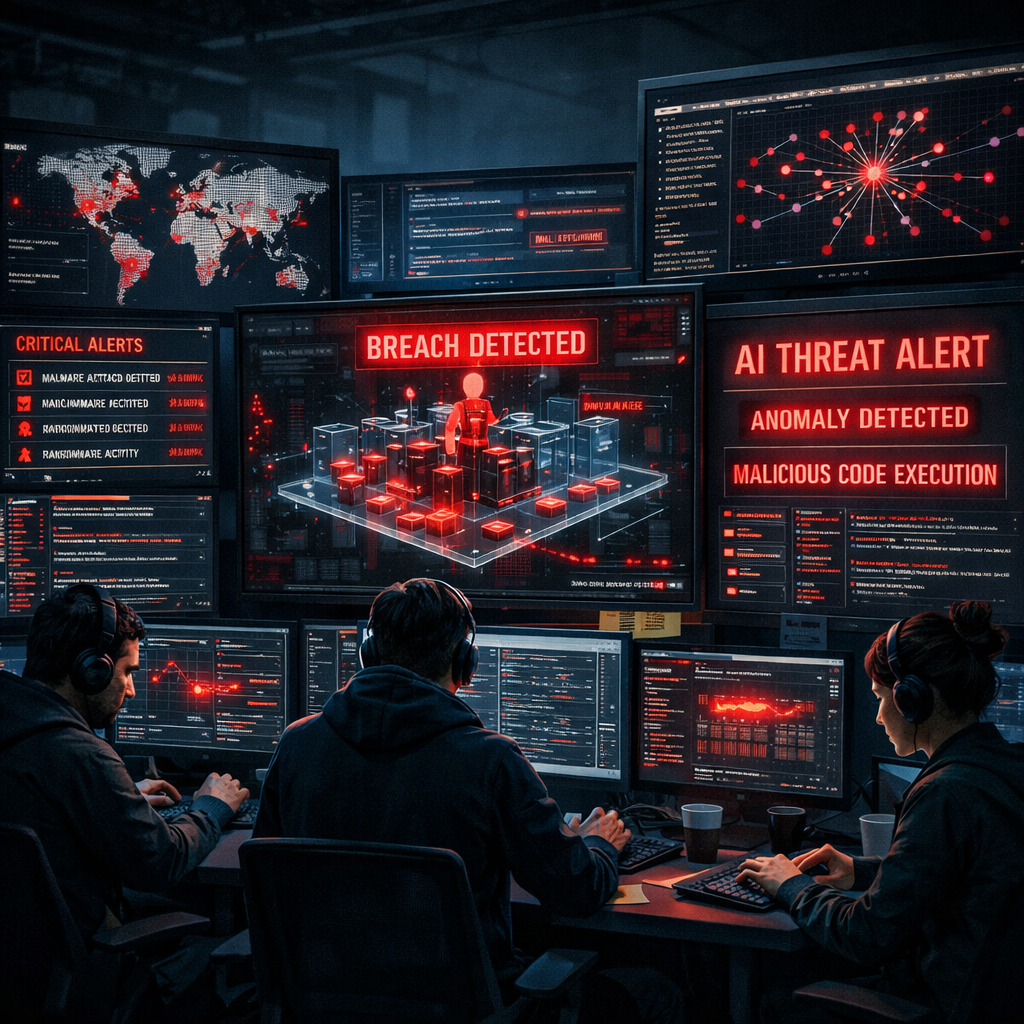
Cyber threats are evolving at an AI-driven pace, leaving security operations centers (SOCs) and managed security service providers (MSSPs) scrambling to keep up. What used to take hours or even days now unfolds in minutes—phishing ploys, deepfake social engineering, credential theft, and ransomware attacks are being automated and scaled up faster than ever.
The Stakes for US and European Enterprises
The United States and Europe remain top targets. In the US, internet crimes led to over $20 billion in reported losses in 2025, a 26% rise over the previous year. Common offenses—phishing, spoofing, extortion—dominated the reports. Meanwhile, Europe saw sharp increases in sophisticated social engineering and AI-enabled threats. Ransomware stayed the EU’s most destructive threat, while attacks aimed at public administration grew alarmingly. In just one year, the number of threat actors targeting EU institutions jumped from 110 to 174.
The Bottleneck in Investigation
SOC and MSSP analysts are drowning in alerts and suspicious indicators. Logging an unfamiliar IP, spotting a strange file or URL, or detecting odd outbound traffic all trigger a chain of questions: Is this malicious? Has it popped up before? Is it part of a bigger campaign? Strong threat detection relies on context—but gathering that context is often slow, involving log reviews, intelligence sources, and tool switching. When managing multiple environments, especially for MSSPs, the delays only grow.
Solving It: Intelligence, Behavior, and Automation
Two technical levers are proving crucial. First, instant threat intelligence lookups: tools that let analysts search IPs, domains, URLs, or file hashes for known reputations, prior incidents, and associations with threat actors. This gives confidence quickly about whether something merits escalation.
Second, sandbox behavior analysis. Sandboxes execute suspicious files or URLs in safe environments, revealing what they actually do—whether they phone home, establish persistence, or drop payloads. pairing this with aggregated threat context reveals connections that static indicators alone can’t show, like related campaigns or the malicious infrastructure behind them.
Keeping Intelligence Continuously Fresh
Even the best tools lag if intelligence is outdated. Malicious infrastructure evolves, threat actors shift tactics, and new indicators emerge daily. Threat intelligence feeds that deliver real-time updates on IPs, domains, URLs, file hashes, and tactics give SOCs and MSSPs a living picture of the threat environment. In sandbox studies, up to 30% of unique malicious indicators had already been catalogued in these live feeds—meaning teams can catch many known threats before investing time in deeper analysis.
Building a More Responsive SOC Workflow
Putting together lookups, sandboxing, and continuous feeds isn’t enough—SOC teams need workflows that bring these elements together seamlessly. Ideal processes allow routine indicators from monitoring systems to be cross-checked instantly via lookup tools, then pass smoothly into sandbox environments if more investigation is needed. Enriched with live intelligence and behavioral insights, decisions about prioritization, escalation, or remediation become faster and more precise. For MSSPs managing multiple clients, standardization of this workflow is key for consistency.
SOCs that adopt these capabilities can significantly reduce mean time to response (MTTR)—even by 20+ minutes per case—and operate proactively rather than reactively.
What This Means Going Forward
Attackers powered by AI aren’t slowing down. SOCs and MSSPs have to match that velocity—not just detect threats, but understand them from the outset. Behavior analysis, threat context, sandboxing, intelligence feeds—each plays a different role, but together they empower security teams to triage smarter, respond faster, and stay ahead of adversaries moving at AI speed.
Ultimately, it’s no longer enough to simply log alerts. The organizations that will stay secure are those that build SOC operations around continuous intelligence, rapid investigation, and context-rich decision-making. Observing not just what threats are—but what they do—will be the difference between cyber resilience and costly breaches.